Your porch doesn’t need a renovation. It needs a window box that looks like a florist stopped by on their way to a magazine shoot.
Nobody tells you this part: window boxes are the cheapest curb-appeal upgrade in all of holiday decorating. A $12 bundle of greens, a few picks from the clearance aisle, and suddenly neighbors slow down to stare. I’ve filled boxes on a budget of basically pocket change and had people ask who did my “install.” (Nobody. It was me, in gloves, at 4pm, losing daylight.)
So here are the 15 looks that actually read as expensive, plus the small details that separate a designer box from a sad bucket of sticks.
1. The classic overflowing evergreen box

If you only do ONE thing, do this. Pack mixed evergreens (fraser fir, cedar, white pine) until the box looks slightly out of control. Volume is what makes a window box look pricey. A thin, polite arrangement always looks cheap, no matter what you spent.
Angle your longest cedar sprigs downward so they drape over the front lip. That cascade creates depth and shadow, which is exactly what high-end installs have and DIY ones usually don’t.
2. Frosted blue spruce and silver accents

Blue spruce has that dusty, silvery sheen that instantly feels luxe. Pair it with brushed-silver ornaments, pewter picks, and a few white-washed pinecones. The whole thing looks like winter decided to be chic.
FYI, this palette plays beautifully with gray siding and black window trim. If you love this direction indoors too, the silver and gold Christmas decor approach keeps the whole house consistent.
3. Red berry branch explosion

Faux winterberry branches give you more per dollar than anything else in holiday decorating. Stick 15 to 20 stems into a greenery base at varying heights and watch the box come alive.
Real ilex berries work too, but they drop. Go faux for window boxes. You’ll reuse them for a decade and nobody can tell from the sidewalk. Promise.
4. Birch logs standing tall

Want instant height without buying anything tall? Stand three birch logs upright in the back corner of your box, varying the heights like a little forest skyline.
The white bark against dark greenery is a contrast trick designers lean on constantly. It also fills space fast, which means fewer greens to buy. Win-win.
5. Magnolia leaves for instant luxury

Magnolia is the cashmere of holiday foliage. Those glossy green fronts and velvety bronze backs give you two colors in one stem, so flip some leaves over for a natural two-tone effect.
Mix magnolia with plain cedar and you’ve got a box that looks like it cost $200. It cost maybe $30. Nobody needs to know.
6. Neutral dried grasses and bleached pods

Not everyone wants red and green, and that’s completely valid. Try bleached pampas, dried wheat, lotus pods, and pale eucalyptus for a quiet, gallery-like look.
This style photographs ridiculously well in soft winter light. It also pairs seamlessly with neutral Christmas tree decor if you’re building a whole cohesive, cozy-minimal vibe.
Quick tip on dried materials
Dried stems hate rain. Tuck them under an eave or toward the center of the box where greenery shields them.
7. Mini Christmas trees in a row

Three small potted spruces lined up in a window box look architectural and intentional. It’s the “I hired someone” look.
Fill gaps between pots with moss or loose greens to hide the containers. Dwarf Alberta spruce handles cold well, though the University of Minnesota Extension notes that potted evergreens still need winter protection and occasional watering before the ground freezes hard.
8. Lanterns nestled into greenery

Drop a black metal lantern right into the center of your box and build greens around its base. The vertical element breaks up the horizontal line of the window, which keeps the eye moving.
Use battery LED pillars with a timer. Real flames near dry evergreen is a genuinely bad idea. The NFPA reports that decorations are the first item ignited in roughly 790 reported home fires a year.
9. Plaid ribbon woven through

Buffalo check or classic tartan ribbon threaded loosely through greenery adds color without clutter. Weave it in an S-curve rather than tying a single bow in the middle.
Go with outdoor-rated wired ribbon. The cheap paper-backed stuff turns into wet spaghetti after one storm. I learned that the hard way in 2019.
10. Copper and brass metallics

Copper bells, brass ornaments, and antique gold picks against deep green read as genuinely expensive because warm metals catch porch light beautifully at dusk.
Keep the metallic count low, maybe five to seven pieces per box. Restraint is what separates elegant from “ornament avalanche.”
11. White flocked everything

Flocked pine, snowy twigs, and white-tipped pinecones create a soft, hushed look that pops hardest against dark or brick exteriors.
Want a cheat? Lightly mist a clear artificial snow spray over your finished box. Two passes max. Any more and it looks like a frosting accident.
12. Citrus and cinnamon stick bundles

Dried orange slices and cinnamon bundles tied with twine bring in that warm, old-world farmhouse energy. The color temperature alone makes a porch feel welcoming.
Dry your own slices at 200°F for about 3 hours, flipping halfway. If you love this warmer palette, orange Christmas decor ideas will give you more directions to run with.
13. Twinkle lights buried in the greens

The professional move: push your lights DEEP into the greenery instead of draping them on top. You get a glow, not visible wires.
Use warm white (around 2700K) and look for the UL “suitable for outdoor use” tag. The CPSC specifically warns against running indoor-rated light strings outside.
14. Pinecone and nut texture box
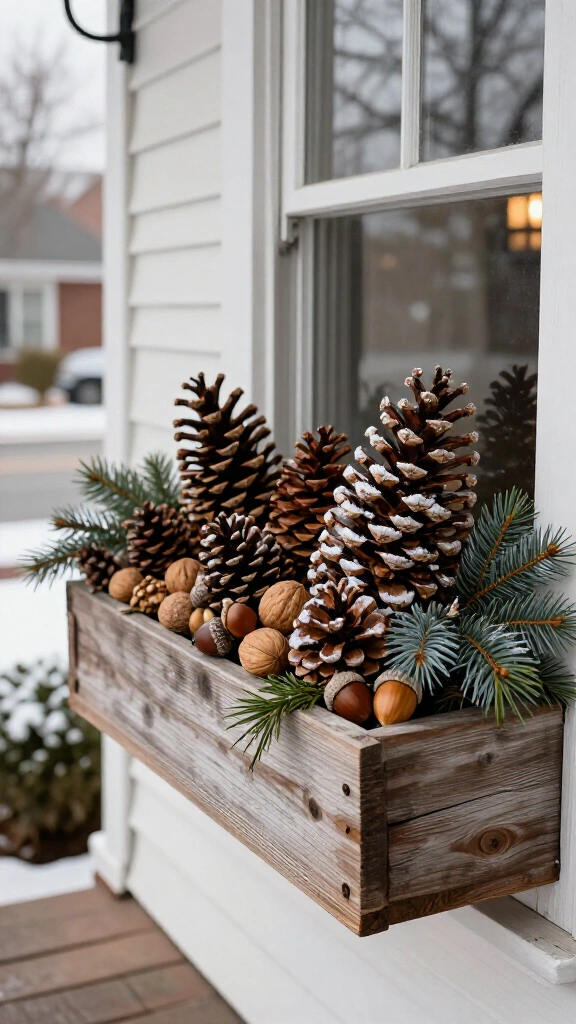
Mix pinecone sizes: tiny hemlock cones, medium white pine, and a couple of giant sugar pine cones as focal points. Tuck walnuts and acorns into the gaps.
Why does this work? Texture variety tricks the eye into reading “custom.” Uniform anything reads as mass-produced.
15. The monochrome all-green box

No ribbon. No ornaments. No berries. Just five or six varieties of evergreen packed tight: boxwood, cedar, fir, juniper with its blue berries, and a little incense cedar.
It’s the most expensive-looking option on this list and the simplest. Isn’t that always how it goes? Pair it with a coordinated front door entrance and your porch is done.
Keeping greens alive longer
Cut stems at an angle, soak them in water overnight before arranging, and use wet floral foam or damp sand as your base. Freezing temps help here rather than hurt, so expect 4 to 6 weeks of good color in most northern climates.
Pulling it all together
The pattern across all 15 ideas is pretty simple:
- Overfill it. Sparse equals cheap. Always.
- Build in three heights: tall back element, mid-level mass, cascading front.
- Pick one palette and commit. Two or three colors, max.
- Vary textures more than you vary colors.
- Light it warm and hide the wires.
You don’t need a bigger budget. You need better proportions and the confidence to stuff 40% more greenery in there than feels reasonable. IMO that’s the entire secret.
So grab the clippers, raid the Christmas tree lot’s free scrap pile (seriously, just ask), and give that plain porch the glow-up it’s been waiting for. Your neighbors are going to have questions.