A tiny house can feel cozy without feeling cramped. Choose decor that makes good use of the space, but leave enough room to move around and enjoy it.
These 27 tiny house decor ideas cover storage, flexible furniture, lighting, and color choices that can make small rooms feel more open.
1. Start with a cohesive color palette

Choose two or three main colors and repeat them throughout your tiny house. Soft white walls, warm wood, and muted green accents can tie the kitchen, living room, and sleeping area together without making every space look identical.
Use contrast with purpose: A few dark details add depth, while a consistent palette helps the eye move easily between areas.
2. Hang curtains high and wide
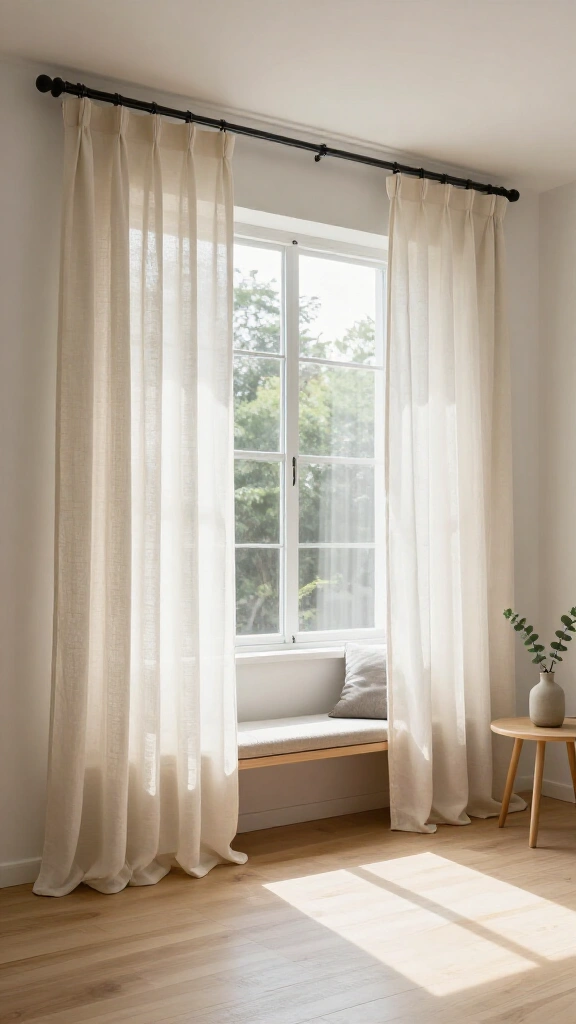
Mount curtain rods close to the ceiling and extend them beyond the window frame if you have enough wall space. The higher placement draws the eye upward, and the extra width lets you pull the curtains away from the glass during the day.
Choose lightweight curtains for an airy look, or add a lining if you want more privacy and control over the light.
3. Choose furniture with exposed legs
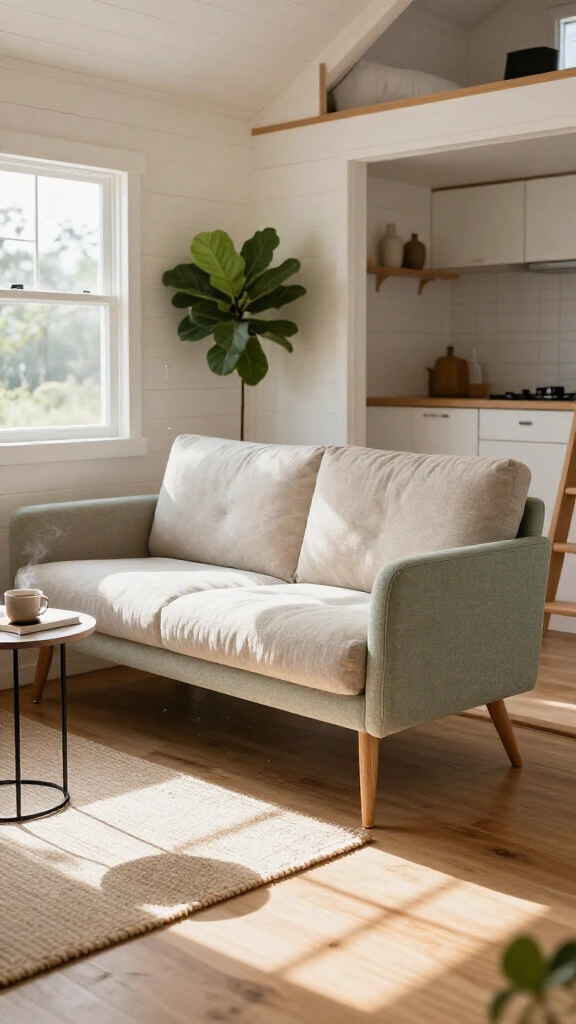
A sofa or chair with slender, visible legs leaves more floor in view and makes the room feel lighter. You still get a comfortable seat, but you can see the space underneath it.
Check the construction first. A lovely chair loses some of its appeal if it wobbles every time you reach for your coffee.
4. Add a mirror where it reflects light

Place a mirror across from or near a window to reflect daylight and bring another view into the room. Even a modest mirror can make a narrow entryway or small living area feel less closed in.
Check what the mirror reflects before you hang it. If it faces a cluttered shelf, you’ll see that clutter twice.
5. Swap bulky tables for nesting tables

Nesting tables give you extra surface space when friends visit, then tuck together when you need more room on the floor. Keep the smallest table beside a chair or pull it out for snacks, books, or a laptop.
Look for lightweight tables with rounded corners to make tight walkways easier to navigate.
6. Float shelves above everyday furniture

Install floating shelves above a desk, sofa, or doorway to use the wall space without adding another cabinet to the floor. Arrange a few useful objects alongside a small plant or framed print, and leave some space between them.
Check the load: Follow the shelf manufacturer’s weight limits and use wall anchors or studs that can support what you plan to store.
7. Pick a storage ottoman with multiple uses
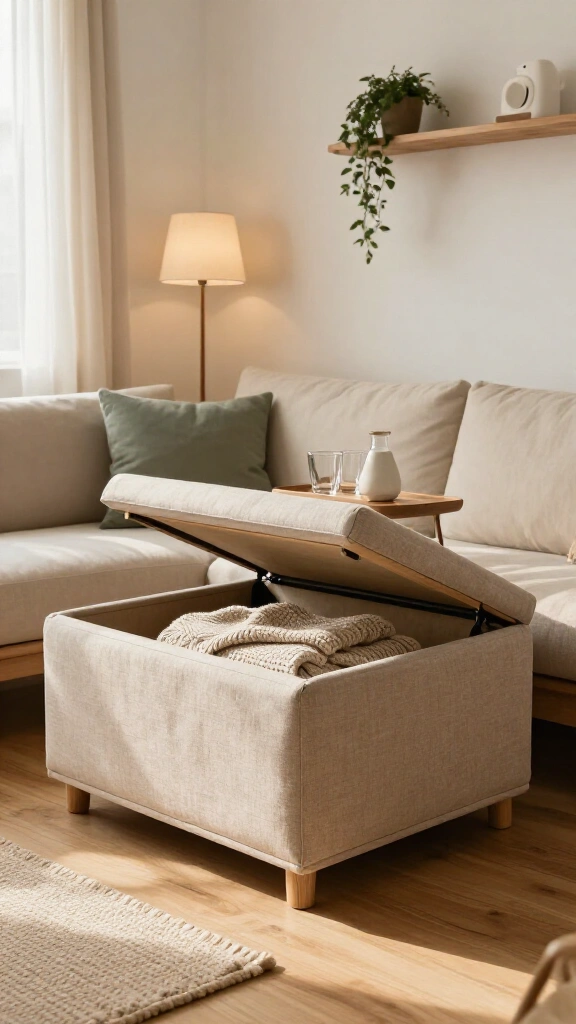
A storage ottoman can hold blankets, give you a place to put your feet up, and support a tray of drinks. It packs several uses into one piece of furniture, which makes it a good fit for a tiny living room.
Before you buy, measure the space the lid needs to open and make sure you can walk comfortably around the ottoman.
8. Use a fold-down dining table
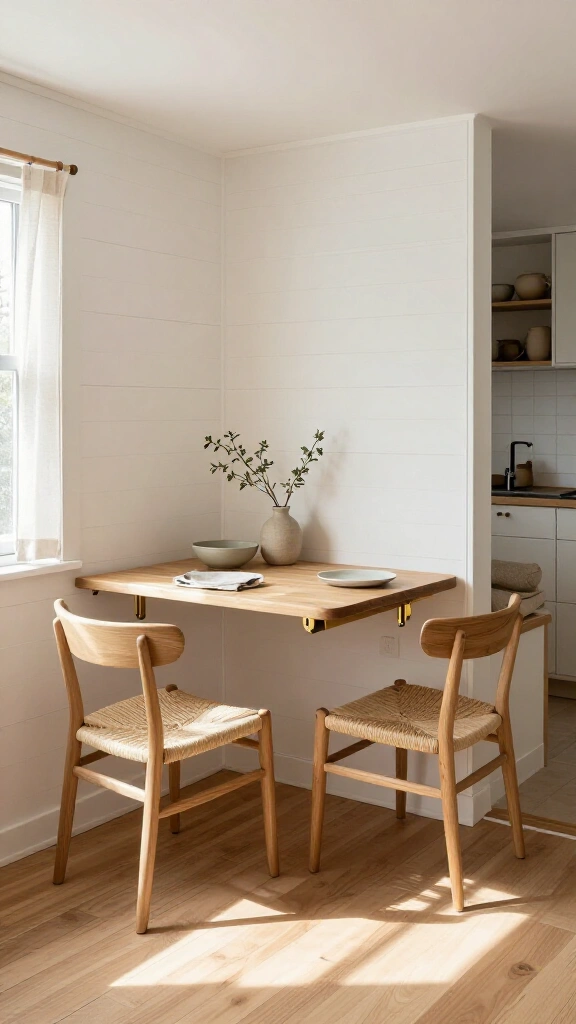
A wall-mounted drop-leaf table gives you a place to eat or work without taking up floor space all the time. Fold it down after dinner, then slide a pair of slim chairs against the wall or into a nearby closet.
Choose hardware that suits your wall construction and can support the weight you expect the table to carry.
9. Keep window treatments simple
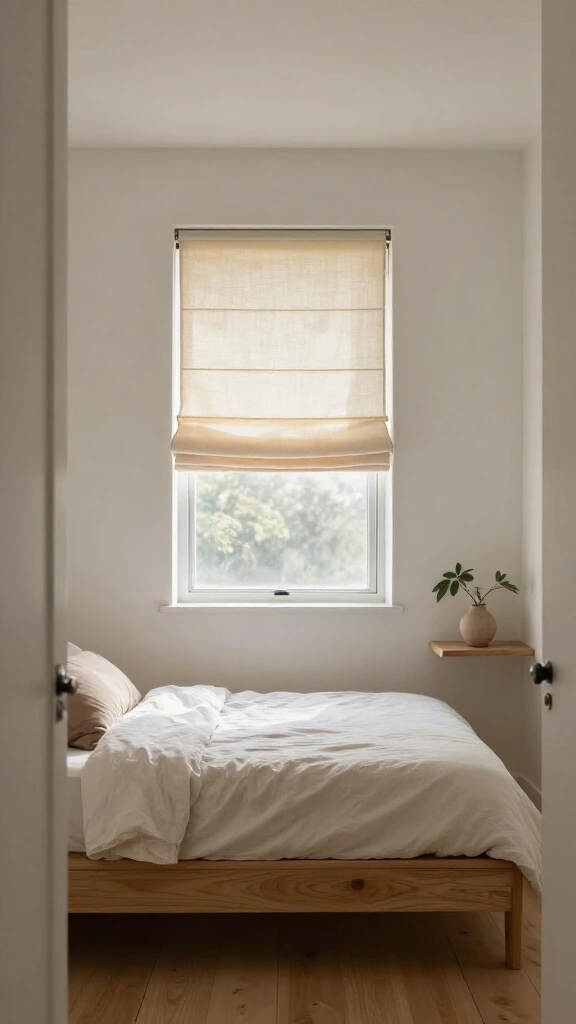
Roller shades or Roman shades provide privacy without surrounding a small window with heavy layers of fabric. Pick a color close to the wall color for a quiet look, or choose a subtle texture to add warmth.
In a bedroom, consider light-blocking fabric if streetlights or early morning sun interrupt your sleep.
10. Layer lighting instead of relying on one fixture
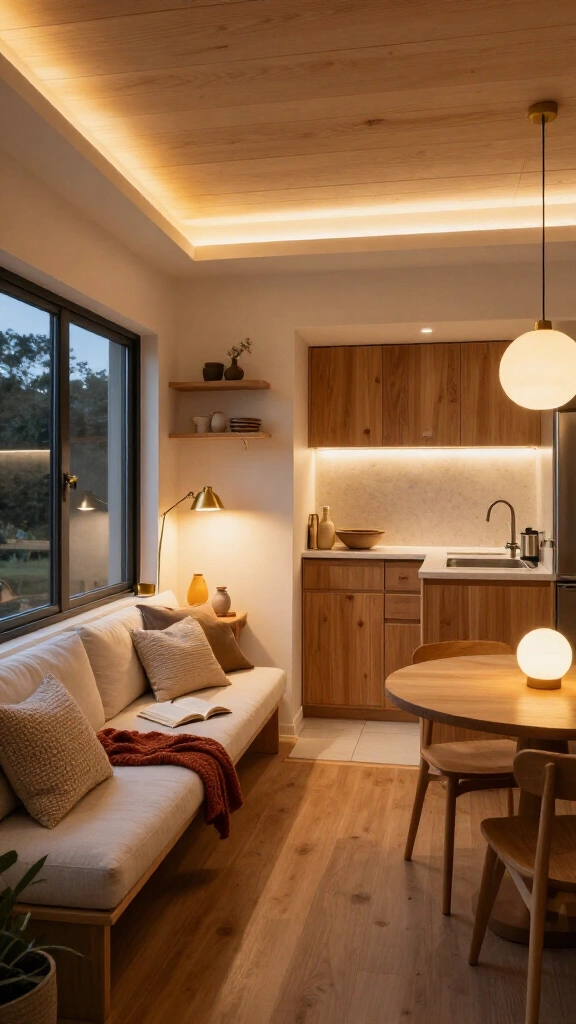
Combine ambient lighting with a reading lamp and focused lighting for kitchen tasks. Separate lights let you use one room for different activities without lighting every corner to the same level.
Choose LED bulbs with a warm color appearance for a cozy feel, and compare brightness in lumens rather than watts. The U.S. Department of Energy’s LED lighting guide explains the basics.
11. Create a cozy nook with a wall sconce
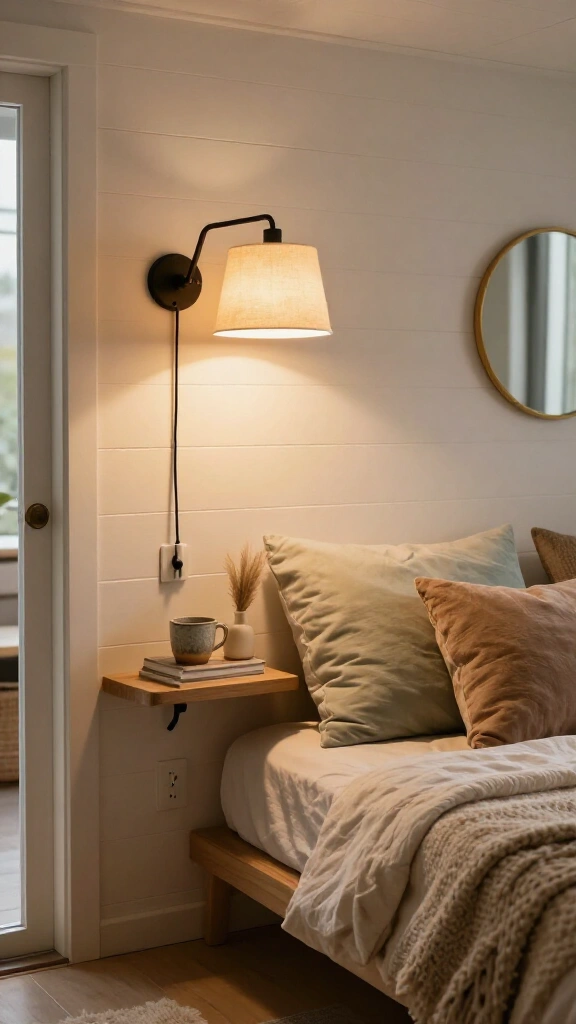
A wall sconce frees up space on a bedside table and may even let you skip the table altogether. Place one beside a bed, reading chair, or small sofa to give that spot its own light.
A plug-in model offers flexibility without new wiring. Keep the cord tidy and follow the manufacturer’s installation and electrical instructions.
12. Decorate vertically with tall bookcases
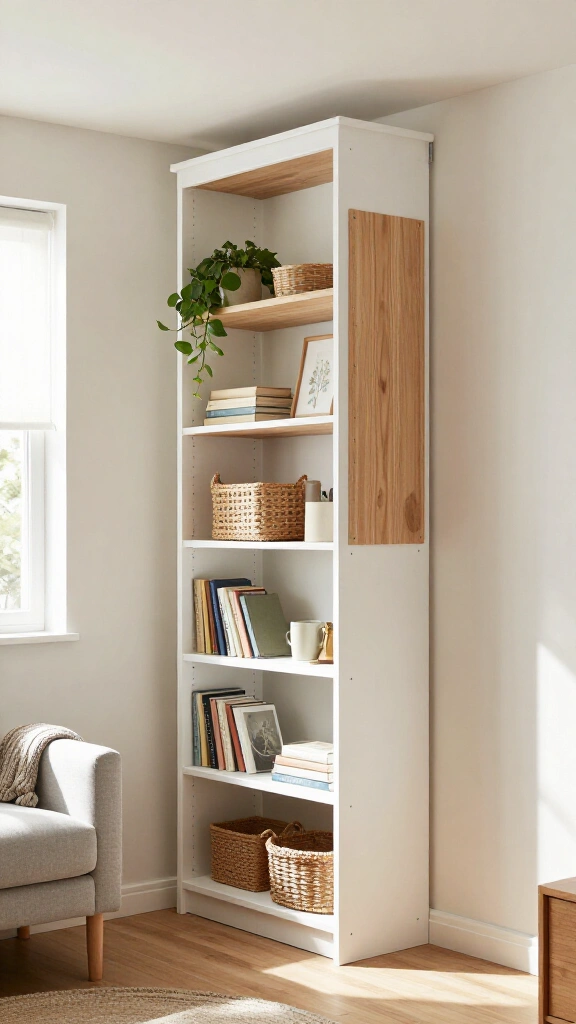
A tall, narrow bookcase gives you storage up the wall without taking up much floor space. Keep everyday items within comfortable reach, and use the higher shelves for lightweight things you reach for less often.
Anchor tall furniture securely to the wall, especially if children live in your home. The U.S. Consumer Product Safety Commission’s Anchor It campaign offers practical guidance on preventing tip-overs.
13. Choose a rug that fits the room

A rug that fits the space can define a living area without a divider. In a small seating area, try one that reaches at least beneath the front legs of the sofa and chairs.
A rug that sits on its own in the middle of the floor can leave the furniture looking disconnected. Measure the area first, and use tape to mark the dimensions if you’re unsure.
14. Give your bed drawers underneath

Put low drawers or lidded bins under the bed to store spare linens, seasonal clothes, or extra towels. Matching containers give the space a calmer look, especially if you can see them from the rest of the room.
Leave enough clearance to open each drawer fully, and check for dampness before you store fabrics for long periods.
15. Try a daybed in a multipurpose room
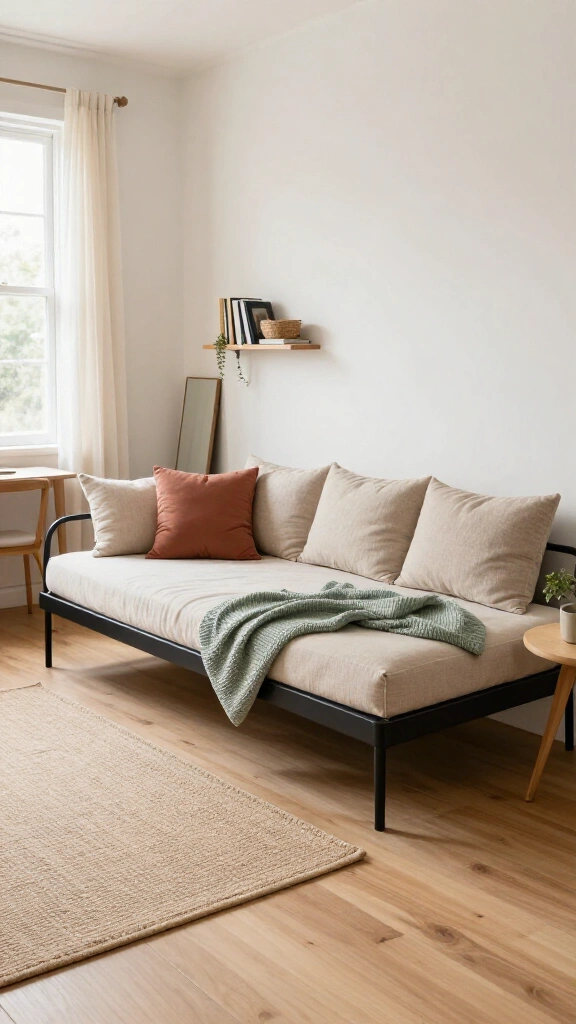
A daybed can work as a sofa during the day and a bed at night. Add supportive back cushions and a washable throw to give it a relaxed living room look.
If possible, test the mattress and seating depth before you buy. Space-saving furniture should suit the way you live, even if a photo online makes it look clever.
16. Make the most of your entryway
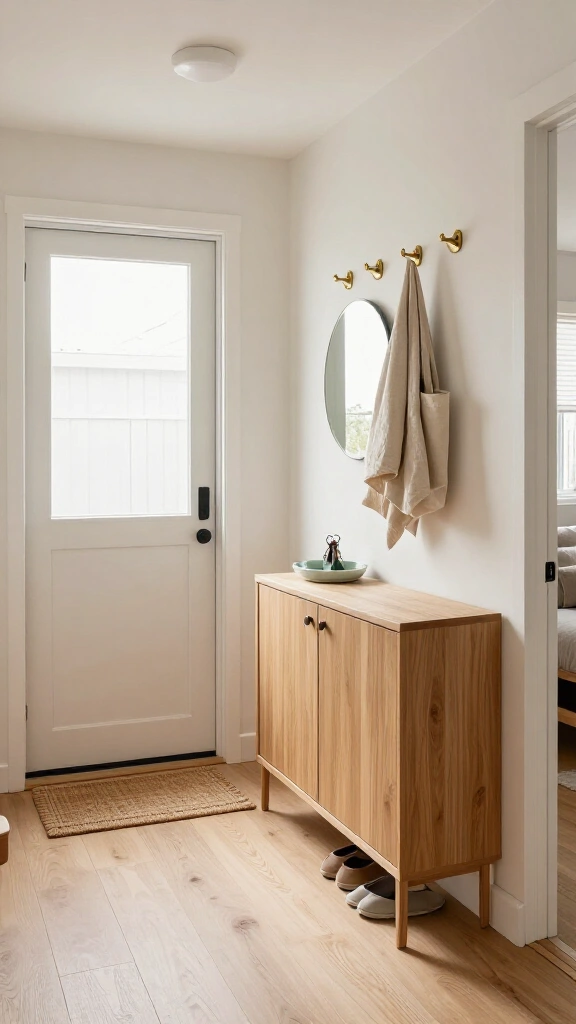
Give keys, shoes, and coats a home near the door. A slim shoe cabinet, a few wall hooks, and a small catchall tray can stop everyday clutter from spreading through the house.
Keep the doorway and exit route clear. Even a charming entryway gets old when everyone has to squeeze sideways to leave.
17. Use baskets to soften open storage

Gather chargers, pet supplies, or cleaning cloths in baskets that fit your shelves. Natural fibers add texture, and baskets with consistent shapes can make open storage look tidier.
Label the baskets if you can’t tell what’s inside. You’ll save yourself the trouble of searching through each one when you need something.
18. Add a rolling kitchen cart

A narrow rolling cart can give you prep space, hold pantry staples, or sit beside the dining table when you need another surface. Choose locking wheels so the cart stays put while you work.
Measure your walkways before shopping, and position the cart where it won’t block appliance doors. A smaller cart that moves easily will cause less frustration than a larger one you have to dodge.
19. Hang kitchen tools on a rail
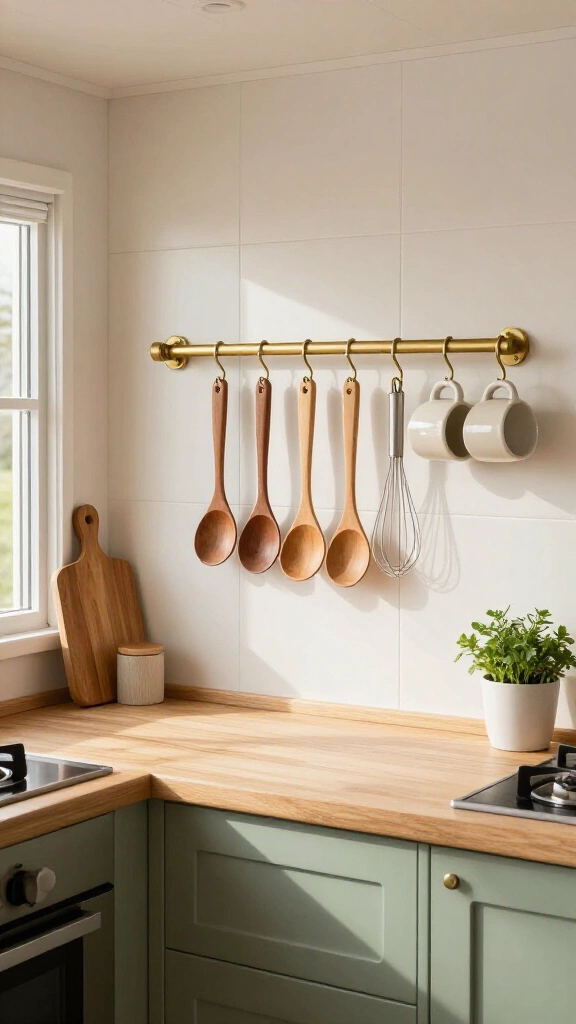
Mount a rail or hooks where you can reach the utensils you use most without crowding the counter. A few wooden spoons or mugs can look good on display and leave drawer space for less attractive essentials.
Keep hanging items away from burners and follow appliance clearance instructions. Make sure the arrangement works safely before you settle on how it looks.
20. Use clear containers selectively

Clear containers make pantry staples easy to find and let you see when supplies run low. Choose stackable containers that fit your shelves instead of buying a giant matching set first.
Keep the original cooking instructions and expiration information somewhere you can find them. For foods that spoil easily, follow the package storage directions rather than assuming every jar belongs on an open shelf.
21. Turn a staircase into useful storage
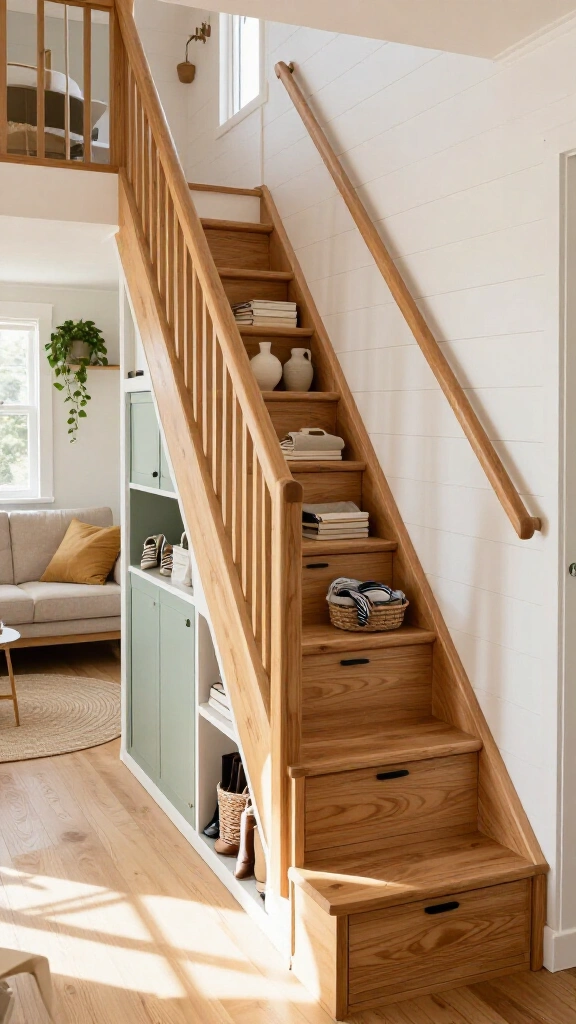
If your tiny house has stairs, consider adding drawers, cubbies, or cabinets underneath. You can store shoes, books, or household supplies there without adding another piece of furniture.
For a new build or renovation, consult a qualified professional before you alter the staircase. Keep handrails and treads safe to use, and maintain required clearances.
22. Define zones without building walls
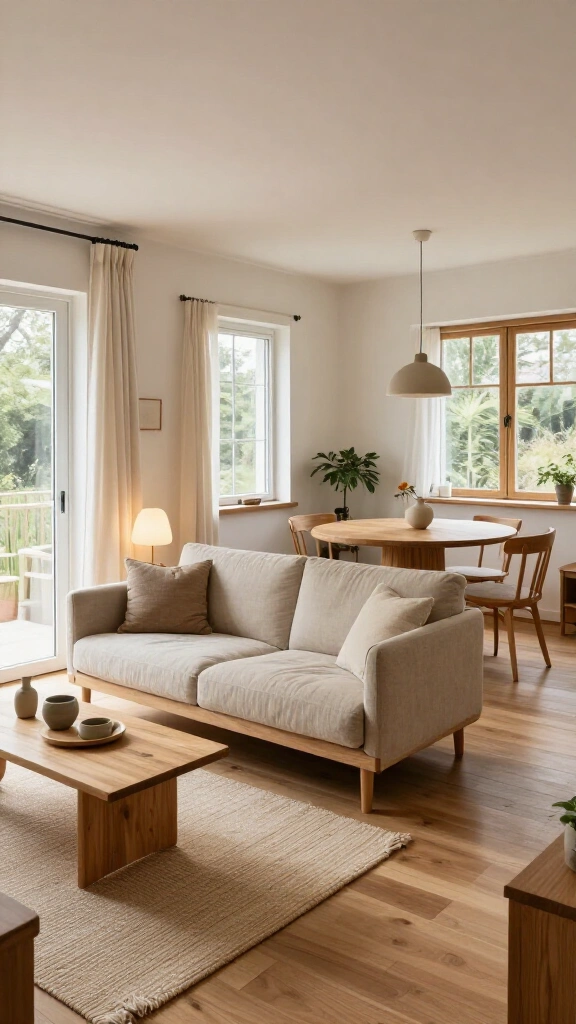
Use a rug, a change in lighting, or the back of a sofa to separate the living area visually from the dining space. These cues give an open-plan tiny house some structure while keeping sightlines clear.
If you want more privacy, try a ceiling-mounted curtain. You can pull it fully open when you want the room to feel connected again.
23. Bring in plants without sacrificing floor space
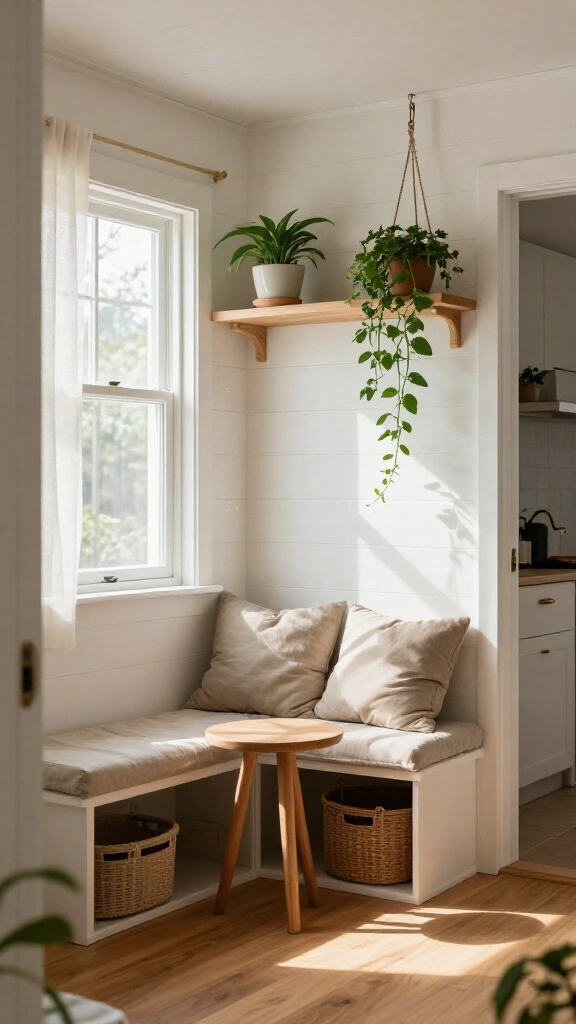
Put a small plant on a high shelf or hang one near a bright window to bring some color and life into the room. Choose a plant that suits the available light and the amount of watering you’re willing to do. Both matter more than a perfect Pinterest photo.
If you share your home with pets or young children, check whether a plant is toxic before bringing it inside. Protect surfaces from water drips, too.
24. Choose larger art instead of many tiny pieces

One generous print can give a small wall a focal point without crowding it. Choose artwork that picks up a color from the room, then leave enough empty wall around it so it stands out.
If you love a cozy, collected look, borrow texture and relaxed styling ideas from these Nancy Meyers living room details.
25. Keep bathroom counters mostly clear

Move backup toiletries into a cabinet or basket, and leave only the things you use daily beside the sink. A small tray can keep soap and hand cream together in one tidy spot.
Add hooks where towels can dry between uses. You can also explore these laundry room decor ideas and adapt the storage ideas to your space.
26. Decorate seasonally with easy swaps
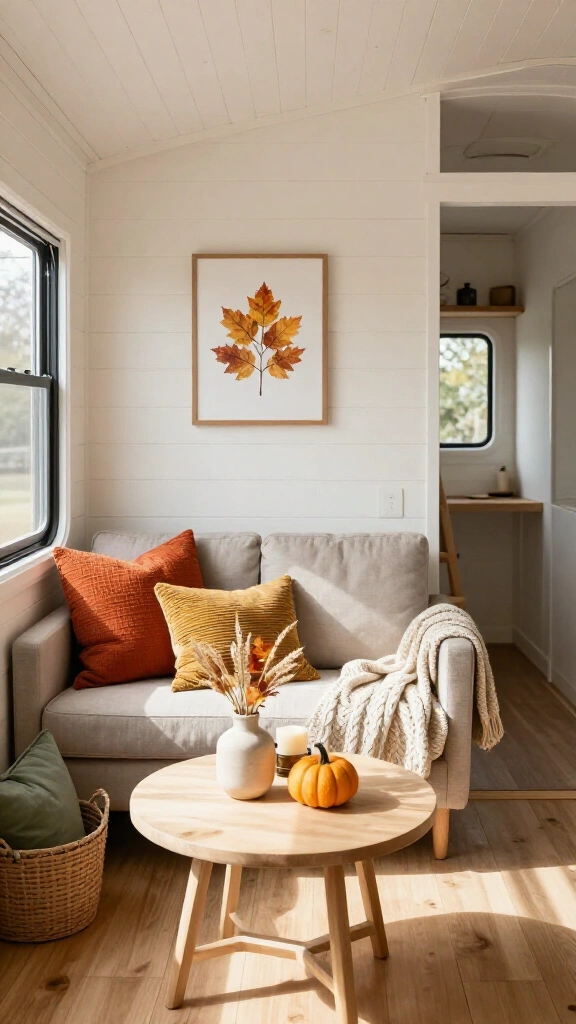
Change a pillow cover, a small print, or a table arrangement instead of storing a whole new set of decor for every season. You’ll give the room a fresh look without filling the closet with decorations.
For festive ideas that fit tight quarters, take a look at these small-space Christmas decor ideas.
27. Leave a little empty space

Resist the urge to fill every shelf, corner, and tabletop. A clear surface gives your eyes a place to rest and leaves room for the things you need during the day.
Start with one cluttered spot: remove everything, put the essentials back, and return only the decor you enjoy. Choose to leave some space empty rather than looking for something else to fill it.
Make your tiny house feel like home
Good tiny house decor looks pleasant and supports your daily habits. It also keeps walkways comfortable and makes storage easier to use. Start with one change: add a mirror, swap a bulky table, or clear a crowded counter.
You can create a welcoming home without more floor space. Give your favorite things room to shine, and think carefully about what else you bring in.