You sit down to finish an urgent project, but five minutes in, you find yourself folding laundry or staring at a dusty baseboard. You grab your laptop, tell yourself you will power through your task list, and then spend twenty minutes scrolling on your phone. Physical surroundings shape mental endurance. You can turn an empty bedroom corner or hallway nook into an effective workstation with clear boundaries.
Setting up a productive workspace does not require a spare room or a massive budget. Practical styling, direct lighting, and simple organization can turn dead space into an area where you get things done. Here are 27 study room ideas that balance function and clean design.
1. Floating corner desk

Swap a four-legged desk that consumes floor space for a wall mounted option. Secure a custom triangular or L-shaped desktop straight into the wall studs. This clears floor space underneath and makes the room feel open.
Anchor the wood slab with heavy hidden steel brackets so the desk can hold two monitors safely. Keep your desktop clear by mounting a wire basket underneath for your surge protectors and power cords.
2. Vertical slat wall divider

If you need visual boundaries in an open living room, install a floor-to-ceiling wood slat partition. This structure defines an office area without blocking daylight or air circulation.
Vertical oak or walnut slats absorb stray household noise while breaking up flat drywall. Stain the wood in a darker tone than your drywall to give the corner distinct contrast.
3. Biophilic greenery grid

Add indoor plants to your workstation using a vertical wall grid. Mount wire mesh panels on the wall and hang potted pothos or snake plants from metal clips. Research from the American Psychological Association shows that views of nature reduce mental fatigue and improve concentration.
Self-watering pots keep moisture away from your keyboard and computer cords. The foliage softens sound reflections across the room and breaks up long blocks of screen time.
4. Pegboard organization wall

Use vertical wall space by hanging a wide wood or steel pegboard above your desk. Slot in small shelves, brass hooks, and cups to store scissors, pens, and chargers within reach.
Paint the pegboard dark charcoal to frame the workspace clearly. You can shift the pegs and bins around whenever your workflow changes without putting new holes in your drywall.
5. Warm layered task lighting

Avoid working under harsh overhead ceiling fixtures alone. Place an adjustable desk lamp beside your monitor and run a warm LED strip behind the edge of your desk. Recommendations from the Mayo Clinic note that balanced, glare-free light reduces eye strain during long desk shifts.
Choose bulbs rated between 3000K and 4000K to stay alert during the day. Dimmable switches let you dial down brightness when you work into the night.
6. Monochromatic color blocking

Separate your study corner from the rest of the room with targeted paint. Paint a solid rectangle or wide arch of navy, olive, or terracotta behind your desk and extend it up to the ceiling. This visual boundary separates your work zone from living areas.
Paint your wall shelves the exact same color to give the setup a custom, built-in look. You only need a single quart of paint and a roll of painter tape to finish the job.
7. Built-in alcove bookcase

Turn an unused wall recess beside a chimney or hallway closet into a compact work zone. Mount thick pine shelves from the ceiling down to desk height, then fit a custom work surface into the base of the opening.
Stack your reference manuals and notebooks between bookends and small pottery. This layout borrows from functional small house storage strategies that get double utility out of awkward wall indents.
8. Floor-to-ceiling cork wall

Small bulletin boards fill up too quickly. Line an entire wall section with thick, self-adhesive cork tiles instead. Pin reference sheets, project timelines, design mockups, and notes directly into the wall surface.
The thick cork also absorbs room echo, which helps during audio calls. Frame the outer edges with flat wooden molding to give the installation clean edges.
9. Ergonomic statement seating

A cheap desk chair ruins your lower back during long sessions. Pick an ergonomic model upholstered in textured fabric or saddle leather rather than generic black mesh. Select a chair with firm lumbar adjustment and movable armrests.
Your chair defines the look of the entire desk nook. Pick a profile that matches your room furnishings so the corner looks like a natural extension of the home.
10. Minimalist floating shelves

Mount two white oak floating shelves directly above your desk. Place a potted plant on one side, stack four hardcover reference books, and leave open breathing room on the edges.
This vertical arrangement guides the eye upward, which makes low ceilings feel taller. The clean wood elements reflect organic modern decor, giving the corner a tidy and balanced feel.
11. Light-bouncing accent mirror

If you work in a dark corner, mount an arched mirror on the wall next to your desk. The glass catches ambient window light and redirects it across your work surface. Home decorators regularly use clever mirror decor tricks to brighten tight spaces.
The reflective surface breaks up the feeling of staring into a blank wall for eight hours. Angle the mirror so it reflects an open window or framed print rather than an unmade bed or laundry pile.
12. Under-desk cable concealment

Tangled power cords around your feet ruin the look of an office and collect dust. Screw an enclosed metal raceway to the underside of your desk frame. Bundle monitor cables and laptop cords into zip sleeves so they run as a single clean line.
Press magnetic clips along the table leg to keep phone and tablet chargers within arm reach. Hiding the wires keeps the floor clear so you can stretch your legs without snagging plugs.
13. Textured acoustic felt panels

Cut down street noise and hallway chatter with geometric felt wall tiles. Mount hexagonal tiles in muted tones like olive or charcoal directly onto the wall behind your monitor. Dense felt dampens higher audio frequencies, which improves microphone sound quality during work calls.
Stick them up with removable adhesive strips so you can pull them down later without peeling the paint. This gives renters a reliable sound barrier that also acts as decorative wall texture.
14. Warm neutral area rug

Lay down a flatweave wool rug or a jute runner beneath your desk. A dedicated rug defines the exact boundaries of your work zone within a larger bedroom or shared living area.
Pick a tight, flat weave so chair wheels roll across the surface without bunching the fabric. The floor covering also protects hardwood finishes and insulates cold floors during early mornings.
15. Framed goal board

Replace loose paper collages with a linen pinboard set inside an ash or walnut frame. Pin your core quarterly targets, project deadlines, and relevant sketches in organized rows.
Update the board every three months as you finish projects. It functions as clean wall decor while keeping your priorities front and center every day.
16. Hidden closet office

Convert an unused reach-in closet into a desk nook by taking down the clothes rod. Fit a sturdy butcher block shelf at desk height, paint the back wall dark green, and mount a pair of puck lights overhead.
Hang linen curtains or reinstall bifold doors across the opening. Closing the doors at five o’clock hides your computer screen and lets you disconnect from your workday.
17. Natural wood desk riser

Lift your monitor to eye level with a solid walnut or maple riser shelf. The riser creates open storage below where you can slide your keyboard, trackpad, and notepad when you finish work.
Choose a riser built with cork footpads or cast aluminum brackets to keep the desk stable. Raising the screen stops you from hunching forward over your keyboard all afternoon.
18. Dark accent wall
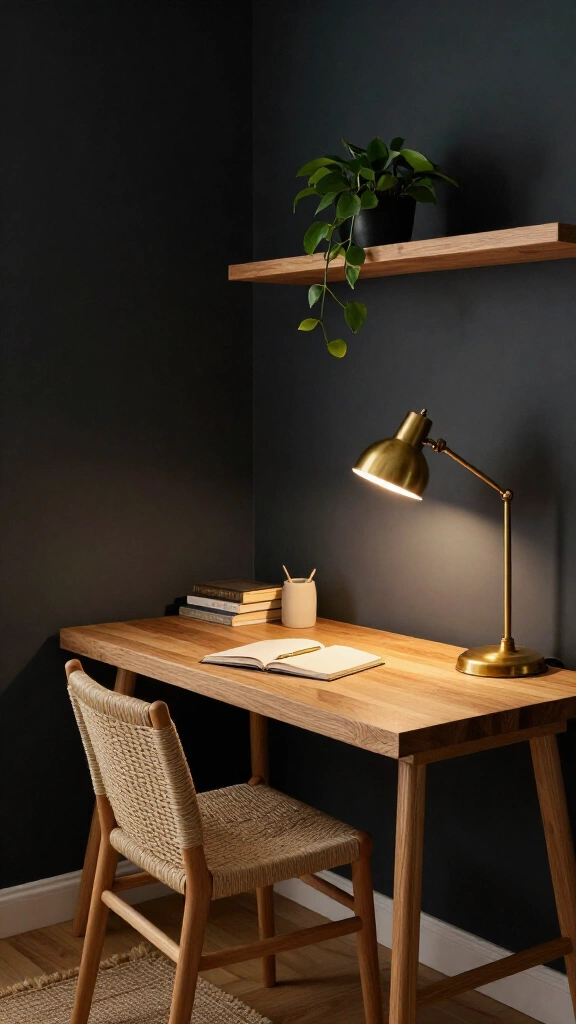
Add visual depth to your study area by coating the walls in charcoal, dark slate, or midnight teal. Dark paint softens sharp room corners, which can make small spaces feel deeper rather than cramped.
Balance the dark paint with brass task lamps and unstained oak furniture so the nook stays inviting. The deep color wraps around the desk to help you tune out visual distractions in the rest of the room.
19. Rolling utility cart

If your desk has no built-in drawers, roll a three-tier metal cart alongside your chair. Put heavy manuals on the bottom tray, notebooks in the middle, and pens or hard drives up top.
Wheel the cart into a closet when company comes over or when you need floor space. This simple storage piece fits easily into studio apartments and shared rooms.
20. Monitor light bar

Save table space by mounting an LED light bar across the top frame of your screen. These fixtures point light downward onto your desk and keyboard without throwing harsh glare onto the display glass.
Switch between bright daylight white for morning research and softer amber for evening work. A monitor bar clears off the corner of your desk where a standard lamp base normally sits.
21. Window sill perch desk

Take advantage of natural daylight by mounting a deep timber board over an existing window sill. Facing your chair toward the outdoors gives your eyes distant focal points between screen tasks.
Exposure to daytime light supports healthy sleep rhythms, according to the Sleep Foundation. Install sheer roller shades to cut down harsh direct glare when the sun sits overhead.
22. Scent diffuser station

Use scent cues to signal that work has started. Place a compact ceramic diffuser on a shelf beside your desk, adding drops of rosemary or citrus oil when you begin a study block.
Distinct scents help build associative memory and trigger focus routines. Running the diffuser provides an easy ritual to start your workday with intention.
23. Japandi low-profile bookshelf

Place a low, horizontal wooden bookshelf along the wall next to your desk. Light, untreated birch or ash keeps the room feeling calm and open.
Slide woven seagrass baskets into the lower shelves to store loose cables, hard drives, and extra stationery. The low height leaves the upper wall open, which prevents a small study corner from feeling boxed in.
24. Framed architectural art prints

Skip motivational wall posters with generic quotes. Hang black-and-white architectural photographs, mechanical blueprints, or clean geometric drawings instead.
Set the prints inside slim metal frames fitted with wide white matting. The structured, linear designs bring visual order and polish to your workspace.
25. Fold-down murphy desk

If you need your work area to disappear at the end of the day, mount a fold-down secretary cabinet to the wall. Release the front latch, and the hinged panel drops down into a rigid writing table.
The interior cubbies hold your notebook, pens, and charging cables. Fold the front panel back up in the evening to restore your bedroom or dining area to its original state.
26. Dedicated drink station

Fewer kitchen breaks mean fewer interruptions to your focus. Set up a compact electric kettle on a side table near your desk alongside a mug and two jars of loose tea or pour-over coffee.
Place a stone slab or tile tray underneath the kettle to shield your table from water marks. Keeping hot drinks within arm reach lets you stay in your work groove without wandering through the house.
27. Tactile desk pad and coasters

Cover your desktop center with a wide wool felt or leather desk mat. A sturdy mat protects the desk surface, softens typing fatigue on your wrists, and muffles keyboard clatter.
Add a solid slate coaster for your mug and a small brass tray for your pens. These simple materials make your workspace feel cohesive and intentional.
You do not need a lot of square footage to build a functional workspace. You need clear organization. By combining practical wall storage, direct lighting, and durable materials, you can turn any unused corner into a dedicated work retreat. Pick two or three adjustments that fit your layout and build out your corner this week.