Your room measures 9 by 10 feet, and your furniture acts like it measures 15 by 20. Sound familiar? Small room decor doesn’t mean squeezing in less. It means tricking the eye with light and height, and choosing each piece carefully. These 27 ideas give you a full toolkit, so grab a coffee and start picking your favorites.
1. Paint the walls a light, airy neutral
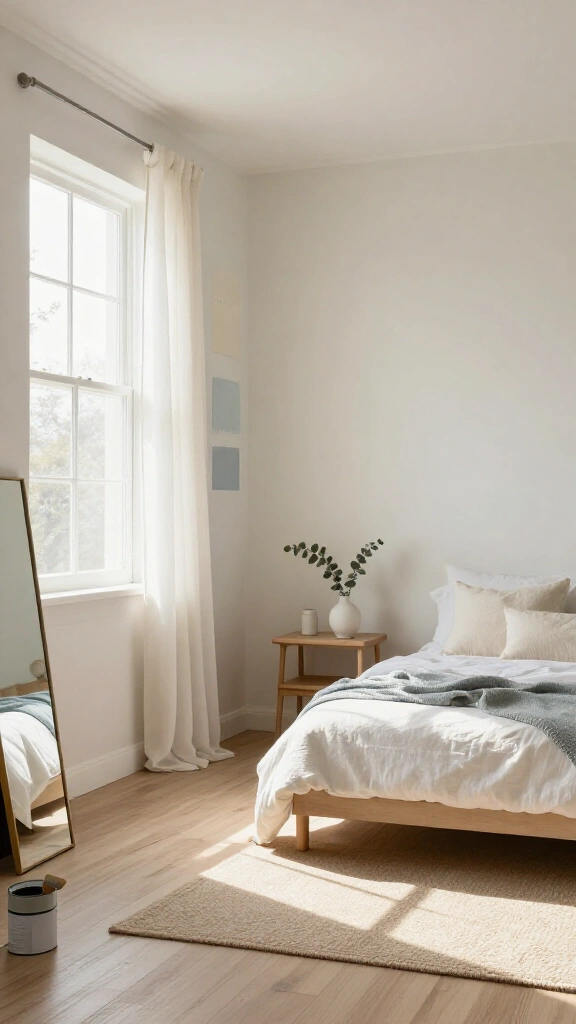
Light colors bounce light around the room, and that makes walls seem to retreat. Soft whites, warm creams, pale greige, and misty blues all work well. Test two or three swatches on the wall and check them morning and night, because daylight changes everything. Major paint brands like Sherwin-Williams offer color visualizers that spare you a costly mistake.
2. Hang a large mirror across from a window

This is the oldest trick in the small-space book, and it still works. A big mirror reflects daylight and the view, so it looks like a second window. Lean an oversized floor mirror against the wall for a relaxed look. Skip the tiny decorative mirrors, because they barely register.
3. Hang curtains high and wide

Mount your curtain rod just below the ceiling, or even a few inches above the window frame. Your eye travels upward and reads the walls as taller. Extend the rod past the window edges so the curtains frame the glass without covering it. Floor-length panels finish the look.
4. Pick furniture with visible legs

Chunky, skirted sofas sit on the floor like heavy boulders. Leggy furniture lets you see the floor underneath, and more visible floor makes the room feel more open. Look for sofas, chairs, and dressers that sit at least 6 inches off the ground. Slim tapered legs in wood or metal also bring a mid-century touch.
5. Choose multifunctional furniture

Every piece in a tiny room should earn its square footage. A storage ottoman works as a footrest and extra seating, and it hides your blankets. A lift-top coffee table doubles as a desk. Why buy three items when one does all three jobs?
6. Go vertical with shelving

When floor space runs out, use the walls. Tall, narrow bookcases and floating shelves pull the eye upward and give you storage without a big footprint. Fill the lower shelves with practical items and save the top ones for lightweight decor. Leave a little breathing room between objects so the shelves don’t look crammed.
7. Layer your lighting

One harsh overhead bulb makes a small room feel like an interrogation chamber. Instead, combine ambient, task, and accent lighting. Add a floor lamp in a corner, a small table lamp, and maybe a plug-in wall sconce. The U.S. Department of Energy says LED bulbs use far less energy than old incandescent ones, so you can light every corner without dreading the bill.
8. Commit to a monochromatic palette

When the walls, rug, and sofa share one color family, the eye doesn’t stop and chop the room into pieces. Vary the shades and textures to keep it interesting. Think oatmeal, sand, and ivory rather than one flat beige. The room ends up looking calm and intentional.
9. Add glass or acrylic pieces

See-through furniture takes up almost no visual space. A glass coffee table or acrylic accent chair lets the eye pass straight through. Glass shows fingerprints like a crime scene, so keep a microfiber cloth nearby.
10. Mount a wall desk or floating nightstand
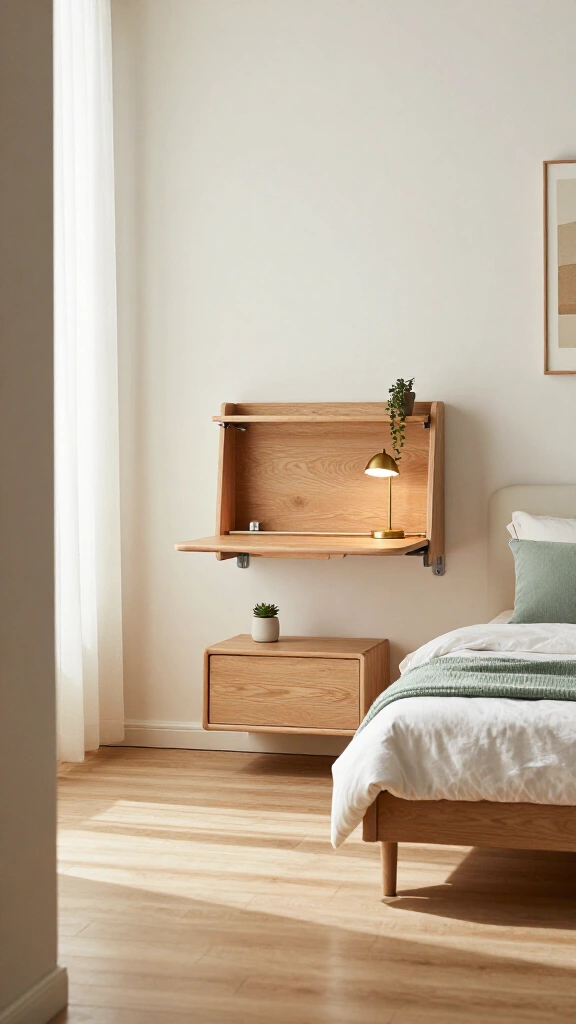
Wall-mounted furniture frees up the floor entirely. A fold-down desk disappears when you finish work, and a floating nightstand keeps your bedside clear. Visible floor area is one of the quickest ways to make a room feel bigger. Anchor everything into studs for safety.
11. Size your rug correctly

A tiny rug floating in the middle of the room makes the space look choppy. Choose a rug large enough that at least the front legs of your furniture rest on it. That ties the seating area together and stretches the floor visually. Light, low-pile styles work best.
12. Hide the clutter in closed storage

Clutter shrinks a room faster than any paint color can expand it. Closed cabinets, lidded baskets, and storage benches keep the visual noise down. Open shelves look pretty only when you style them. Be honest: do you really want your tangled chargers on display?
13. Choose one oversized piece of art

Many people assume small rooms need small art. The opposite often works better. One large piece creates a bold focal point, while a scatter of tiny frames adds visual clutter. Hang it at eye level and let the wall breathe around it.
14. Use sheer window treatments

Heavy drapes swallow light and make walls feel closer. Sheer or light-filtering fabrics keep your privacy while the sun pours in. Linen-look panels in white or soft taupe feel airy and relaxed. If you need blackout for sleeping, hang a thin blackout liner behind the sheers.
15. Store things under the bed

That space under your bed is prime real estate. Slide in flat bins for off-season clothes, shoes, or extra bedding. A bed frame with built-in drawers can replace a bulky dresser entirely. Raise the frame with risers if you need even more room.
16. Paint or treat the ceiling like a fifth wall

A bright white or very pale ceiling reflects the most light and makes the room feel taller. Some designers go the other way with a soft sky blue for an open-air effect. Either way, don’t ignore the ceiling. It covers a huge surface area.
17. Choose round and curved furniture

Sharp corners jab into walkways, and your shins know it. Round tables and curved sofas keep traffic flowing and soften the room’s lines. A round pedestal table also seats two people in a spot where a square one would hog the space. In my view, a small round coffee table beats a rectangular one every time.
18. Bring in greenery

Plants add life without eating floor space. Hang them from the ceiling or place them on high shelves to draw the eye upward. Pothos, snake plants, and ZZ plants forgive beginners and tolerate low light.
Skip the giant floor planter
A tall fiddle-leaf fig looks great, but it demands a lot of floor and a lot of attention. Stick with compact options in tiny rooms.
19. Use the back of doors

Doors work as hidden storage walls. Hang an over-the-door organizer for shoes, accessories, or cleaning supplies. Add slim hooks for bags and robes. You gain storage without losing an inch of floor.
20. Keep flooring consistent and light

Continuous flooring removes visual breaks and lets the space flow. Light wood tones or pale laminate make the floor look wider. If you can’t replace your floors, a large, light rug helps a lot. Dark, patchy flooring does the opposite.
21. Pick foldable or convertible pieces

Drop-leaf tables, nesting tables, and folding chairs appear only when you need them. Hosting four friends in a studio? Pull out the extra seats, then tuck them away at the end of the night. A sleeper sofa turns your living room into a guest room.
22. Create a single focal point

Too many competing features make a room feel chaotic. Pick one star, such as a statement headboard, a bold light fixture, or a large piece of art. Let everything else play a supporting role. For more layout inspiration, check out our guide to small living room decor ideas.
23. Add metallic and reflective accents
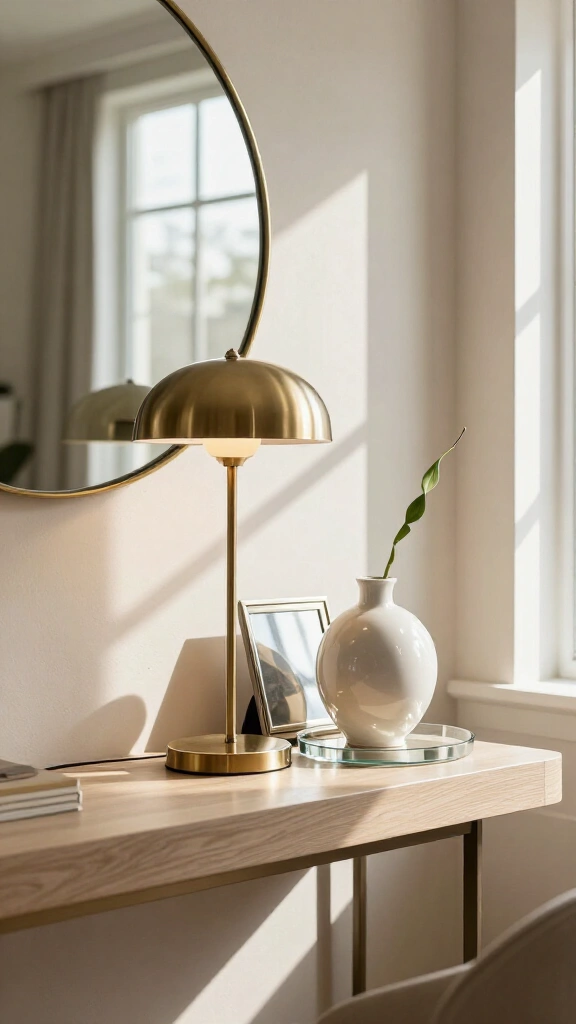
Brass lamps, chrome frames, and glossy ceramics catch and scatter light. A few shiny pieces add depth without adding bulk. Keep it to a handful of accents so the room feels polished, not like a jewelry store.
24. Try vertical stripes or tall patterns

Vertical lines draw the eye up, which makes ceilings look higher. Use them on an accent wall, in curtains, or on the back panel of a tall bookcase. Keep the stripes thin and low-contrast. Bold, thick stripes can overwhelm a small room fast.
25. Put corners to work

Corners often sit empty, which wastes useful space. Tuck in a corner shelf, a reading chair, or a slim floor lamp. A corner desk can also turn dead space into a home office. Even a tall plant looks good there.
26. Limit patterns and layer textures instead

Too many patterns make a tiny room feel busy. Stick to one or two patterns, then add interest through texture. Mix a chunky knit throw, a linen pillow, and a smooth ceramic vase. You get depth without visual noise.
27. Scale down seasonal decor

Holiday decor can take over a small room before you notice. Choose a few meaningful pieces instead of covering every surface. Our small Christmas decor ideas show you how to add cheer without clutter, and our small table Christmas decor ideas suit tight dining spots. Need more inspiration? Architectural Digest regularly runs clever small-space designs.
Final thoughts: small rooms, big personality
A tiny room doesn’t limit your style. It just asks you to make smarter choices. Start with the big wins: light paint, a large mirror, high curtains, and furniture with legs. Then layer in storage and lighting, and finish with texture.
You don’t need to try all 27 ideas at once. Pick three, test them this weekend, and watch your space open up. Which one will you try first?