A tiny entryway has a big job. It welcomes guests, catches your keys, and somehow has to accommodate everyone’s shoes. A few thoughtful choices can make that little landing spot feel calmer, brighter, and more inviting.
These small entryway decor ideas pair practical storage with room to breathe. Choose what works for your space, whether you have a narrow hallway, a compact foyer, or a front door that opens straight into the living room.
1. Hang a mirror to bounce light around

A mirror reflects daylight and can make an entryway feel more open. Hang a round or arched mirror where it can catch light from a window, or place one above a slim console for a quick outfit check. Choose a frame that echoes your door hardware to tie the look together.
2. Choose a narrow console table

A slim console gives keys and mail a home without crowding the walkway. Measure the available depth before you shop, and make sure the door can swing freely past it. Set out a small tray and a lamp or vase, then leave some surface space clear.
3. Install wall hooks instead of a coat rack

Wall hooks hold coats and bags without taking up floor space. Arrange a few sturdy hooks in a row, and leave enough room between them for bulky jackets. Use anchors or fasten the hooks into studs according to the manufacturer’s instructions, especially if you plan to hang heavy bags.
4. Add a bench with hidden storage

A compact storage bench gives you somewhere to sit while you pull on your shoes and somewhere to stash the pairs you wear most. Look for a lift-top design or open cubbies, depending on what suits your routine. A washable cushion makes the seat more comfortable without adding much fuss.
5. Define the space with a runner

A narrow runner draws the eye into your home and gives a plain entryway some personality. Choose a low-pile material that you can clean easily after muddy shoes cross it, and add a non-slip rug pad. Before you buy, check that the door clears the rug when you open it.
6. Float a shelf above the floor

If you don’t have room for a table, a shallow floating shelf can hold your keys, sunglasses, and a small decorative accent while leaving the floor clear. Mount it securely enough to carry the weight you expect, and choose a shallow shelf so nobody bumps an elbow on the way inside.
7. Paint the entryway a light, warm color

Soft white, pale greige, or warm cream can give your entry an airy backdrop without making it feel stark. Test paint samples in the space and check them during the day and at night, since the light will change how the colors look. A washable finish also makes fingerprints near the door easier to clean.
8. Try a bold accent wall

A small entryway doesn’t have to mean beige walls. Give one wall a rich color or a playful wallpaper pattern, then keep nearby furniture simple to balance the space. For more ways to use color with confidence, explore these colorful home decor ideas.
9. Use a slim shoe cabinet

A shallow shoe cabinet keeps footwear out of sight and makes a narrow entryway feel tidier. Check the cabinet’s depth with its doors open as well as closed, so you know you can use it comfortably. Secure tall or tip-prone furniture to the wall; the U.S. Consumer Product Safety Commission offers furniture-anchoring guidance.
10. Layer your entryway lighting

A ceiling light illuminates the whole entryway, while a small lamp or wall sconce adds a softer glow. Choose warm-toned bulbs for a welcoming atmosphere, and compare their brightness before you buy. The U.S. Department of Energy’s LED lighting guide explains bulb efficiency and labeling.
11. Make a tray your drop zone
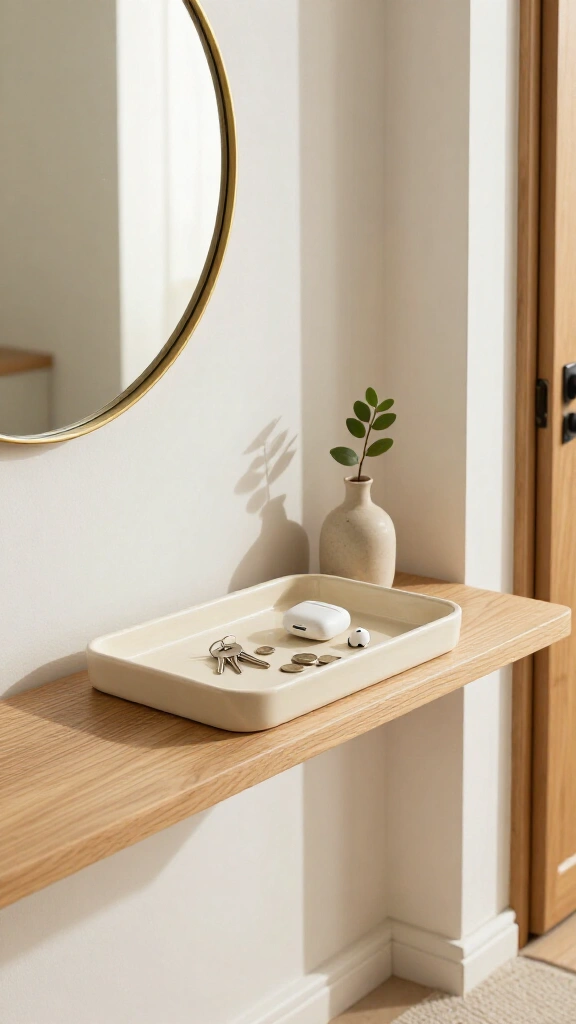
Keys, earbuds, and loose change have a way of wandering. Give them a shallow tray on a shelf or console so they stay together instead of spreading across the room. Pick a tray with a raised edge, and regularly clear out receipts and other pocket clutter.
12. Hang art that draws the eye up

A vertical print or a small stack of framed pieces draws the eye upward and puts empty wall space to use. Choose artwork you enjoy rather than filling the wall for the sake of it. Leave some breathing room around the frames so the arrangement doesn’t feel crowded.
13. Bring in a petite plant

A small plant softens hard edges and brings some life to an entryway. Choose a variety that suits the light near your door, and use a saucer or waterproof planter to protect the surface underneath. If your entry gets almost no daylight, a convincing faux plant makes more sense than a real one that struggles to grow.
14. Create a landing spot behind the door

The wall behind your door may have room for a slim hook rail or a narrow organizer. Open the door fully and measure the clearance before you install anything. Remember to account for the depth of coats or bags, too. A doorstop can protect the wall and keep the handle from hitting your setup.
15. Use baskets to tame everyday clutter

Baskets can corral scarves, dog leashes, and reusable shopping bags. Tuck one under a bench or console, and choose a size that slides out easily when you need it. Keep the categories simple. If everyone has to solve a puzzle to put things away, they probably won’t stick with the system.
16. Pick furniture with open legs

A console or bench with visible legs lets you see more of the floor, which can give a small foyer a lighter look. Put one basket underneath if you need storage, but resist packing every inch. You’ll have useful space without creating a tiny furniture traffic jam.
17. Add a wall-mounted mail organizer

A slim mail organizer keeps envelopes off your console and gives incoming paper a place to land. Choose a design with enough slots for your household, then sort through the contents often. Add a small hook underneath for your keys if the organizer includes secure hardware and you have room.
18. Repeat a simple color palette

Repeat two or three colors across your rug, artwork, and storage pieces to pull the entryway together. You might pair warm wood with cream and black, or mix soft blue with natural woven textures. A consistent palette helps practical items fit into the decor rather than compete with it.
19. Hang a large-scale piece of art

One generously sized artwork can create a focal point without the visual busyness of many small frames. Measure the wall first, and leave enough space around the piece so it doesn’t overwhelm the doorway or nearby furniture. A lightweight print in a slim frame works especially well in a compact space.
20. Build a mini mudroom with a peg rail

A peg rail gives jackets, hats, and bags an orderly home along one wall. Place a narrow bench or shoe tray below it if you have the floor space, and reserve a few pegs for guests. The setup combines small entryway storage with a relaxed look that suits a lived-in home.
21. Choose a fold-down seat

A wall-mounted fold-down seat gives you a spot to put on shoes, then tucks away when you need more clearance. Check the manufacturer’s weight rating and mounting requirements before installation. Make sure you can open the seat without blocking the door or the main path through your entry.
22. Style a cozy corner with texture

A woven basket, a soft cushion, or a wood-framed mirror can add warmth without taking up much space. Mix a couple of textures rather than piling on accessories, especially if your entry already holds lots of everyday gear. Find more welcoming touches in these cozy home decor ideas.
23. Make the front door part of the design

Paint the inside of your front door a fresh color or update the hardware for a noticeable change that takes up no extra floor space. If you rent, check your lease and ask your landlord before painting or replacing fixtures. For an easier seasonal update, try a removable wreath or a small hanging decoration.
24. Edit the space for your real routine

A good tiny entryway suits the way you leave and return home. Notice where you tend to drop shoes, keys, and bags, then place storage within easy reach of those spots. Keep the essentials you use often near the door, and move out-of-season extras elsewhere so the space stays functional and looks good.
Make your small entryway work harder
You don’t need extra square footage to create a welcoming entryway. Give yourself a clear path, practical storage, good lighting, and a few details that make you smile when you walk through the door.
Start with one frustrating problem, perhaps the shoe pile or those missing keys, and solve that first. Then add a mirror, artwork, or a colorful rug that makes the space feel like you. Even the smallest spot in your home can make a memorable first impression.