Step into a snow-dusted Vermont tavern, smell woodsmoke mixing with fresh pine needles, and your shoulders drop within seconds. That quiet comfort defines a classic New England holiday. You do not need an antique Massachusetts saltbox house to capture that historic feel. By using traditional textures, wild greenery, and soft lighting, you can turn any modern living room into an inviting winter refuge.
Skip the plastic tinsel this year. Here is how you can fill your home with authentic, old-fashioned warmth.
1. Dried Citrus and Cinnamon Stick Garlands

Early American homemakers decorated their winter parlors with staples straight from the root cellar and dry pantry. You can string dehydrated orange rounds, whole star anise, and cinnamon sticks together on jute twine in under an hour. When morning sunlight hits the amber citrus slices in a window, they cast a warm, stained-glass glow across the floorboards.
Slice three or four navel oranges thin and bake them at 200°F for roughly three hours until completely dry. Thread them alongside rough cinnamon bark, then drape the finished garland along a bookshelf or over a kitchen doorway. The dry, spiced scent greets your guests the moment they walk through the front door.
2. Fresh White Pine and Cedar Boughs on the Hearth

Few scents capture the northern woods like fresh evergreen cuttings brought inside from the cold. Gather thick boughs of eastern white pine, cedar, and balsam fir, then drape them across your fireplace mantel. Let the branch tips trail down toward the hearth for an untamed, forest-gathered look.
Mist the greenery with cool water every couple of days, or tuck concealed florist water tubes into the main branch stems to prevent needle drop. For historic ideas, explore preservation guides from Historic New England to see how eighteenth-century homesteads displayed seasonal greenery.
3. Single Taper Window Candles in Every Pane

Drive down a rural road in Maine or New Hampshire during December, and you will see a solitary candle burning in every window sash. Centuries ago, farm families placed these tapers to signal warm food and safe shelter to freezing travelers. Battery-powered brass tapers deliver that exact quiet welcome without creating a fire hazard.
Select warm white LED bulbs that replicate the gentle glow of real beeswax. Program your candles on timers so every window lights up automatically the moment twilight settles over the neighborhood.
4. Aged Pewter and Tarnished Brass Table Accents

Colonial tavern keepers favored pewter and brass because both metals survived drafty rooms and heavy daily handling. Gather a small assortment of vintage brass candlesticks and place them down the middle of your dining table to catch the firelight. Skip the metal polish. That dark, aged patina gives the metal its authentic character.
Cluster candleholders of different heights to keep the table arrangement grounded. If you enjoy this collected, heirloom aesthetic, check out our favorite rustic farmhouse Christmas decor ideas to bring more vintage texture into your holiday rooms.
5. Hand-Strung Fresh Cranberry and Popcorn Garland

Threading popcorn onto sewing thread remains one of the simplest holiday projects around. Classic Cape Cod guest houses still drape strands of ruby cranberries and white popped corn over evergreen boughs for a textured, homespun garland.
Fill glass compote dishes or rough wooden bowls with leftover cranberries and float small tea lights on top. You can also work fresh cranberries into simple Christmas coffee table decor trays to build an understated holiday display on your coffee table.
6. Heavy Wool Tartan and Buffalo Plaid Blankets

Drafty timber-frame houses required heavy textiles, and thick wool blankets protected early families through brutal winters. Throw dense wool blankets in traditional patterns like Black Watch, muted hunting green, or red Stewart plaid over the backs of your reading chairs. The substantial fabric creates immediate comfort in chilly rooms.
Store extra rolled blankets in a woven ash basket beside the fireplace so family members can grab them on frosty nights. You can carry this layered warmth directly into your guest room with cozy Christmas bedroom decor that helps holiday visitors settle in comfortably.
7. Hand-Dipped Beeswax Tapers in Stoneware Holders

Electric lamps offer modern convenience, but genuine flame creates true warmth. Early New England families burned hand-dipped beeswax tapers that gave off a gentle, honey-tinged aroma. Set tall, golden tapers into heavy salt-glazed stoneware crocks or dark iron push-up holders.
Their slightly uneven, dipped finish looks authentic alongside simple wood furniture. Light them during family dinners to cast long shadows and create an intimate, tavern-like mood.
8. Authentic Bayberry Wax Melts and Candles

An old colonial rhyme says: “A bayberry candle burned to the socket brings food to the larder and gold to the pocket.” Early coastal settlers boiled the small grey berries of wild bayberry shrubs to produce pure, clean-burning wax for Christmas Eve. Lighting bayberry wax remains a regional good-luck tradition to this day.
Buy genuine bayberry wax tapers rather than synthetic fragrances so you get that distinctive herbal, peppery pine scent. Light a taper on New Year’s Eve to honor maritime tradition and welcome good luck for the coming year.
9. Clove-Studded Orange Pomander Balls

Long before commercial air fresheners hit store shelves, early homemakers pushed dried clove studs into fresh oranges to scent musty winter parlors. The natural blend of sharp citrus rind and rich clove creates a quintessential holiday fragrance that lasts for weeks as the fruit dries out.
Poke clean holes into firm oranges with a toothpick, forming simple geometric stripes or spiral patterns, then press whole cloves directly into the skin. Pile several finished pomanders into an antique wooden trencher or nestle them into pine boughs along your stair rail.
10. Wild Juniper and Cedar Wreaths with Raw Velvet Ribbon

Leave the glitter and plastic ornaments in their storage bins. A classic New England wreath relies on simple botanical variety: lacy cedar fronds, stiff balsam needles, blue juniper berries, and small hemlock cones. Tie your wreath with a raw strip of torn velvet ribbon in dark hunter green or deep berry red.
Living history museums like Old Sturbridge Village show how early farmsteads decorated using only the evergreen boughs growing in nearby pastures. An untamed, natural wreath reflects that quiet restraint.
11. Weathered Wooden Sleds and Antique Skates in the Entryway

Your front entryway sets expectations before anyone steps inside. Rest an old wooden Flexible Flyer sled against your exterior front wall or inside the mudroom hall. Hang a pair of vintage leather ice skates over the wooden slats, loosely tying the faded cotton laces together.
This small porch arrangement recalls cold afternoons spent gliding over frozen mill ponds and adds personality before your guests take off their winter coats.
12. Stoneware Pitchers Packed with Red Winterberry

Native deciduous holly, known across the Northeast as winterberry, drops its foliage each November to expose dense clusters of bright red berries along bare gray bark. Cut a few tall stems and arrange them inside an antique salt-glaze stoneware crock. The contrast between gray clay, dark wood, and scarlet berries creates an unmistakable country aesthetic.
The editors at Yankee Magazine frequently recommend winterberry branches as the best local winter cutting for simple holiday styling. These hardy stems stay fresh in water for weeks without dropping their berries.
13. Hearthside Split Birch Logs and Iron Fireplace Tools
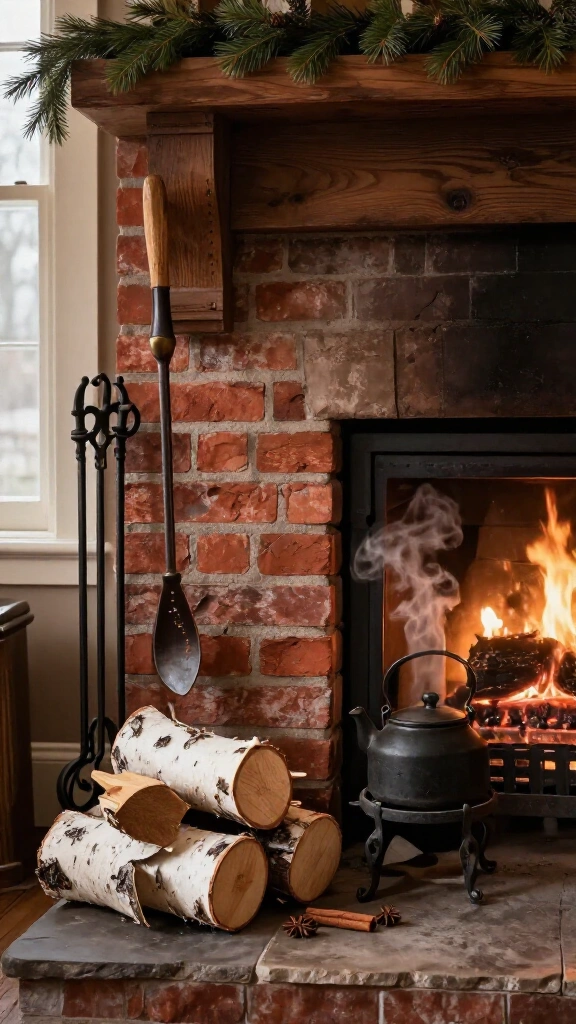
Historic wayside taverns built their winter routines around the hearth. Set up your fireplace with heavy wrought-iron tongs, a wooden bellows, and a neat stack of chalky white birch logs. Even before you strike a match, the papery white bark provides crisp visual interest against dark fieldstone or red brick.
Set a small cast-iron kettle with water, apple cider, and whole spices on top of your wood stove or hearth trivet. The warm steam keeps winter air comfortable while filling the room with comforting holiday aromas.
Three simple principles for a colonial holiday home:
- Embrace natural imperfection: Wild boughs, handmade beeswax tapers, and unpolished metals bring far more character than symmetrical store-bought decor.
- Keep light levels low: Use soft incandescent bulbs, open hearth flames, and warm window tapers to cast long, relaxing shadows.
- Lean into heritage scents: Fresh-cut balsam fir, clove pomanders, and real bayberry wax recall winters past better than any room spray.
You do not need a centuries-old farmhouse to recreate an authentic New England holiday. Focus on native branches, quiet candlelight, and sturdy heritage materials, and your rooms will welcome visitors with honest warmth. Light the tapers, feed the hearth, and enjoy a quiet, restful season.