You crave a thick green retreat right outside your back door, but you refuse to spend every weekend tied to a garden hose. Delicate perennials drop dead if you miss a single watering session, and few people have time for that upkeep. You do not need acres of land or hired help to build a rich garden.
Practical layout choices, drought-tolerant plants, and architectural foliage quickly convert a cramped patio into a private green space. With a few deliberate shortcuts, your yard stays green all season. Here are 29 direct ways to pack maximum plant life into a tight space while keeping your free time intact.
1. Layered evergreen shrubs

Evergreen shrubs build the permanent foundation of a low-maintenance yard. Plants like boxwood, yew, and dwarf cherry laurel hold their deep green leaves through hot summers and freezing winters. You skip the seasonal mess of raking dead foliage off the dirt.
Plant them in staggered rows along your fences to create instant visual depth. Their dense branches block harsh winds and choke out weeds under the canopy. You only need to trim them once a year to keep a neat outline.
2. Deep bark mulch beds

Uncovered dirt quickly dries out and sprouts weeds. Lay a thick, three-inch blanket of shredded cedar or pine bark over your garden beds to lock water directly into the root zone. Bark cuts surface evaporation fast, so you only need to soak the soil once in a while.
As the natural wood breaks down, it feeds rich organic material into the soil below. For solid advice on improving dirt quality, read the Royal Horticultural Society guide on mulching. Always leave two inches of open space around plant stems to prevent decay.
3. Vertical trellises with star jasmine

If you run out of ground space, grow your plants upward. Star jasmine (Trachelospermum jasminoides) climbs bare fence boards and masonry walls, covering hard surfaces in glossy dark leaves and fragrant spring flowers.
This climber handles poor dirt and thrives without pampering once its root system establishes. It covers rough wooden walls and turns blank patio edges into lush green dividers. One quick trim each year keeps the vines under control.
4. Self-watering planter troughs

Standard pots dry out fast on hot afternoons and demand constant attention. Swap your regular containers for sub-irrigated planter troughs that include water reservoirs beneath the soil. The roots pull moisture upward through natural capillary pull whenever the soil dries.
You only fill the bottom chamber every two or three weeks during warm weather. This consistent moisture stops leaf scorch and root stress in tight containers. Your patio stays leafy and green while your hose stays wrapped on the reel.
5. Native feather ornamental grasses

Native ornamental grasses like Karl Foerster feather reed grass and blue fescue supply distinct texture and sway in the breeze. Because these grasses originate in rough wild conditions, they handle dry spells, direct sun, and thin city soil without trouble.
Their dense root systems block out weeds while their golden plumes catch the late sun. Cut the dried stalks back to the ground once in late winter before fresh green growth appears. That single step delivers full visual impact for ten minutes of yearly work.
6. Drip line irrigation on an automated timer

Hand-watering sends up to half of your water into the air through evaporation and wind drift. Run flexible half-inch drip tubing straight to the root zones of your plants, hiding the line beneath your bark layer. Connect the line to a battery-powered faucet timer for consistent automatic watering.
The system puts measured drops of water straight onto root zones before the sun rises. This direct delivery stops fungal growth on leaves and reduces your water bill. Program the timer once in spring, and the setup waters your yard through the autumn.
7. Hardy hostas in shady corners

Dark, sunless courtyard corners often give gardeners trouble. Tough, wide-leaf hostas like Sum and Substance or Patriot produce dense green growth in low-light spots. Their broad, ribbed leaves cover open dirt fast and block light from reaching weed seeds.
Hostas return every spring without replanting or specialty fertilizer. Scatter a handful of organic slug barrier around the base to keep the broad leaves intact. They turn dim spaces into lush green pockets with almost no input.
8. Decomposed granite and flagstone paths
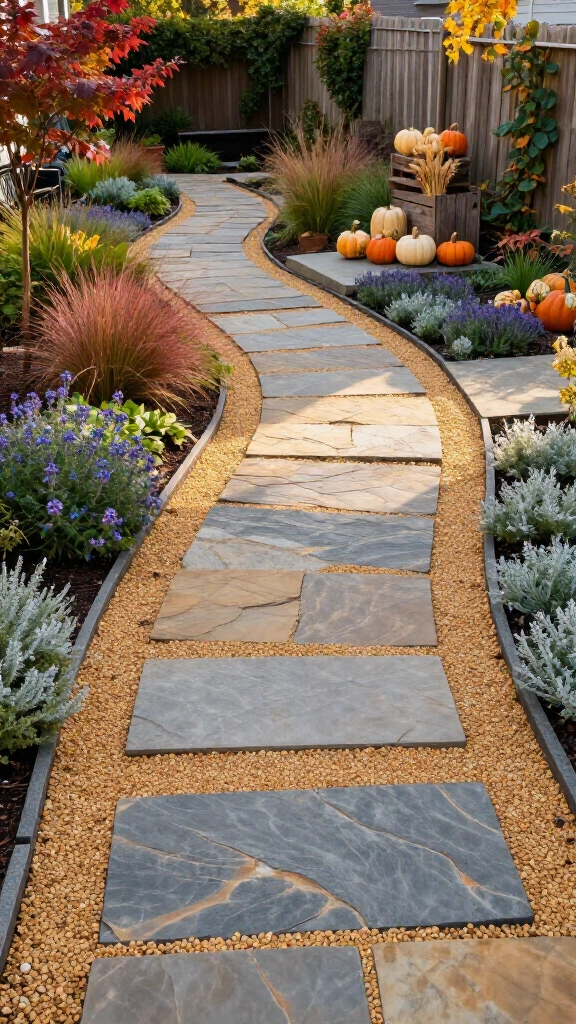
Lawn grass drinks immense amounts of water and demands weekly mowing. Replace patchy grass by laying flat flagstone walkways bordered by crushed stone or decomposed granite. This creates clean, functional outdoor living areas that never need a lawnmower.
Tuck low creeping groundcovers into the gravel edges to soften the stone lines. This neat stonework also sets an ideal stage for DIY outdoor holiday displays when autumn arrives. You gain a clean look without spending Saturdays pushing a mower.
9. Clumping bamboo in high-sided planters

A tall wall of bamboo creates rapid privacy around a patio. Always pick clumping varieties such as Fargesia instead of spreading types, and plant them inside heavy, raised planter boxes to stop wandering roots. Their soft green leaves screen your seating area from neighboring windows.
Clumping bamboo keeps its green foliage straight through cold snaps and dry summer spells. Soak the soil once a week during dry periods to maintain deep leaf color. You get a dense vertical privacy wall within a footprint only twelve inches wide.
10. No-mow sedum living carpets

Stonecrop sedums like Sedum spurium and Sedum acre quickly create thick, succulent mats that outcompete unwanted weeds. They settle into rocky, lean dirt that standard groundcovers cannot tolerate.
Their thick leaves hold water internally, so they survive prolonged dry periods without wilting. In late summer, clusters of tiny pink or yellow blossoms open and draw visiting pollinators. You can walk across them from time to time because the stems bounce back quickly.
11. Espalier fruit trees along boundary fences

Standard orchard trees outgrow small yards within a couple of years. Fasten dwarf apple or pear trees along horizontal guide wires mounted directly against your perimeter fence. Gardeners call this method espalier, and it yields full-sized fruit along flat surfaces.
The flat branches soak up heat from the fence panels, which helps the fruit ripen early. This open layout keeps branches accessible for fast pruning and insect checks. You collect fresh fruit without giving up ground space.
12. Compact Japanese maples as architectural anchors

Every small garden benefits from a distinct focal point. A dwarf Japanese maple (Acer palmatum) like ‘Bloodgood’ or weeping ‘Tamukeyama’ offers sculpted branches and rich color without outgrowing its spot. Its slow growth rate saves you from constant pruning.
These trees produce deep red leaves in summer and bright fiery tones in late autumn. Cover the root flare with mulch and place the tree away from heavy wind tunnels. Read the University of Minnesota Extension guide for tips on siting small landscape trees.
13. Drought-proof terracotta herb clusters

If you forget watering schedules, plant hardy Mediterranean culinary herbs like rosemary, thyme, sage, and oregano in porous terracotta pots. These herbs prefer coarse, gritty soil and light, infrequent watering.
Cluster containers of different heights in sunny corners to create a layered look. Unglazed clay lets air reach the root system, preventing the root rot that comes from heavy rains. You also get fresh seasoning right beside your cooking grill.
14. Mirrored garden panels on solid walls

A bare fence wall can make a narrow yard feel boxed in. Fix outdoor acrylic mirrors directly to windowless masonry walls or behind tall potted plants. The glass bounces light and reflects the foliage, doubling the perceived depth of your garden beds.
Frame the mirrors with cedar boards to match exterior windows. The reflected light brightens shaded leaves and creates the impression of an adjoining garden path. This setup requires no maintenance beyond washing the glass once a season.
15. Automated micro-mist hanging baskets

Hanging baskets look great, but drying winds rob their soil of water quickly. Run thin quarter-inch tubing up your support posts and clip small misting nozzles directly over each pot rim. Connect the line into your main water timer.
The fine spray wets the soil and trailing plants without knocking delicate blossoms to the ground. You maintain lush cascades of ivy and flowers overhead without balancing heavy watering cans on ladders. Automated lines remove the daily hassle completely.
16. Shady woodland fern glades

For yards shaded by tall buildings or dense tree canopies, woodland ferns solve your planting problems. Species like the ostrich fern and autumn fern build soft, layered ground foliage with zero fuss. They flourish in damp, cool ground where sun-loving flowers die off.
Their unfurling fronds bring sculptural shapes to the yard each spring. As the leaves spread out, they blanket the dirt and prevent weeds from sprouting. Spread an inch of leaf mold over the soil once a year to keep the root bed rich.
17. Dwarf conifer collections

If you dislike hedge trimming, dwarf conifers like Picea glauca ‘Conica’ (dwarf Alberta spruce) and Pinus mugo add clean evergreen shapes while growing only an inch or two per year. Their thick needles keep clean geometric lines without any clippers.
Combine blue, gold, and dark green varieties inside a narrow gravel bed. They retain their crisp needles through winter snow and high summer heat. They give you structured foliage year-round without demanding maintenance.
18. Weathering Cor-Ten steel raised beds

Wooden garden boxes rot, split, and harbor burrowing pests after a few seasons. Swap them for narrow Cor-Ten weathering steel beds that build a protective rust layer without degrading the metal structure. The thin steel walls leave maximum dirt volume for roots in tight footprints.
Lifting your plants above ground level speeds up drainage and stops turf grass from invading your garden beds. The warm bronze patina of oxidized steel contrasts cleanly with dark green foliage and gray stone pavers. These steel planters will outlast wood by decades.
19. Fragrant lavender border hedges

Plant English lavender (Lavandula angustifolia) along your stone paths to add scent to your daily walk. Lavender demands sandy, fast-draining dirt and sparse moisture once established. Rich soil and frequent watering actually harm the root systems.
Brushing past the silver-gray stems releases pleasant natural oils that deter garden pests. Cut back the old flower stems once in late summer to keep the base neat and full. You gain a clean, classic border with minimal spending.
20. Solar architectural uplighting

Do not let your garden vanish into darkness at nightfall. Push compact solar-powered LED ground lights into the soil right under sculptural trees, bamboo screens, or ornamental grasses. The low lights project striking shadows across fences and brick walls.
Modern solar panels store plenty of daily charge without requiring underground electrical wires across the patio. Wipe the small glass panels clean in spring and autumn so the batteries draw full sunlight. You get instant evening lighting with zero wiring work.
21. Indestructible cast iron plants

Gardeners call Aspidistra elatior the cast iron plant because harsh conditions fail to kill it. This wide-leaved plant tolerates deep shade, irregular watering, cold drafts, and dry soil that would ruin other tropical plants. It brings broad, glossy foliage to dim patio spaces.
Set them inside heavy ceramic containers to flank porch steps or back doors. Their long, pointed leaves create a deep green accent that stays neat through neglect. Wipe dust from the leaves once a year with a damp rag.
22. Modular pocket green walls

When you have zero open dirt, attach heavy-duty felt pocket panels directly to brick walls or fence posts. Fill the pockets with potting soil and tuck in trailing ivy, sedum, or leafy greens. The breathable felt prevents stagnant water around the root balls.
Run a single drip line along the upper row of pockets, letting gravity carry excess moisture down to the lower plants. This turns blank masonry into a vertical green wall without taking up a single square foot of patio floor. It fills unused vertical space with living plants.
23. Tiered corner planter steps

Tight patio corners often turn into forgotten spots that collect cobwebs and dried leaves. Place a three-step corner plant stand in these angles to stack potted plants vertically. This arrangement lifts trailing vines toward open sunlight while using awkward floor spaces efficiently.
Place hanging vines on the top shelf and wider plants at the base to build a full green column. This layout lets you check plant health without bending down. It also creates a natural spot for seasonal accents like festive front door entryway decor during the fall.
24. Creeping thyme between pavers

Gaps between patio flagstones often grow wild weeds. Choke out those weeds permanently with Thymus serpyllum (creeping thyme). This flat, hardy herb grows tightly between pavers and releases an herbal scent whenever your shoes brush across it.
It takes light foot traffic, survives dry soil cracks, and bursts into purple flowers during early summer. You never have to push a mower across these stones. It blocks weeds and gives your path an established stone look.
25. Big-leaf Fatsia japonica for instant jungle leaves

To get a lush look without fussing over delicate palms, try Fatsia japonica. It produces wide, glossy, hand-shaped leaves that tolerate cool weather, city winds, and deep courtyard shade. The bold foliage gives architecture to small spaces.
Because the wide leaves cast heavy shade over the ground, weeds rarely get enough light to grow beneath them. Soak the soil during extended heatwaves, and the plant retains its lush dark foliage through every season. It gives an exotic look with ironclad durability.
26. Decorative slate chip pathways

Grass paths in small yards wear out fast, leaving muddy ruts along walking lines. Clear the worn dirt, roll down heavy weed barrier fabric, and spread crushed purple or gray slate chips along the walkway. Flat slate chips stay put underfoot better than loose pea gravel.
Rainwater filters straight through the chips into the soil without forming slick puddles. The dark slate makes a clean border that makes surrounding green foliage stand out sharply. You never need to weed, edge, or reseed these walkways.
27. Naturalizing spring allium and narcissus bulbs

For seasonal color that returns without annual planting, bury naturalizing bulbs like round purple alliums and early daffodils (narcissus) beneath evergreen groundcovers. Plant them once in autumn, and they spread out underground on their own.
Rodents, deer, and squirrels dislike the bitter taste of both alliums and daffodils, so your bulbs stay undisturbed in the ground. As the blooms fade, your emerging hostas and grasses hide the yellowing leaves. It provides reliable spring flowers with one afternoon of planting.
28. Still-water pond bowls with floating aquatic plants
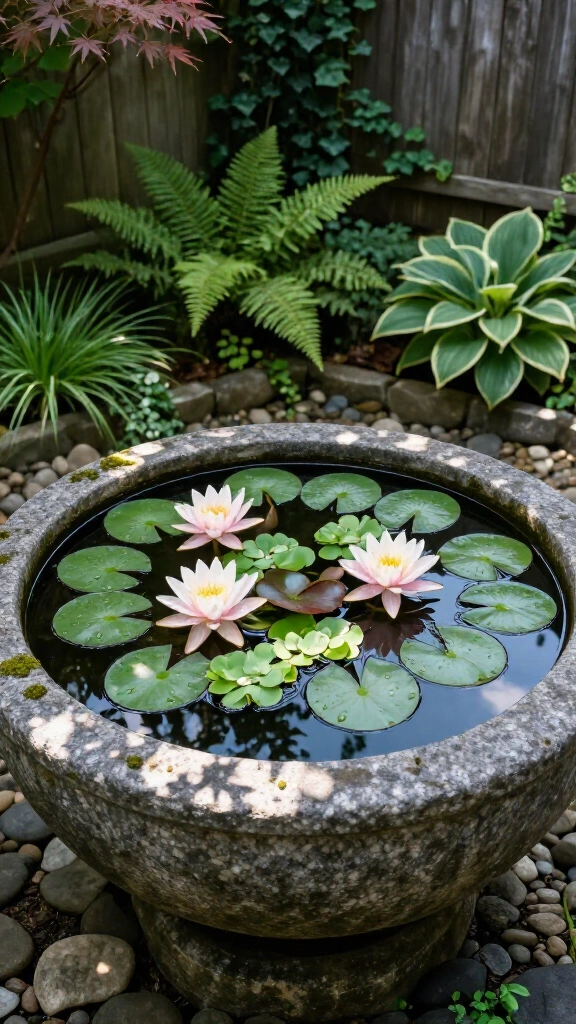
A standard pond demands noisy water pumps, filter cleaning, and constant work against algae. Build a quiet water feature instead by filling a broad stone bowl with water and floating dwarf water lilies or water lettuce across the surface. You do not need pumps, pipes, or wiring.
The floating leaves shade the water, starving green algae of light and keeping the basin clear. Drop in a half tablet of biological mosquito control once a month to prevent insect larvae from growing. The calm water surface mirrors the sky and brings light into tight gardens.
29. Self-climbing Boston ivy for boundary greenery

A stained concrete wall or weathered fence takes away from a relaxing backyard. Plant Parthenocissus tricuspidata (Boston ivy) at the base so its adhesive pads attach directly to the vertical surface without wire frames. It hides hard barriers behind overlapping green leaves.
In autumn, the green foliage turns bright red and copper before the leaves drop for winter. After its root system settles, natural rainfall handles its water needs. It coats vertical boundaries in dense foliage while taking up only a few inches of ground along the fence line.
Quick reference: low-work plants vs. high-work varieties
- Skip thirsty annuals: Replace petunias and impatiens with tough sedums and creeping thyme.
- Pick dwarf evergreens: Swap fast-growing privet hedges for compact dwarf conifers and boxwoods.
- Choose reliable shade plants: Trade fussy ferns for durable hostas and Fatsia japonica.
- Water with systems: Replace manual hose watering with automated drip lines and self-watering troughs.
Transform your small yard into an easy green space
Growing a leafy garden in a tight space does not require daily chores. When you plant reliable evergreens, install simple automated watering, and spread durable groundcovers, the plants thrive on their own. You spend less time pulling weeds or dragging hoses, giving you your weekends back to enjoy the yard.
Select two or three ideas from this guide to try first. Spread mulch across open dirt, place a tough evergreen in an empty corner, or connect a digital timer to a drip line. Soon, you will relax in a dense, green courtyard that takes care of itself.