Diwali evenings bring a distinct sensory warmth: fresh jasmine, melting ghee, and temple bells sounding across the neighborhood. Setting up a dedicated prayer altar often creates unnecessary stress right before the rituals begin.
You do not need a large budget or professional help to build a sacred, welcoming mandap. A few thoughtful details transform any corner of your living room into a peaceful altar. Here are nineteen practical Diwali pooja decoration at home ideas for welcoming Goddess Lakshmi and Lord Ganesha into your house.
1. Cascading Marigold and Mango Leaf Backdrop

Fresh orange and yellow marigold flowers (genda phool) instantly define traditional festival decor. Tie dense vertical garlands against a sheer cloth or wooden screen directly behind the deities. Tuck fresh mango leaves between the flower strands to complete the traditional toran arrangement.
Lightly mist the marigolds with cold water each morning to keep the petals fresh for several days. This simple floral backdrop frames the altar cleanly. Check out our Diwali wall decor solutions for more ways to style your prayer room walls.
2. Floating Brass Urli with Scented Petals
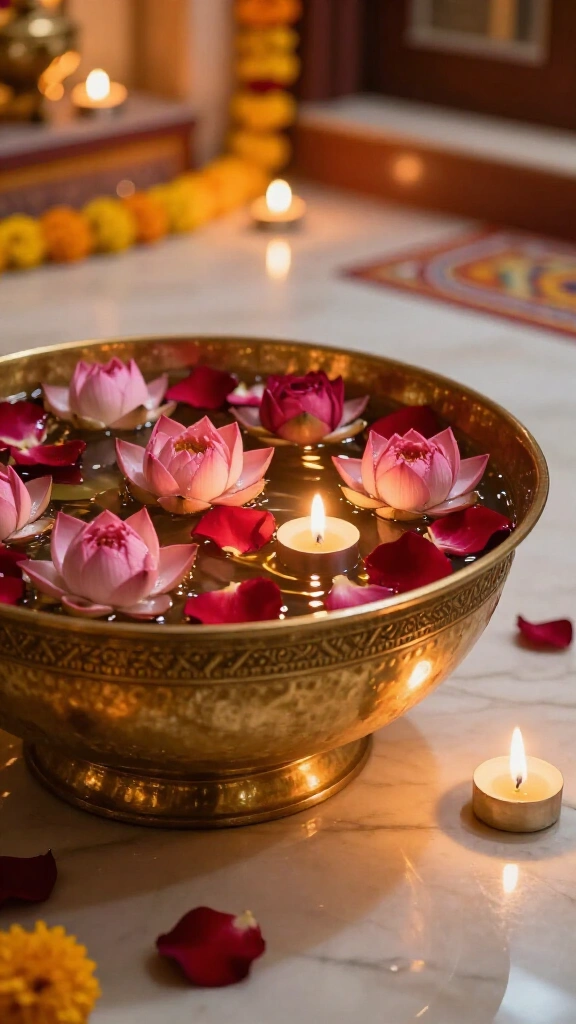
Set a wide brass urli near the entrance of your pooja area or beside the altar steps. Fill the bowl with clean water, add a few drops of rose oil, and arrange fresh lotus flowers or rose petals across the surface.
Place floating tea lights between the flowers. The flame reflections on polished brass brighten the floor and create an inviting entryway. Traditional Vastu guidelines also favor brass metal near entry points to balance room energy.
3. Geometric Kolam Border with Rice Flour and Kumkum
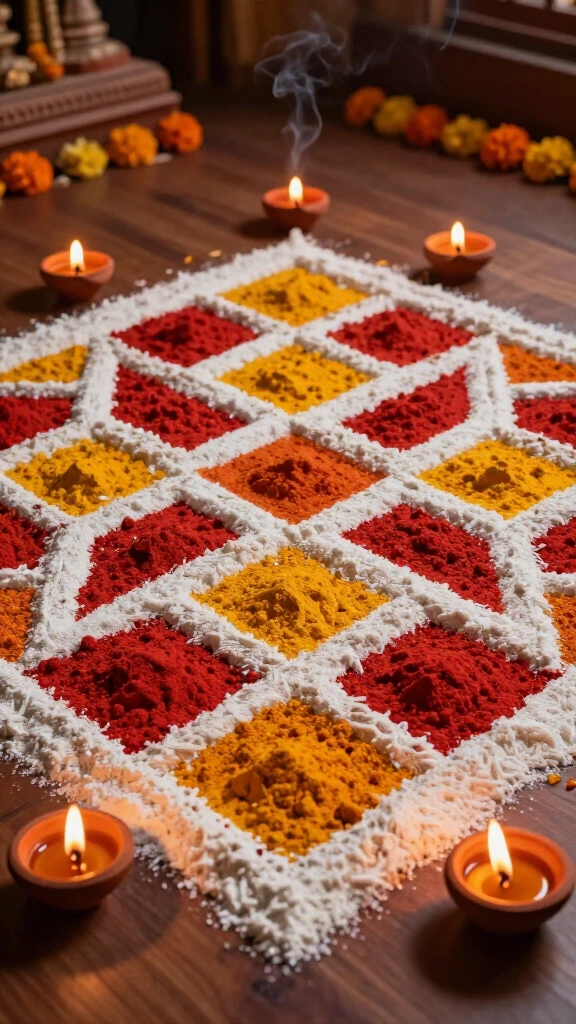
Anchor the base of your pooja platform with a hand-drawn geometric kolam. Draw the core grid using dry white rice powder, then fill specific sections with red kumkum and yellow turmeric powder.
Using rice flour feeds small birds and ants, following the traditional practice of bhuta yajna. Line the perimeter of your design with small clay lamps to illuminate the pattern after sunset.
4. Layered Silk Saree Altar Canopy
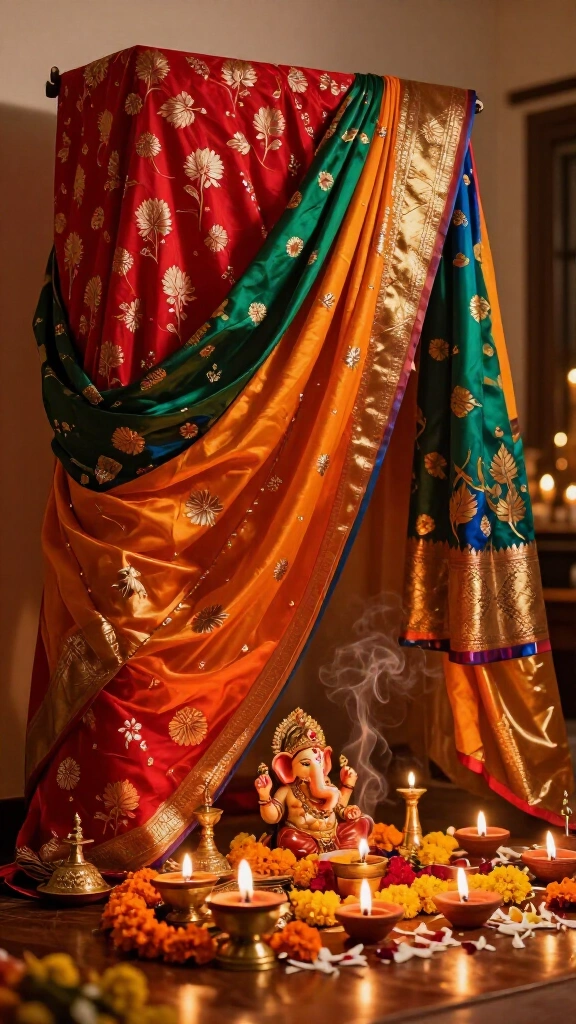
Use traditional Banarasi, Kanjeevaram, or Chanderi silk sarees with broad zari borders to create a backdrop. Hang one saree flat against the rear wall and drape a second one overhead to create an altar canopy.
The woven silk reflects the diya light cleanly around the deities. Fasten the fabric folds with safety pins and small clips to keep the canopy secure throughout the evening ceremonies.
5. Hand-Cast Brass Bell Cascade

Hang brass temple bells of different sizes on both sides of your mandir frame. Suspend them with thick red sacred thread (moli) or brass links at staggered heights.
Layered bells add height to small home altars, and the gentle chimes add a traditional temple sound to the room. Find more inspiration for the rest of your space in our guide to festive Diwali home decor ideas.
6. Backlit Wooden Jali Panels

Mount a laser-cut wood or MDF jali screen behind your deity platforms for a clean architectural background. Fit warm LED strip lights along the back edge of the screen frame.
The backlighting projects geometric shadow patterns across the altar wall without adding physical clutter. Design resources such as Architectural Digest note that lattice screens create depth while maintaining an uncluttered floor plan.
7. Fresh Jasmine (Mogra) Altar Curtains
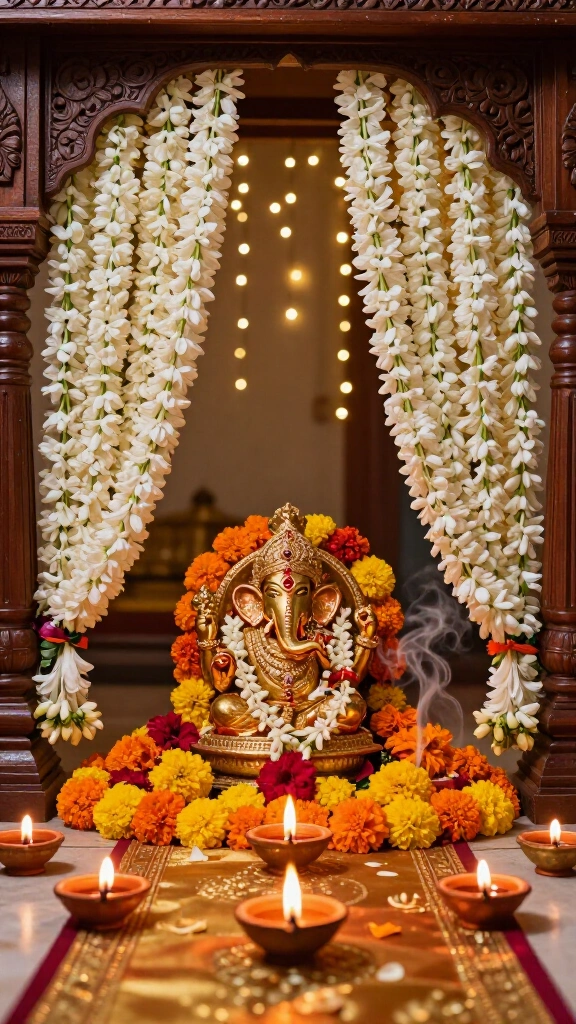
String fresh white mogra garlands along the top edge of your home shrine. Let the strands hang vertically to frame the deities on both sides.
The white jasmine creates a sharp visual contrast against orange marigolds and brass idols. The natural floral fragrance also replaces the need for synthetic sprays during prayers.
8. Banana Stem Pillar Candleholders

Place fresh banana plant stems on both sides of your pooja altar, following classic South Indian decorative traditions. Cut small, flat notches into the stems to hold terracotta lamps safely.
Banana plants represent prosperity and family growth in Hindu tradition. Their deep green color also balances the warm tones of brass lamps and orange marigold garlands.
9. Traditional Kalash with Coconut and Mango Leaves

Set up a traditional Kalash as a central focal point for Lakshmi pooja. Fill a polished copper or silver pot with water, clean coins, and supari (betel nuts), then seat five mango leaves around a coconut marked with kumkum.
Tie a red cloth (chunri) or sacred thread around the pot neck. Place the Kalash in the northeast corner of your altar table before beginning the evening prayers.
10. Glowing Terracotta Diya Pathway
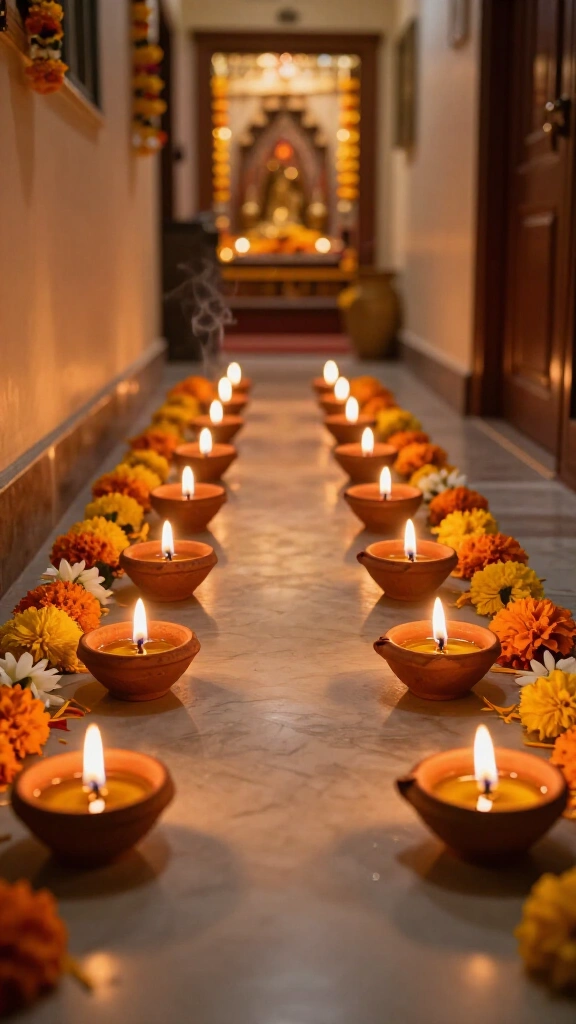
Lay a path of traditional clay lamps from your main entrance toward the pooja area. Space raw, unpainted earthen diyas evenly along both borders of the corridor.
Soak new terracotta diyas in water for an hour before filling them. This prevents the porous clay from soaking up oil and allows the wicks to burn steadily. Use sesame oil or ghee with clean cotton wicks to reduce smoke.
11. Lotus Flower Pedestals for Lakshmi and Ganesha

Lotus flowers hold a central place in Lakshmi iconography. Place fresh, open lotus blooms in shallow silver or brass plates, then set your Ganesha and Lakshmi idols carefully in the center of each blossom.
The natural petals create an organic pedestal for the idols. This small detail elevates the altar setup without requiring extra props or stands.
12. Fairy Light Waterfall Behind Sheer Organza
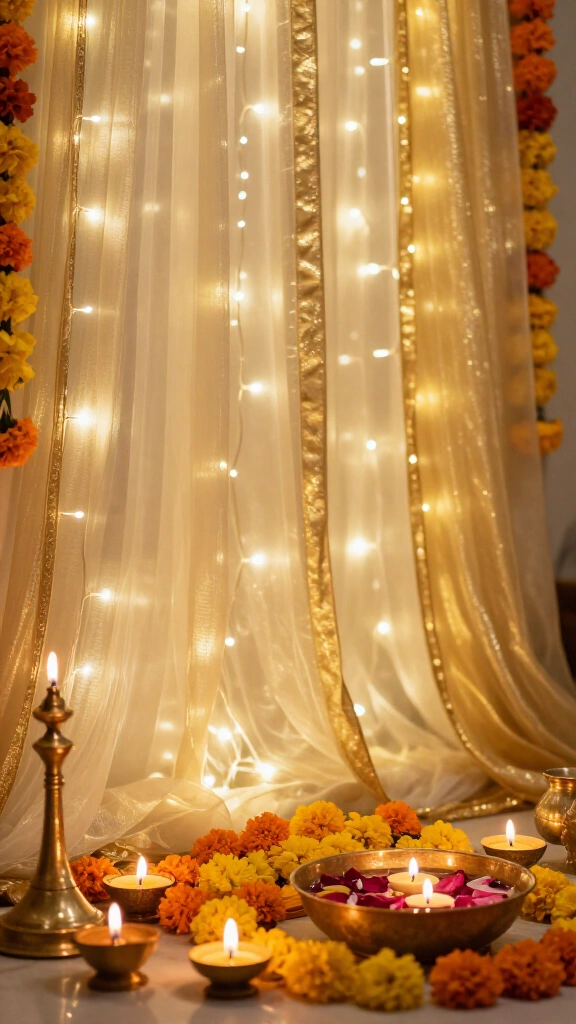
Combine translucent white or gold organza fabric with fairy lights to build a soft illuminated backdrop. Hang vertical LED string lights flat against the wall, then hang the sheer fabric directly over them.
The organza layer diffuses individual LED points into a gentle background light. You can find more safe lighting methods in our guide on Diwali light decoration ideas.
13. Etched Glass Hurricane Lanterns for Fire Safety
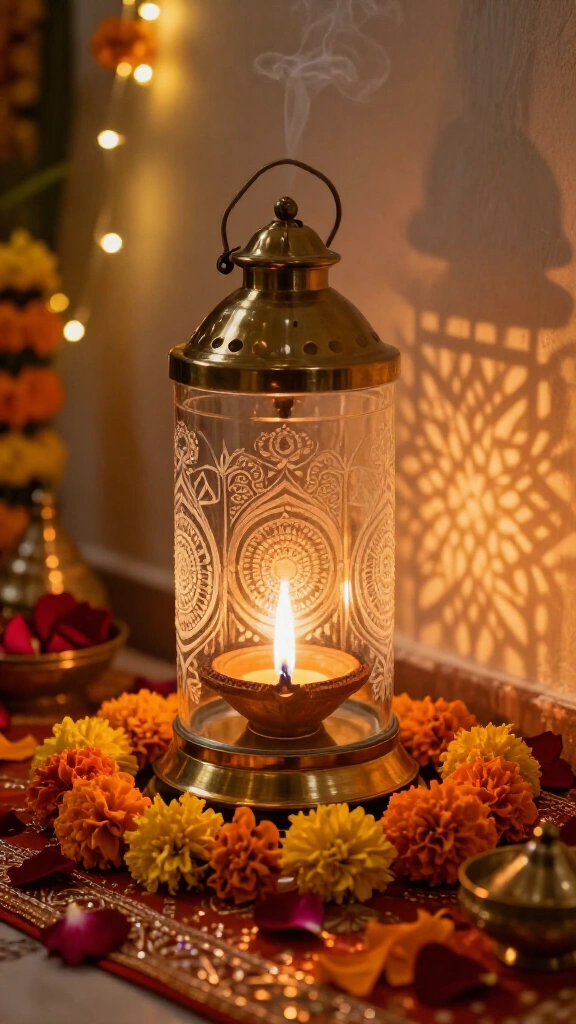
Protect your primary Akhand Diya by placing it inside a tall glass hurricane shade or a brass lantern. Enclosed glass keeps open flames safe from loose dupattas, pets, and ceiling fan breezes.
Etched glass lanterns cast geometric shadows across the walls while protecting the wick from sudden drafts. Guides at The Spruce suggest enclosing open flames during holiday gatherings to prevent accidental fire hazards.
14. Scented Camphor and Rose Water Diffusers
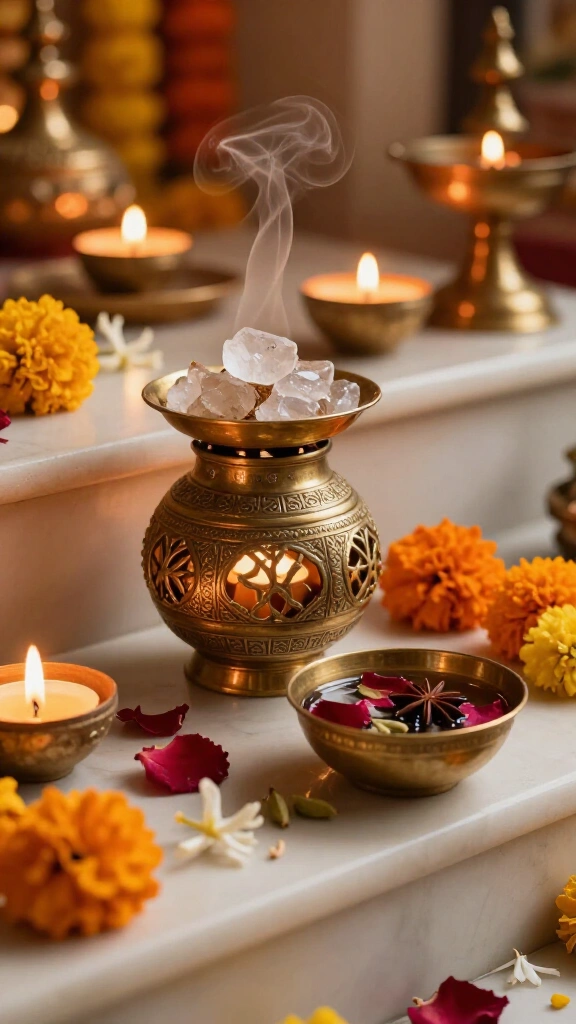
Set up brass aroma diffusers near the altar steps before the pooja begins. Place pure Bhimseni camphor on the diffuser dish over a small tea light, or place bowls of warm water with crushed cardamom and dried rose petals around the base.
Bhimseni camphor produces a clean, sharp scent that refreshes the room air without leaving behind heavy chemical residues.
15. Red and Gold Velvet Asan Runners

Place clean red, maroon, or saffron velvet cloths over your pooja chowki (wooden low tables). Choose fabrics with embroidered golden zardozi borders to outline the prayer area.
A thick fabric runner protects your wooden platforms from kumkum spills and metal idol marks. It also provides a defined surface for placing offerings, lamps, and bell stands.
16. Kumkum Lakshmi Footprint Trails

Apply small red footprints along the floor leading from the front door toward the altar table. Mix red kumkum powder with a splash of water or milk, or use wooden printing blocks dipped in the paste to stamp uniform prints.
These traditional footprints represent Goddess Lakshmi entering your home. Always point the toe marks inward toward the prayer room rather than outward toward the door.
17. Multi-Tiered Brass Peacock Vilakku Lamps
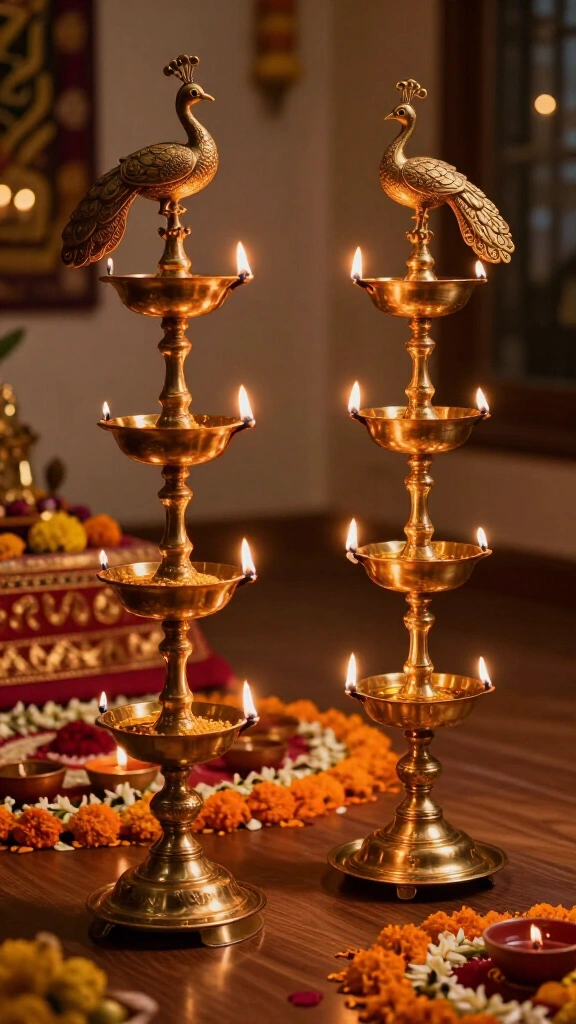
Place tall Kerala-style peacock vilakku lamps on both sides of the altar base. Fill the lamp tiers with sesame oil and insert cotton wicks into each spout.
Tall brass lamps balance low floor altars by adding vertical lighting. Polished brass deepams reflect light across the room and sustain steady flames throughout long pooja rituals.
18. Hand-Painted Shubh Labh Wall Medallions
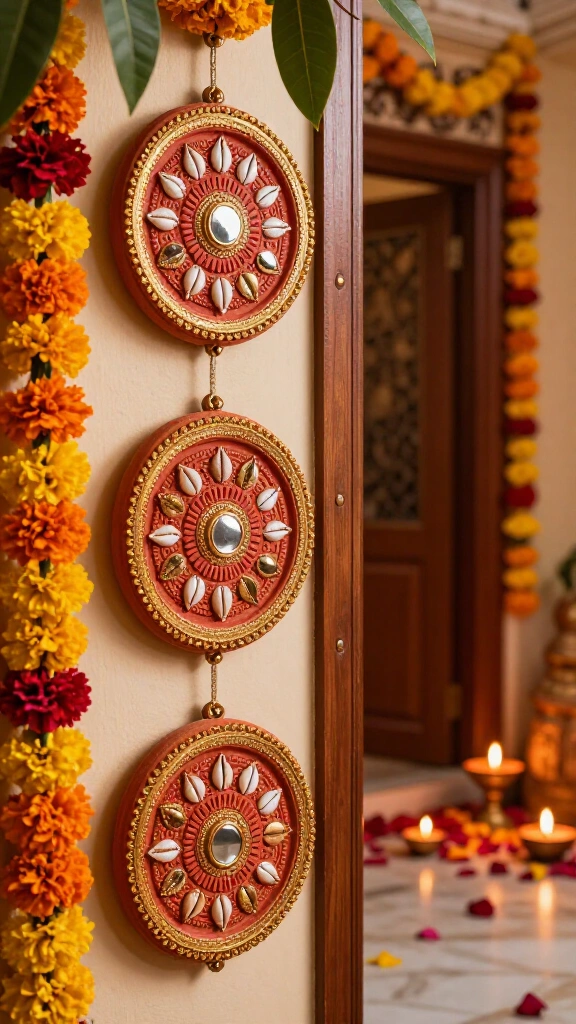
Attach painted terracotta or wooden medallions marked with “Shubh” (Auspiciousness) and “Labh” (Prosperity) beside your pooja room doorway. Look for designs detailed with small mirrors, cowrie shells, or gota borders.
These wall plaques mark the entryway to your sacred space. You can easily store them after the festival and reuse them for future family poojas.
19. Traditional Tanjore Art Focus Wall
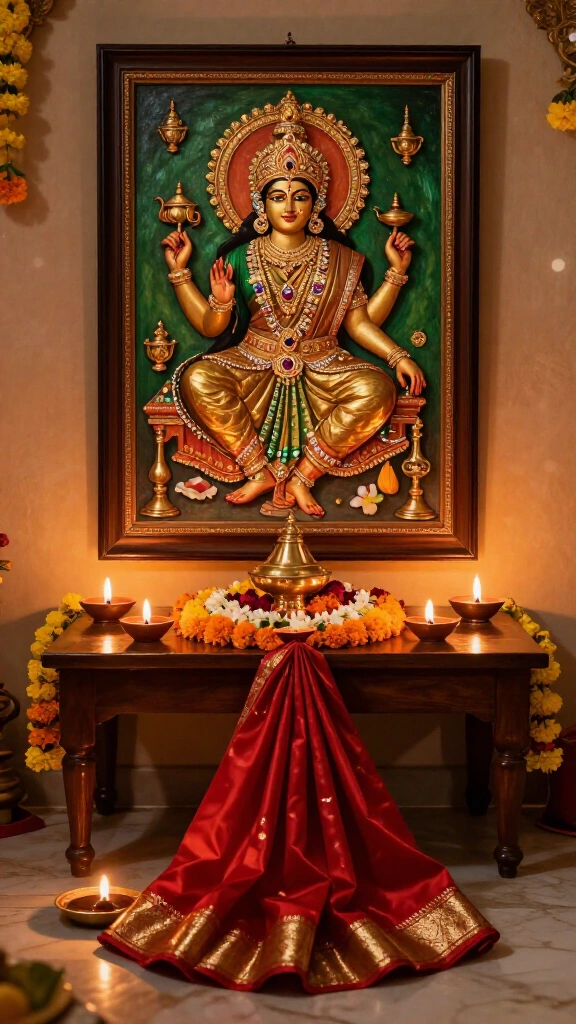
Hang a classic Tanjore painting of Goddess Lakshmi or Lord Ganesha directly on the wall behind your mandir table. The gold foil relief work and embedded stones catch the light from your brass lamps.
A permanent devotional painting acts as an anchor for the altar, removing the need for disposable paper or plastic backdrops.
Quick Tips for a Mindful & Safe Diwali Pooja Setup:
- Keep fabrics clear of open flames: Secure saree drapes with safety pins at least two feet away from all burning wicks.
- Eco-friendly disposal: Collect used marigolds and mango leaves after the celebrations to compost them in your garden.
- Vastu placement: Position deities facing East or West so that you face East or North during the prayer rituals.
Setting up a sacred Diwali mandir centers on devotion, calm, and care. Select two or three ideas that fit your living space, light your diyas, and share a peaceful holiday with your family.