Walk past an 18th-century brick home in December, and you immediately see why simple evergreen trim outshines a yard full of plastic inflatables. Early American holiday decor works because people built it around fresh boughs, garden fruit, and clean architectural lines.
Historic decor can turn stuffy if you treat your living room like a museum wing. Done well, it gives your house warmth and dignity. If you appreciate timeless Christmas decor ideas, these 14 concepts bring early American character into your home without turning it into a dusty antique shop.
1. The Classic Pineapple and Fresh Apple Fan Doorway
A fruit fan over the front door defines authentic Williamsburg curb appeal. Colonists valued pineapples because merchant ships carried them north as rare Caribbean cargo. Historians at Colonial Williamsburg point out that local decorators popularized this fruit and greenery arrangement during the 1930s to celebrate historic craft traditions.
You can build this piece by mounting a fan-shaped wood plaque above your front door transom. Secure a ripe pineapple at the base, then nail or wire alternating arcs of Lady apples, lemons, and boxwood sprigs outward to the rim. The clean geometry gives your entrance immediate color and balance.
2. Hand-Dipped Beeswax Tapers in Every Single Window
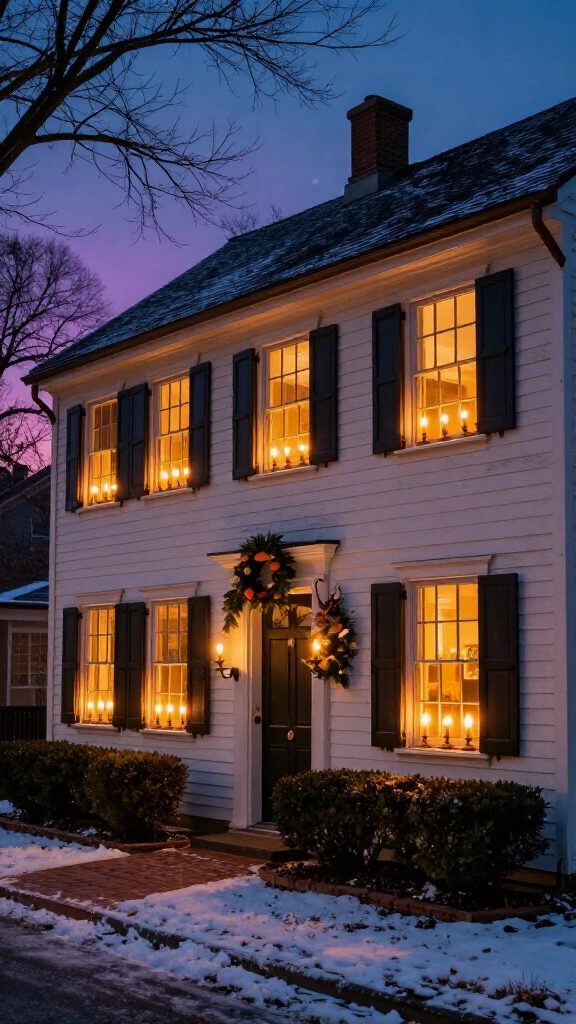
In the eighteenth century, householders placed burning tapers on their sills to guide travelers down unlit roads toward food and lodging. You can carry on this tradition today without risking an open flame against your curtains.
Skip cold white LED bulbs. Pick battery-powered wax tapers that use warm 2200K bulbs instead. Put one candle in the middle of each street-facing window sill. Set their timers so they switch on together at dusk, giving your facade a calm, steady line of light.
3. Lush Magnolia Leaf and Fragrant Pine Garlands
Early Americans gathered greenery straight from surrounding forests. Families across Virginia and the Carolinas cut broad, leathery magnolia branches and wired them together with long-needle pine boughs.
Magnolia leaves carry a natural two-tone finish: deep green on top and warm, velvety brown underneath. Mix these stiff branches with flexible white pine garlands along your stair rail or fireplace mantel. The combination holds moisture well indoors and connects your room directly to earthy Christmas decor traditions.
4. Fragrant Clove-Studded Orange Pomanders

Store-bought room sprays rarely match the warm scent of real citrus and spice. Colonists pushed whole dried cloves directly into citrus rinds to freshen parlors and preserve fruit through damp winter weeks.
Use a wooden skewer to poke patterns into firm navel oranges, lemons, or clementines, then press whole cloves into the holes. Group ten or twelve finished pomanders in an antique trencher or pewter dish. As the fruit dries out over the month, the oils cure together and release a steady, spicy aroma.
5. Bayberry Wax Candles for Good Hearth Fortune

Settlers in New England boiled bushels of wild bayberries every autumn to skim off the fragrant, gray-green wax floating on the water. A regional proverb promised that burning a bayberry candle down to the socket brings gold to your pocket and peace to your home.
Place two bayberry tapers into heavy brass candlesticks on your dining table. The herbal scent cuts through rich holiday food without the heavy sweetness of modern scented wax. Burn them during Christmas dinner to practice an authentic winter ritual.
6. Foraged Oyster Shell Mantel Accents

Tidewater communities along the Chesapeake Bay turned ocean harvests into winter decor. Clean oyster shells have a natural pearlescent sheen that catches low light without artificial glitter.
Drill small holes near the hinges of sun-bleached shells, then string them on jute cord through cedar boughs. You can also lay loose shells around pillar candles on a table runner. The pale interiors reflect candle flame across your dining room and honor early seaside traditions.
7. Symmetrical Boxwood Wreaths with Ruby Pomegranates

Eighteenth-century builders prized strict visual balance. Colonial front doors require tidy, manicured circles rather than unruly, asymmetrical wreaths. Small-leaf English boxwood provides the exact dense texture this style needs.
Pack short boxwood clippings tightly onto a wire ring. Secure four or five whole red pomegranates along the bottom curve with heavy florist wire, or space them evenly around the face. The dark red fruit cuts cleanly against the fine green foliage and gives your entryway formal symmetry.
8. Dried Citrus Wheel and Cinnamon Stick Garlands

Winter decor in early farmhouses relied on dried stores from the pantry. Translucent slices of dried citrus let daylight pass through historic multi-pane windows much like colored glass.
Cut oranges, lemons, and grapefruits into thin rounds, then dry them on baking racks in a 200°F oven until the pulp turns firm and clear. Thread the rounds onto thick twine, alternating citrus wheels with dried bay leaves and tied bundles of whole cinnamon sticks. Hang the garland across open kitchen shelves or along a sunny window frame.
9. Real Cotton Velvet Ribbons in Historic Pigments

Modern wired ribbon and shiny polyester satin ruin an antique aesthetic. Eighteenth-century homes used flat, heavyweight ribbon woven from natural fibers like silk or cotton.
Look for velvet ribbon dyed in traditional plant and mineral shades:
- Madder Red: A muted brick red extracted from madder root.
- Indigo Blue: A deep, smoky navy that sits handsomely against walnut or mahogany furniture.
- Verdigris: A soft moss green that matches fresh cedar.
- Walnut Brown: A rich, warm earth tone drawn from boiled green walnut husks.
Tie loose, soft bows with long tails around wreaths and newel posts rather than stiff, wired puffs.
10. The Historic Pineapple Centerpiece Pyramid

Wealthy eighteenth-century hosts assembled tall fruit pyramids as centerpieces for formal holiday dinners. Florists at Southern Living regularly share variations of this classic display for dining tables.
Build one by setting a sturdy wooden cone or damp foam pyramid on a footed pedestal. Fix a whole pineapple directly at the top point using wooden dowels. Push wooden floral picks into rows of Seckel pears, small red apples, and lemons, working from the bottom ring upward. Tuck fresh rosemary and cedar into any open gaps to hide the base.
11. Copper and Pewter Vessels Filled with Native Nuts

Colonial households rarely purchased single-use party novelties. They gathered everyday household pewter, copper, and cast brass dishes to hold food and refreshments during visits from neighbors.
Find old pewter bowls or tarnished copper pots at estate sales and thrift counters. Fill them with unshelled black walnuts, chestnuts, and pecans, then set a heavy cast-iron nutcracker beside the bowl. This gives visitors something warm and tactile to snack on while they talk by the fire.
12. Red Cedar Mantels Dotted with Wild Rosehips
Eastern red cedar grew along country fence lines, making it the primary holiday bough for rural farmhouses. While garden centers favor Fraser firs today, native cedar offers soft, fine foliage and a woodsy scent unique to early American homesteads.
Lay thick cuts of cedar across your mantel, letting the branch ends drop down toward the hearthstones. Tuck stems of bright red winterberry or thorny wild rosehips deep into the boughs. The sharp scarlet berries break up the green foliage without requiring manufactured ornaments.
13. Pure Linen and Burlap Hearth Stockings

Glittery commercial stockings clash with historic woodwork and brick. Early families made practical household textiles from homespun flax linen, homespun wool, and coarse grain bags.
Sew or buy simple stockings from unbleached flax linen, marking each one with cross-stitched initials in red thread. The quiet oatmeal color lets your mantel greenery stand out. These simple pieces pair naturally with classic Christmas tree decor in the next room.
14. Cedar Shingle and Star-Cut Tin Lantern Accents

Before gas and electric lamps lit town roads, travelers carried pierced tin lanterns through the dark. Tinsmiths punched holes and star patterns into thin metal sheets to let candle glow escape while keeping winter wind from blowing out the flame.
Set punched-tin lanterns on your stone steps, along the front path, or directly on the hearth. Place a battery-operated pillar candle inside each lantern. The punched metal throws pinpoint patterns of light across your porch floor and brick walls every evening.
How to Maintain Fresh Fruit and Greenery All Season
Natural fruit arrangements look magnificent, but they dry out quickly indoors. Follow these quick preservation steps to keep your natural displays perky from early December through New Year’s Day:
- Mist magnolia leaves and cedar boughs every morning with cool tap water so the needles stay hydrated.
- Wipe display apples and citrus with a light coat of vegetable oil or dip sliced fruit in lemon juice to prevent premature decay.
- Position fruit pyramids and greenery well away from active heating ducts, radiator covers, and fireplace embers.
Bringing Historic Charm into Modern Times
Early American holiday decorations remind us to look outside before buying imported plastic. Cedar branches, backyard orchard fruit, heavy brass, and beeswax candles carry real weight and history. Choose two or three of these projects this December to give your home quiet seasonal warmth that never goes out of style.