Most home buffets end up looking like school lunch lines. Flat platters, messy napkins, and harsh overhead lighting ruin the mood before anyone picks up a plate. You do not need commercial catering gear to fix this. A few simple adjustments turn an ordinary folding table into an inviting setup.
1. Vary Heights with Wooden Crates

Flat surfaces make serving awkward and crowd your dishes together. Flip a few wooden crates upside down underneath the tablecloth to create solid platforms. The extra height lets guests see every dish clearly and reach food without bumping into front-row bowls.
2. Layer Contrasting Fabric Runners

A single tablecloth often looks flat and sterile. Start with a neutral base cloth, then place a textured runner down the center or across the diagonal. Coarse linen, burlap, or heavy cotton brings depth to the table surface. For winter party planning, read our guide on 15 Christmas buffet table decor ideas that make hosting feel effortless.
3. Group Serveware in Odd Numbers

Balanced layouts often rely on odd numbers. Place bowls, dip dishes, and cutting boards in clusters of three or five instead of even pairs. Odd groupings prevent rigid grid lines and help the table look organic rather than staged.
4. Weave a Lush Eucalyptus Garland

Fresh greenery fills awkward gaps between dishes better than random knickknacks. Snake a garland of seeded eucalyptus or olive branches around platters and warming trays. The dark green leaves frame the food neatly and leave plenty of room for guest plates. Most grocery stores sell hearty greens like these for just a few dollars.
5. Display Flatware in Ceramic Pitchers

Cutlery scatters quickly when you leave it loose on the table. Separate forks, knives, and spoons into ceramic pitchers or wide-mouth jars instead. Point the handles upward so people do not touch the prongs or blades while grabbing a set. This saves table space and keeps the utensils clean.
6. Anchor with an Oversized Botanical Urn

A strong focal point gives the entire setup structure. Position a tall stone or ceramic urn with cut branches behind the main dishes. Keep the branches tall enough so they frame the spread without blocking sightlines across the room. Browse Architectural Digest for examples of large branch arrangements in dining spaces.
7. Repurpose Cake Pedestals for Savory Food

Cake stands work just as well for savory dishes as they do for desserts. Place cheese wheels, tea sandwiches, or skewers on marble and glass pedestals. Lifting your signature appetizers above the tabletop draws immediate attention to them and frees up flat space underneath.
8. Frame the Food with Warm Fairy Lights

Harsh ceiling lights make food look washed out. Tuck warm battery-powered micro lights underneath a runner or weave them directly through table greenery. The soft glow illuminates the food without casting hard shadows across the room.
9. Use Raw-Edge Wooden Cutting Boards as Platters

Skip cheap plastic trays and use thick wooden cutting boards instead. End-grain butcher blocks and live-edge olive wood slabs give cured meats, cheeses, and roasted vegetables a solid, rustic base. The wood grain adds warmth that plain serving trays cannot match.
10. Identify Dishes with Mini Chalkboard Picks

Nobody likes guessing whether a dish contains dairy, nuts, or gluten. Place small chalkboard markers or handwritten cards in front of each platter. Note any major allergens directly on the card so guests can serve themselves with confidence.
11. Add Scent-Free Taper Candles for Drama

Candles create a classic evening atmosphere, but heavily scented wax interferes with the smell of the food. Set unscented tapers in sturdy holders along the back perimeter of the table. Keep open flames away from sleeves and napkins.
Pro Tip on Candle Placement
Position tapers against the back wall or at the far corners so guests never reach across a flame to grab food.
12. Set Up a Separated Drink Station

Beverages create instant bottlenecks when you put them next to the food line. Move punch bowls, wine bottles, and glassware to a side cart or separate console table. This division spreads people out and keeps spilled drinks away from your serving platters. Entertaining guides on The Spruce suggest this layout adjustment to keep party traffic moving smoothly.
13. Mix and Match Vintage Ceramic Platters

Identical white platters can look sterile. Search thrift shops and flea markets for stoneware, transferware, and ironstone trays. Mixing varied patterns and textures gives the table a collected look that feels personal rather than catered.
14. Swaddle Warm Bread in Linen Napkins

Dinner rolls and sliced baguettes dry out quickly when left uncovered on a cold plate. Line a wire basket with a thick cloth napkin, place the warm bread inside, and fold the corners over the top. The cloth traps heat effectively and keeps bread fresh throughout dinner.
15. Hide Box Risers Under a Solid Drape
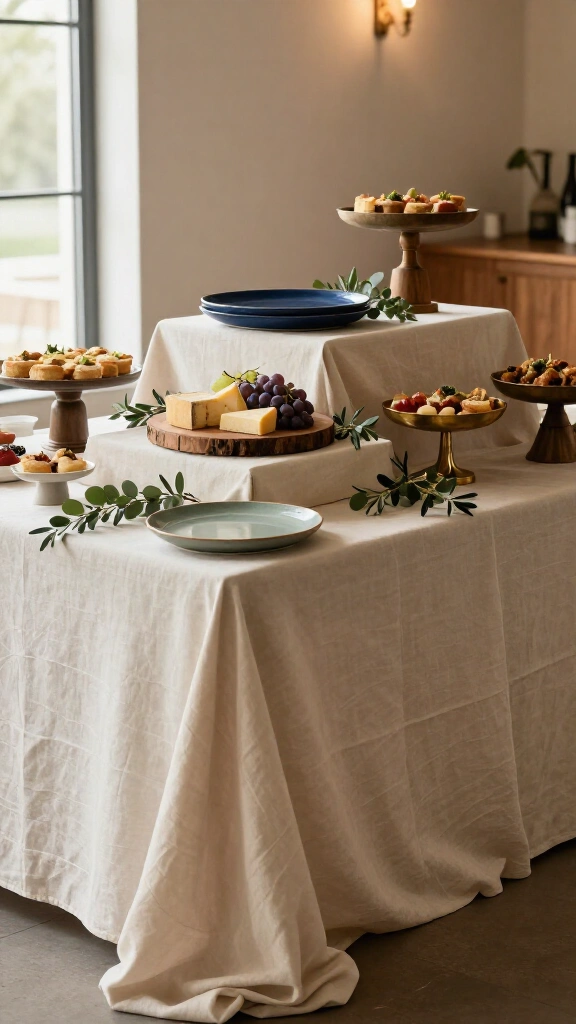
You do not need specialty catering stands to create different levels. Place sturdy shoeboxes, thick art books, or inverted baking pans across the bare table. Cover everything with a long, opaque tablecloth and press the fabric into the crevices. You get solid display tiers without spending money on hardware.
16. Lean a Framed Mirror Against the Wall

A buffet shoved against an empty wall can look isolated. Lean a heavy framed mirror or large painting directly on the table surface against the wall. The mirror reflects candlelight back into the room and makes the table feel twice as deep.
17. Scatter Fresh Citrus Fruit for Color Splashes
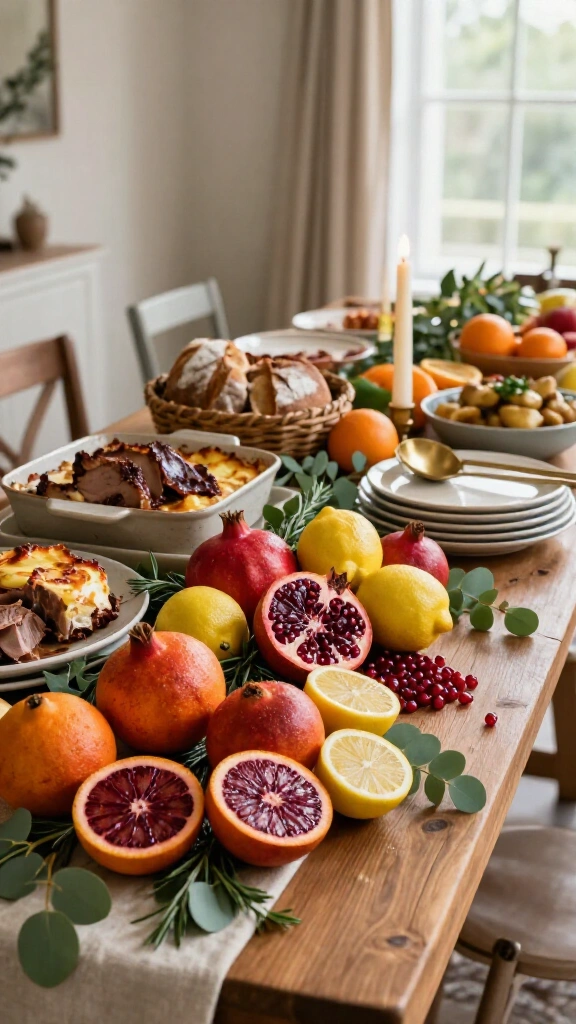
Brown and beige foods can make a table look dull. Slice blood oranges, lemons, and pomegranates in half, then scatter them among whole fruit alongside your greenery. These bright colors break up monochrome spreads at very little cost.
18. Position Dinner Plates Exclusively at the Front

Set your dinner plates at the head of the table where the line begins. Stacking plates in the middle or spreading them around causes confusion and holds up the line. Guests should pick up a plate first, fill it as they walk along, and collect flatware at the end.
19. Hang Suspended Decor Above the Table

Save table space by taking your decor overhead. Suspend paper lanterns, dried flower branches, or simple wreaths directly above the buffet. Hanging accents draw eyes upward and define the serving area without taking up room needed for platters.
20. Use Tiered Pastry Stands for Savory Sliders

Buffet tables fill up quickly when you offer multiple dishes. Use two-tier or three-tier metal stands to display mini sandwiches, crostini, or skewers vertically. These stands double your serving surface without taking over the tabletop.
21. Weave in Cohesive Seasonal Holiday Accents

Incorporate seasonal items into your display to fit the time of year. Tuck pinecones, small squashes, or deep-toned ribbons between your serving dishes. For winter party ideas, see our list of 15 Christmas buffet decor ideas that make holiday hosting feel effortless.
22. Corral Condiments in a Woven Tray

Individual sauce bottles, olive oil cruets, and small butter bowls scatter across a table within minutes. Gather them onto a single shallow woven tray or marble slab. This contains drips, protects your tablecloth, and keeps condiments in one obvious spot.
23. Drape Crinkled Chiffon for Romantic Texture

Skip stiff, ironed linens when hosting evening dinners or brunches. Run a strip of washed linen or crinkled chiffon down the center of the table, gathering it into soft folds. The loose fabric softens the hard metal edges of chafer dishes and serving spoons.
24. Upgrade to Brushed Gold and Matte Black Serving Tongs

Cheap clear plastic tongs bend easily and snap under pressure. Replace them with matte black or brushed metal serving utensils. Entertaining resources on Food Network note that sturdy metal utensils give guests better control while serving heavy dishes.
25. Stack Ramekins and Dip Bowls in Clean Columns
Scattered dip bowls crowd platters and look disorderly. Stack small ceramic ramekins into neat columns directly next to bowls of salsa, dips, and dressings. Guests can grab an individual dish easily without disrupting the rest of the table.
26. Conceal Spare Supplies Beneath Floor-Length Skirting

Keep backup food, extra napkins, and paper towels under the table behind a floor-length tablecloth. Stashing supplies underneath lets you restock empty dishes quickly without making trips to the kitchen throughout the night.
27. Place Napkins and Utensils at the Finish Line

Never force guests to hold utensils and napkins while dishing out hot food. Put flatware and napkins at the very end of the line. Guests can serve themselves using both hands, collect their fork and napkin last, and walk directly to their seats.
Setting up an organized buffet table comes down to smart mechanics rather than expensive props. Vary your heights, give guests room to move, and group items logically so the line flows naturally. Put these adjustments in place for your next dinner party, and your serving area will work smoothly from start to finish.