Bookcases easily become catchalls for loose mail, tangled cords, and random knickknacks. If your shelves look more like an overcrowded yard sale than a styled display, you do not need an interior design degree or a huge shopping budget to fix them. A few deliberate changes in arrangement and spacing will turn messy bookcases into a clean, balanced feature in your room.
1. Alternate Horizontal and Vertical Book Stacks

Break up uniform rows of book spines by laying some volumes flat. Standing books lead the gaze upward, while horizontal piles create pedestals for smaller accessories. Set a small brass candle or a marble dish directly on a stack of three flat books. This switch breaks up repetitive lines and brings rhythm to the unit.
2. Embrace the 60-30-10 Color Rule

Shelves look chaotic when too many competing shades fight for attention. Reserve 60% of the display for a dominant neutral tone, 30% for a secondary coordinating hue, and the final 10% for a sharper accent color. Writers at Architectural Digest frequently recommend strict color boundaries to keep shelves unified. A restrained palette makes mismatched book jackets look intentional.
3. Mix Organic Textures with Sleek Ceramics

Contrast makes simple shelving interesting. Place coarse jute baskets beside glossy ceramic vases or smooth terracotta pots. Combining rough surfaces with smooth finishes keeps the eye moving across each shelf. When you balance varied textures, the display feels like a collection built over years rather than an afternoon shopping spree.
4. Group Decorative Accents in Odd Numbers

Pairs of objects often look formal and stiff on open shelving. Arrange items in groups of three or five to create a relaxed, natural feel. Gather pieces of different heights, such as a tall candlestick, a medium stoneware jug, and a low dish. This triangular arrangement gives the group clear proportion without feeling forced.
5. Anchor Bottom Shelves with Heavy Art Volumes

Anchor the bookcase by keeping your largest coffee table books on the bottom shelves. Heavier volumes and thick storage bins pull the gaze downward, so placing them near the top makes the unit feel top heavy. Stacking dense tomes near the base gives the furniture a solid visual foundation and leaves the upper sections open for lighter decor.
6. Integrate Cascading Trailing Plants

Add living plants to soften sharp shelf corners. Place a pothos or English ivy on an upper tier so the vines spill down over the edges. Fresh foliage breaks up rigid vertical lines and adds natural curves to wood or metal framing. Check the natural light in your room first so you pick plants that can survive there.
7. Layer Framed Artwork Against the Backboard

Do not reserve picture frames exclusively for bare walls. Rest a small sketch, oil painting, or family photo directly against the back panel of the bookcase. Set a low bowl or a couple of flat books slightly in front of the frame. This overlapping arrangement creates depth and covers plain backing boards.
8. Treat Sculptural Bookends as Works of Art
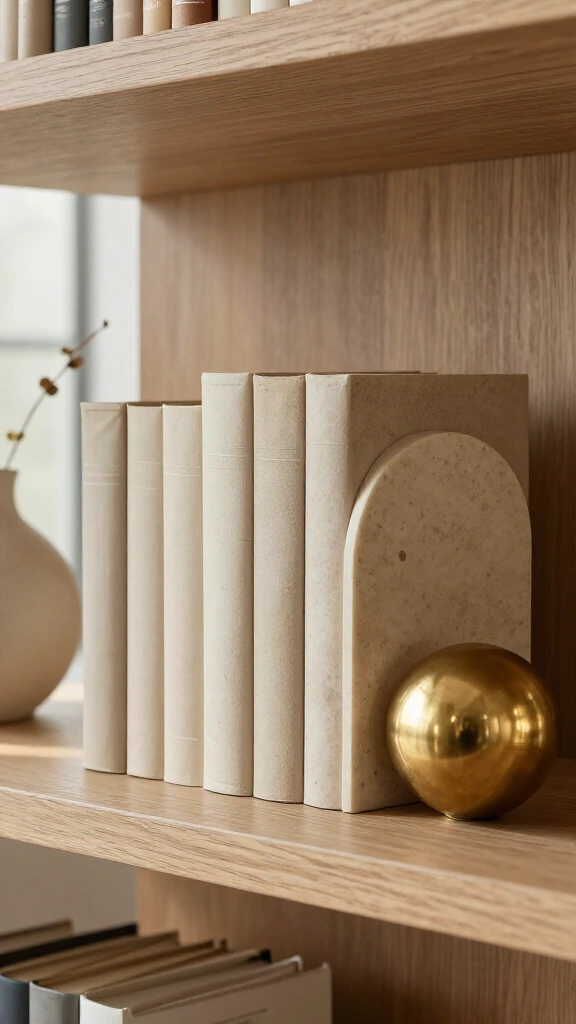
Swap standard metal office bookends for heavy stone, cast iron, or carved wood. Treat these supports as independent sculptures that also keep your books in place. Travertine arches or solid brass spheres secure standing paperbacks while adding weight and character to the shelf.
9. Leave Generous “Breathing Room”

Shelves look cluttered when you fill every square inch. Leave open areas across each tier so individual items stand out. Aim to keep roughly a quarter of every shelf empty. If an arrangement feels crowded, remove two or three objects until the space feels balanced.
10. Curate Spines by Color Gradient

Bright rainbow sorting can look busy, but muted color shifts bring order to large book collections. Group warm creams and whites together, transition into slate blues, and finish with dark greens or blacks. Sorting covers by color gives a sprawling book collection clean visual structure.
11. Drop in Textured Catch-All Bowls

Loose items like matchboxes, keys, and odd trinkets quickly ruin a clean shelf. Place a wide soapstone or turned wood bowl on a middle shelf to catch these odds and ends. A low bowl hides loose items from view while adding a solid, sculpted accent to the shelf.
12. Show Off Vintage Flea Market Finds

Buying all your accessories from big department stores leaves shelves looking like showroom catalogs. Add secondhand items from flea markets or thrift shops, such as an old brass compass, a weathered clock, or a vintage camera. These pieces give your home personal character that off the shelf decor cannot duplicate.
13. Introduce Warm Metallic Accents
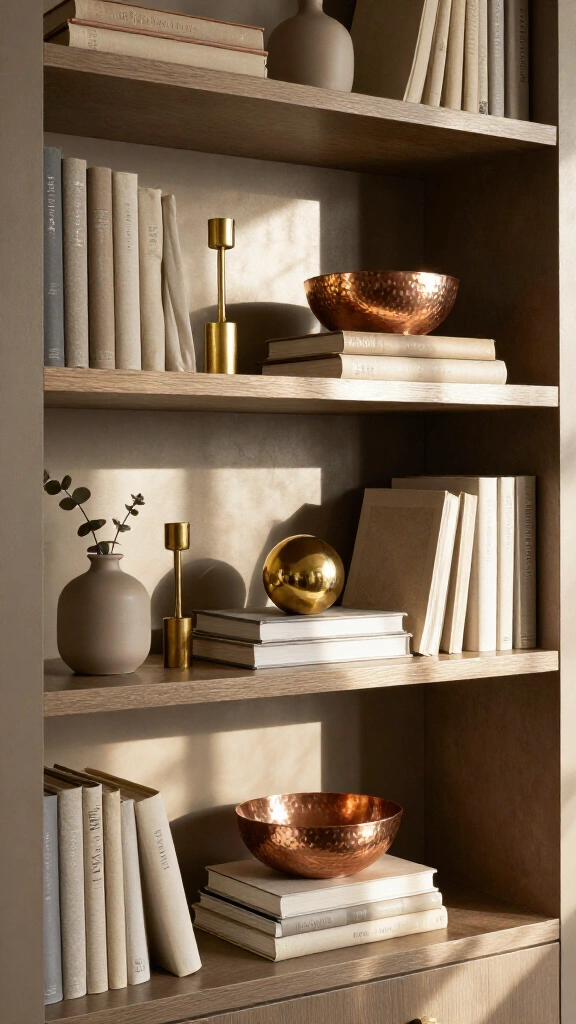
Rows of matte paper covers and painted shelves can look dull without reflective materials. Place brushed brass candlesticks, hammered copper dishes, or small polished spheres on different levels. Metal surfaces catch natural light and brighten dim shelf interiors.
14. Back Your Bookcase with Peel-and-Stick Wallpaper

You can change the character of a basic bookcase without buying a new unit. Line the back panel with removable peel-and-stick wallpaper, such as textured grasscloth or a faint geometric pattern. The patterned backdrop adds depth behind your books and turns plain fiberboard into a striking custom detail.
15. Create Symmetrical Rhythm Across Tiers
Distribute visual weight across the bookcase so one side does not look heavier than the other. If you arrange a dense cluster of books on the top left shelf, set a similar group on the middle or lower right shelf. This staggered pattern leads the eye diagonally across the bookcase and prevents lopsided arrangements.
16. Prop Up Architectural Sculptures

Geometric objects break up repetitive rows of straight rectangular book spines. Place carved wood links, a marble pyramid, or a ceramic knot directly on top of a horizontal stack. Letting a distinct sculptural object stand by itself on an open shelf provides a sharp visual break from paper edges.
17. Install Wireless Puck Lights for Dramatic Mood

Dark shadows obscure decorative details inside deep shelving. Mount small rechargeable LED puck lights to the underside of each shelf to cast warm downlight over your items. Home improvement writers at The Spruce note that accent lighting turns basic storage units into built-in features. Turn them on in the evening to illuminate individual displays.
18. Hide Paperbacks in Uniform Linen Bins

Paperbacks often have bent spines or mismatched covers that look messy in large quantities. Store dog-eared paperbacks, user manuals, and stray electronics inside matching fabric bins or woven baskets on the bottom shelf. Bins hide visual clutter while keeping reading materials within arm’s reach.
19. Rotate Seasonal Pieces Throughout the Year

Update your shelves every few months by swapping out a few accents. You can adapt suggestions from our guide to 18 Christmas bookshelf decor ideas that turn cluttered shelves into cozy holiday magic as winter approaches. Small additions like pinecones in December or miniature dried gourds in October bring seasonal color without crowding out your permanent pieces.
20. Elevate Tiny Items on Pedestals

Small keepsakes often get lost on deep, tall shelves. Set small perfume bottles, mineral stones, or tiny travel mementos on small wood risers or thick marble coasters. Raising these smaller pieces gives them presence and stops them from disappearing into dark corners.
21. Display Decorative Plates and Trays Upright

Set wide ceramic platters or vintage silver trays upright using clear acrylic display stands. A round dish behind a short stack of books introduces curved lines against rows of straight edges. This simple adjustment fills vertical background space using pieces you might already own in your kitchen.
22. Paint the Entire Unit a Moody Monochromatic Shade

Paint the bookcase the exact color of your living room walls, whether you use deep charcoal, navy, or forest green. Painting the furniture and wall the same shade creates a built-in look out of modular shelving. Dark background tones also provide high contrast, making light book pages and metallic bookends stand out clearly.
23. Balance Visual Weight Between Light and Heavy

Treat each shelf like a mechanical balance scale. Counter a dense group of dark books on one end with a clear glass vase or a wire sculpture on the other. Balancing opaque, heavy items with clear or thin materials keeps the shelf from feeling lopsided.
24. Display Curated Travel Souvenirs

Use your shelves to hold distinct travel pieces rather than generic tourist trinkets. Display an olive wood box from Greece or a small terracotta figurine from Mexico. Choosing items with personal memories gives your home authentic character that mass-produced decorations cannot match.
25. Tuck In Miniature Candle Clusters

Place fluted glass votives or pillar candles into narrow gaps between book stacks. Even when unlit, solid wax candles add smooth matte texture and vary the height profile of a shelf. Use unscented candles so strong artificial perfumes do not overwhelm the room.
26. Incorporate Warm Wooden Accents

Add raw wood objects to balance manufactured surfaces. Carved teak bowls, turned wooden beads, or petrified wood coasters introduce organic grain that softens painted metal and paper bindings. Natural wood tones balance out painted frames, similar to how our pro pumpkin decorating ideas use natural shapes to soften seasonal indoor spaces.
27. Step Back and Edit Ruthlessly

The most important step in bookcase arrangement comes at the very end. Once you place everything, step back ten feet and view the entire unit. Squint to identify cluttered clusters or awkward empty spaces, then remove two or three items that draw unnecessary attention. Removing extra clutter turns a crowded storage rack into a clean, intentional display.
Quick styling checklist for clutter-free shelves
- Audit before styling: Clear every shelf completely so you work with a blank surface.
- Establish a focal point: Give each tier one prominent item, such as a trailing plant, a framed picture, or a heavy sculpture.
- Keep cords hidden: Route speaker wires and light cables behind the vertical frame rails.
- Prioritize favorite reads: Place the books you read regularly within easy reach instead of packing shelves with decorative volumes you never open.
Arranging an attractive bookcase requires balance rather than perfection. Experiment with different object heights, incorporate pieces you care about, and leave open space across each shelf. Step back, adjust a stack or two, and let the room feel open and organized.