Calculating the True Cost of Hardwood vs. Luxury Vinyl Plank Over 10 Years
When homeowners compare solid hardwood to Luxury Vinyl Plank (LVP), the decision usually comes down to the price tag in the showroom. LVP looks exactly like wood, claims to be waterproof, and costs a fraction of the price. If you only look at the day-one material cost, LVP wins every time. However, flooring is a permanent architectural fixture, not a disposable rug. If you calculate the financial lifespan of the material over a 10-year period, the math aggressively shifts in favor of solid hardwood.
My Hands-On Experience with Flooring Lifespans
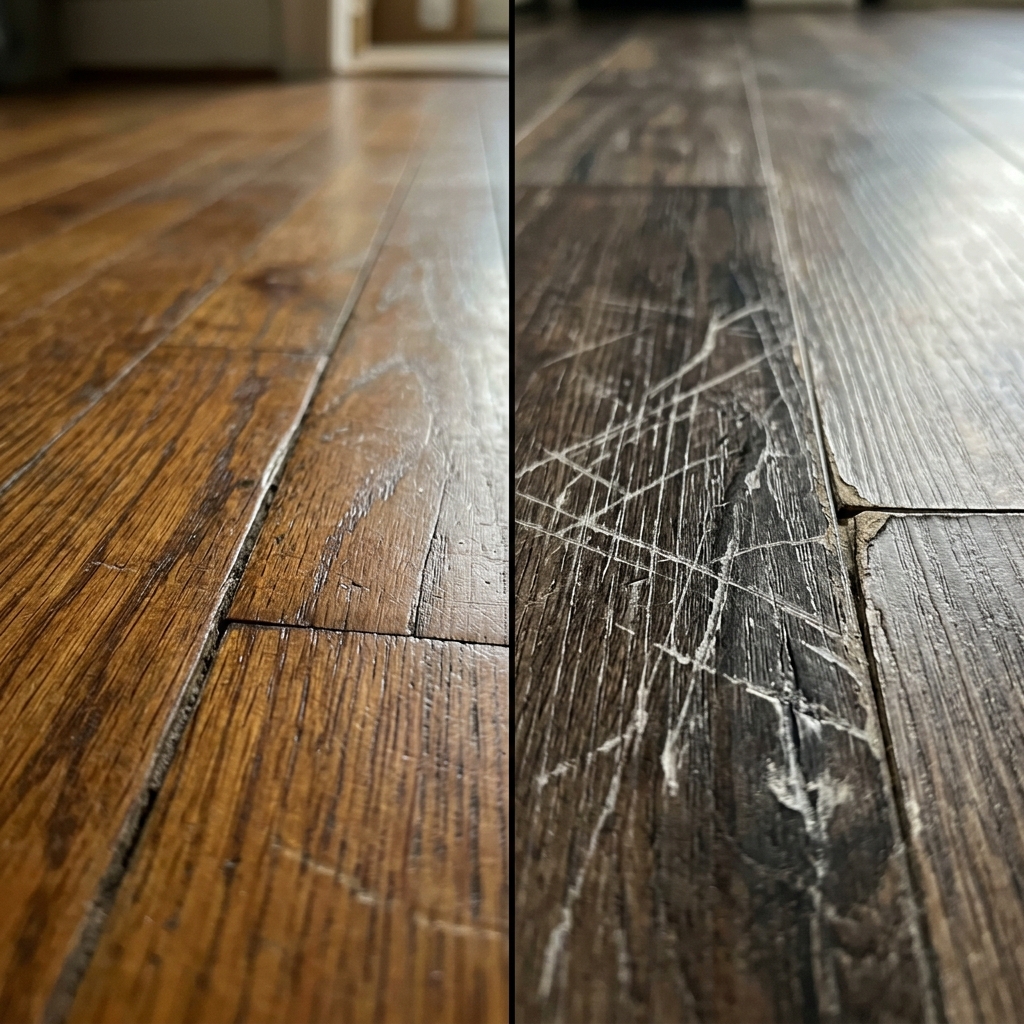
In 2016, I helped a client install premium LVP in a high-traffic rental property. They paid $5 per square foot. It looked fantastic on day one. By 2022, the floor was covered in deep scratches from a dog, and the locking mechanisms in a sunny hallway had warped and popped loose. You cannot sand or fix LVP. We had to rip the entire floor out and pay to install a brand new one. In contrast, I installed solid white oak in my own home in 2015. It suffered similar dog scratches. Last month, I simply hired a crew to screen and recoat the top layer of polyurethane. The floor looks brand new again for a fraction of the cost of a replacement. That taught me the difference between a depreciating asset and a renewable one.
The Day-One Installation Costs
Let's run the math on a 1,000-square-foot living space. A quality LVP costs around $4 to $6 per square foot. It is a floating floor, meaning it clicks together over a basic underlayment without glue or nails. Labor is cheap, usually around $2 to $3 per square foot. Your total day-one cost for LVP is roughly $8,000.
Solid hardwood is expensive. A good 3/4-inch oak runs $8 to $12 per square foot. It requires a nail-down installation over a wooden subfloor (which you must measure carefully, as detailed in our guide on calculating hardwood flooring needs). Labor is heavily specialized and costs $4 to $6 per square foot. Your day-one cost for hardwood is roughly $15,000. It is nearly double the price of the vinyl.
The 10-Year Replacement Reality
The World Floor Covering Association (WFCA) notes that while LVP is highly durable against water, its wear layer is essentially a printed photograph coated in plastic. If you drag a heavy piece of furniture across LVP and gouge it, that plank is permanently ruined. You cannot repair it. You have to disassemble the entire floor from the nearest wall just to replace that one plank.
After 10 years of heavy family use, LVP usually looks dull and scratched. Because styles change, you likely cannot buy replacement planks. You have to tear the floor out and spend another $8,000 to replace it. Your 10-year total cost for LVP is now $16,000.
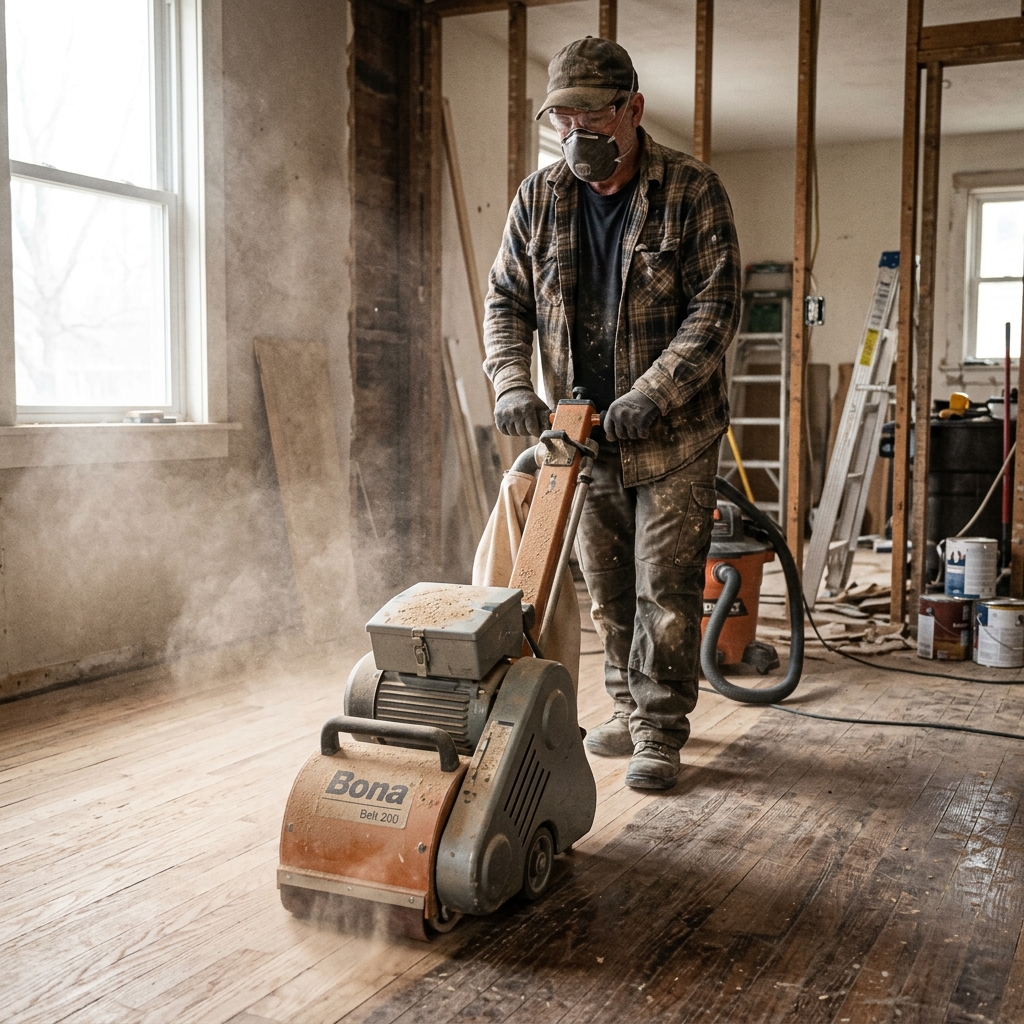
Solid hardwood can be sanded down to raw wood and completely refinished. If you get deep scratches, you do not throw the wood away. You pay a crew about $3 to $4 per square foot to sand it and stain it a brand new color. After 10 years, you spend $4,000 to make the floor look like it was installed yesterday. Your 10-year total cost for hardwood is $19,000. The gap narrows significantly, and you end up with a floor that actively increases the resale value of the home, whereas a 10-year-old plastic floor drags the appraisal down.
Need to calculate measurements for your space?
Use our free, interactive Flooring Calculator to calculate dimensions, box requirements, or guidelines automatically.
Calculate Flooring Costs→