How to Measure Curtains Like an Interior Designer: The High and Wide Method
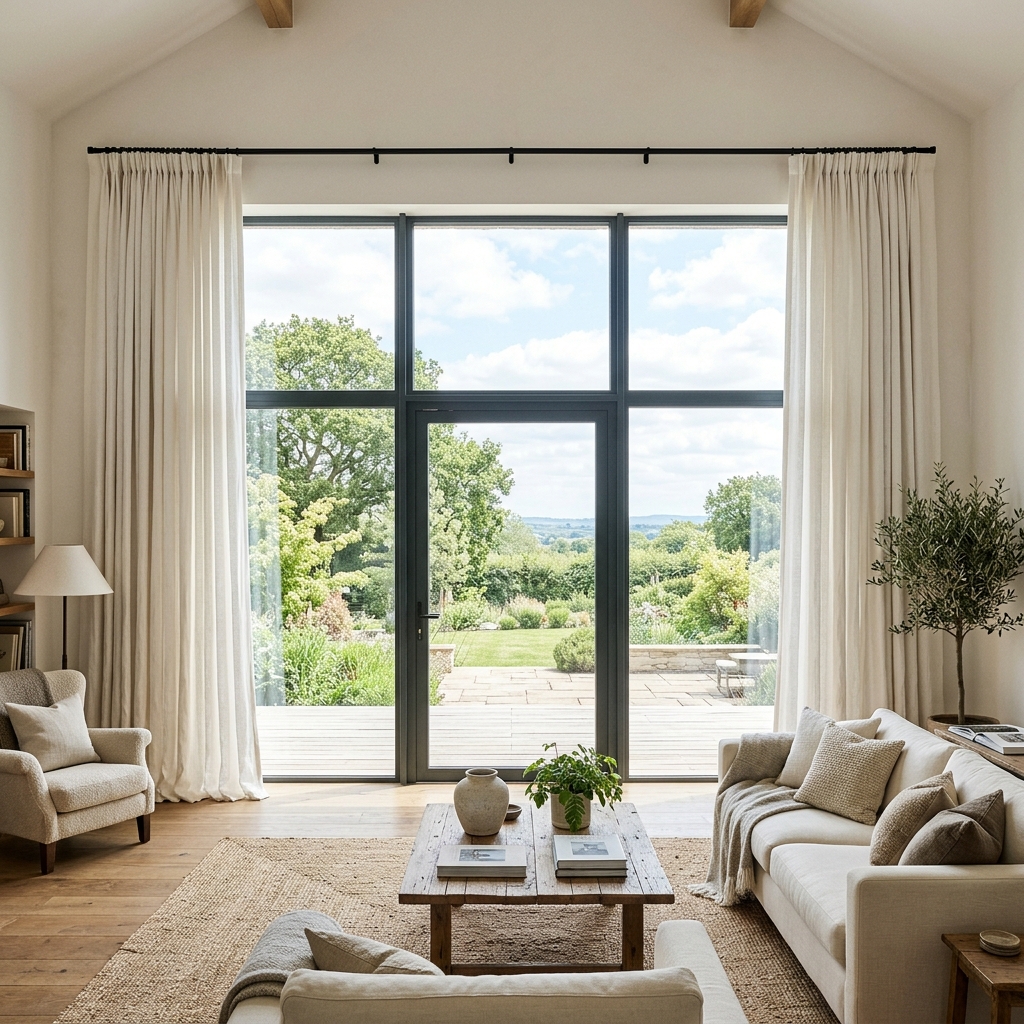
Most homeowners measure for curtains by measuring the exact width and height of their window frame. They buy a curtain rod that perfectly matches the width of the glass, mount the brackets directly onto the wood trim, and hang panels that stop an inch above the floor. This completely strangles the architecture of the room. It makes the ceilings feel low, the windows feel cramped, and blocks massive amounts of natural light because the bunched fabric covers the glass. If you want a luxury aesthetic, you must adopt the 'High and Wide' installation method.
My Hands-On Experience with High and Wide Drapes
In late 2025, I staged a small, dark 1950s bungalow for sale. The living room had standard 8-foot ceilings and two very small, square windows. The previous owners had mounted cheap blinds inside the frames and hung short, dark curtains right on the window trim. The room felt like a cave. I stripped all the hardware off. I installed massive, heavy matte black rods practically touching the ceiling, completely ignoring where the actual windows stopped. I extended the rods out 12 inches past the glass on both sides. I hung heavy, lined linen panels that lightly brushed the floor. The optical illusion was instant. The buyers thought we had physically raised the ceiling and installed larger windows. I proved that curtain placement is actually architectural manipulation.
The Mathematics of 'High'
Never mount your curtain rod on the window trim. You must mount the brackets high on the drywall, forcing the eye to travel upward. The rule of thumb is to split the distance between the top of the window trim and the ceiling. If you have 12 inches of blank wall above the window, mount the rod 6 inches above the trim.
If you want maximum drama, mount the rod 2 inches below the crown molding or ceiling line. This forces you to buy longer curtains—usually 96-inch or 108-inch panels instead of the standard 84-inch panels—but the visual payoff is immense. The Window Covering Manufacturers Association (WCMA) notes that longer vertical lines in window treatments are scientifically proven to make a room feel physically taller.
The Mathematics of 'Wide'
You must also manipulate the width. Buy a curtain rod that is 16 to 24 inches wider than your actual window frame. When you push the curtains completely open, the fabric stack should rest entirely against the blank drywall, not against the glass. By moving the fabric off the window, you allow 100 percent of the natural light to enter the room. This makes the physical window look as wide as the curtain rod itself.
This flood of natural light is critical if you are struggling with paint colors. As we discussed in our guide on matching wood floor undertones, identifying true colors requires maximum natural light. Do not block your windows with bunched fabric.
Getting the Floor Length Right
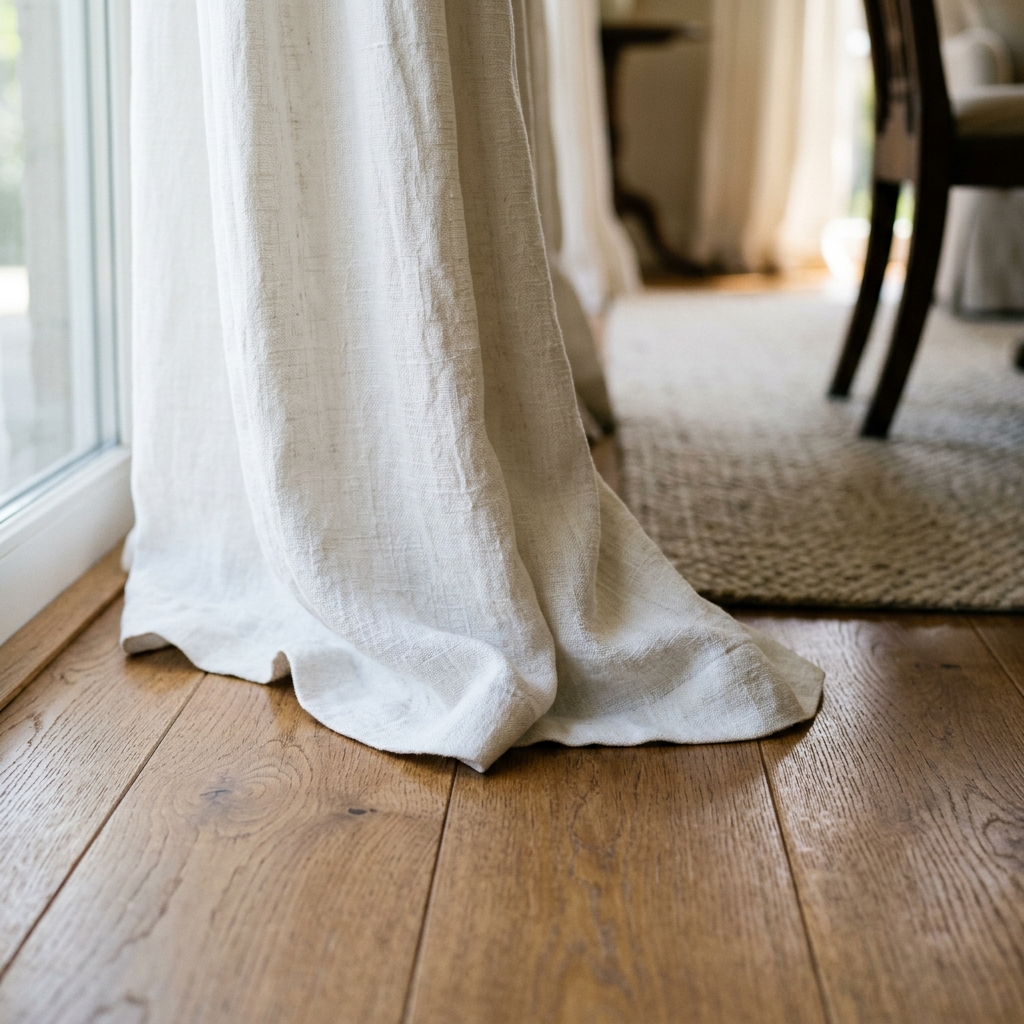
Curtains that hover two inches above the floor look like high-water pants. It ruins the luxury aesthetic. Your curtains must do one of two things: they must lightly 'kiss' the floor (touching it exactly without buckling), or they must 'puddle' (where an extra two to four inches of fabric pools luxuriously on the ground). Puddling requires high maintenance because it traps dust, so the 'kiss' method is the standard for modern homes. Measure from your high-mounted rod down to the floor, buy the correct length, and adjust your rod brackets up or down slightly to achieve the perfect kiss.
Need to calculate measurements for your space?
Use our free, interactive Paint Calculator to calculate dimensions, box requirements, or guidelines automatically.
Plan Your Decor→