Why the 60-30-10 Color Rule Fails in Open Concept Homes (And How to Fix It)
The 60-30-10 color rule is the oldest and most reliable formula in interior design. It dictates that 60 percent of a room should be a dominant color, 30 percent a secondary color, and 10 percent an accent color. If you are decorating a traditional house with distinct, walled-off rooms, this math works flawlessly. You paint the walls the 60 percent color, buy furniture in the 30 percent color, and toss in some 10 percent throw pillows. But if you try to apply this exact rigid formula to a massive open-concept living, dining, and kitchen area, the entire design will collapse into a chaotic mess.
My Hands-On Experience with Open Floor Plans
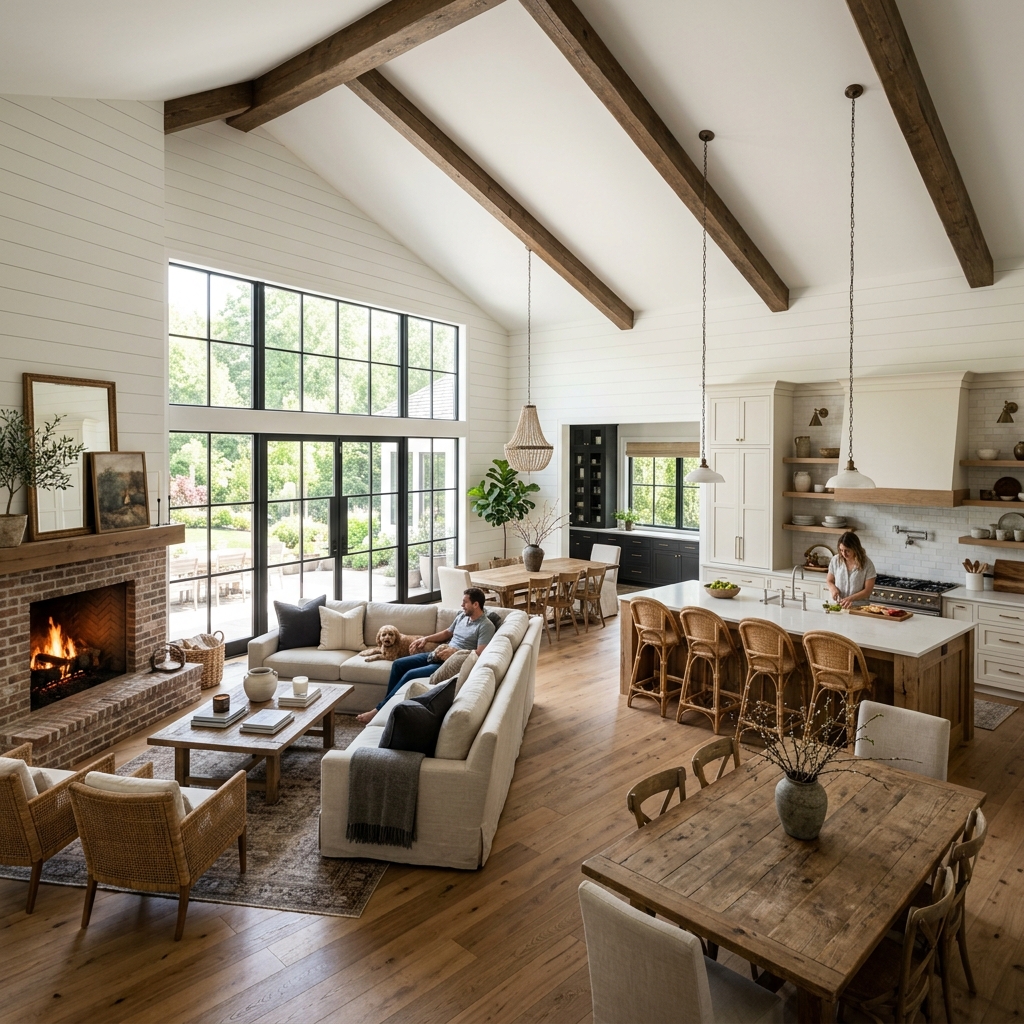
In early 2025, I designed a modern farmhouse build that featured a massive 1,200-square-foot great room. The space contained the kitchen, the dining area, and the main family room without a single dividing wall. The client tried applying the 60-30-10 rule by painting every single wall stark white, buying a giant navy blue sectional, and using brass accents everywhere. The room felt completely sterile and overwhelming at the same time. There was no visual separation between the kitchen and the couch. I had to rip up their paint plan and teach them how to fracture the 60-30-10 rule across distinct functional zones to bring intimacy back into the cavernous space.
The Problem with Shared Walls
In an open concept home, the walls do not stop. A single stretch of drywall might run from the kitchen backsplash straight into the living room window wall. If you treat that entire massive wall as your 60 percent dominant color, you lose the ability to define what happens in that space. A solid wall of one color stretching 40 feet looks like a warehouse, not a home.
According to color psychology studies from the Pantone Color Institute, humans need visual boundaries to feel comfortable in a space. You have to establish those boundaries using color instead of drywall.
Adapting the 60 Percent Base
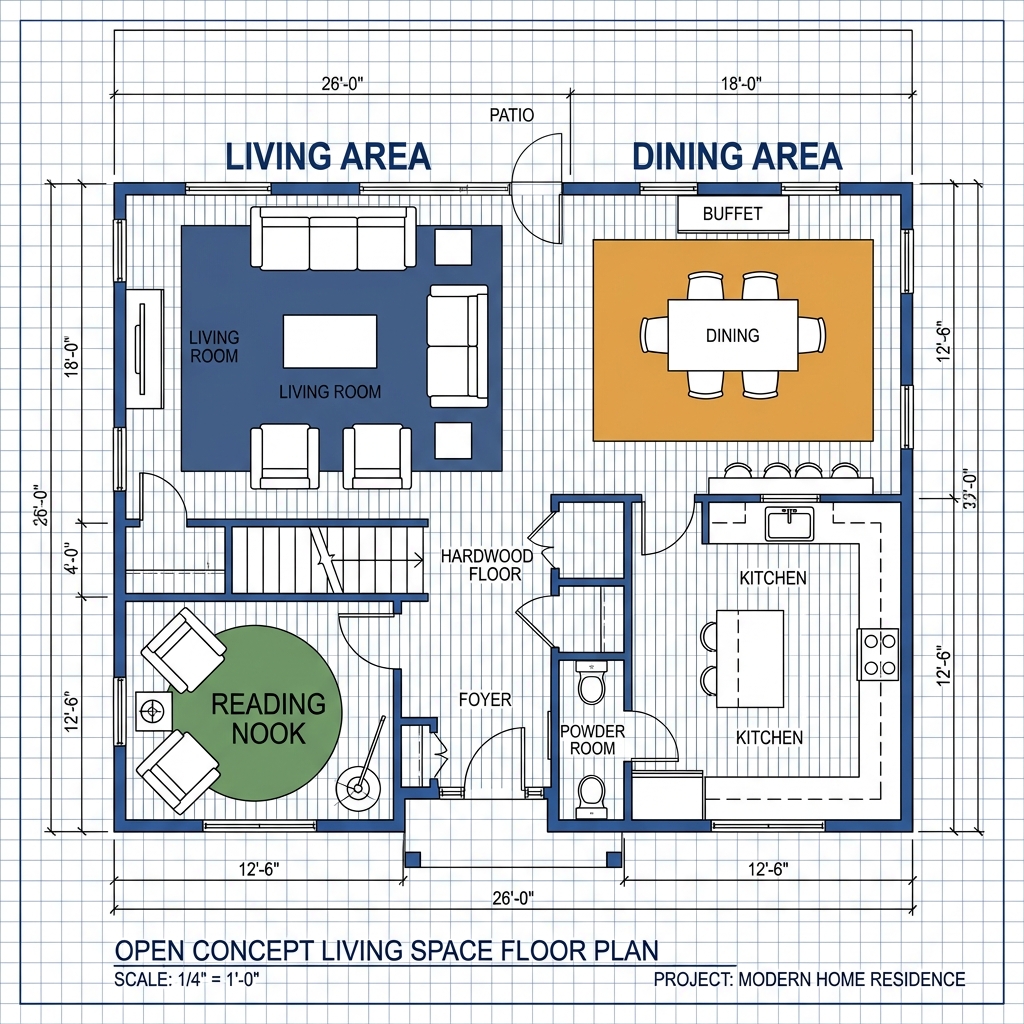
Instead of treating the entire great room as one formula, you must treat it as a collection of micro-zones. Your 60 percent base color should still be a neutral that ties the whole house together. Paint all the continuous walls this base color. However, you must rely on large area rugs to establish the borders of your micro-zones.
Place a massive, textured rug in the living area and a different, coordinating rug under the dining table. These rugs act as the 'floor walls' that define the 60 percent base for that specific zone. If you are struggling to make the wall color work with your hardwood, review our guide on how to match wood floor undertones to ensure your base neutral does not clash with the grain.
Anchoring the 30 Percent
The 30 percent secondary color is where open concept homes usually fail. People scatter this secondary color everywhere, which creates visual static. Instead, you must anchor the 30 percent color to heavy architectural features.
In the kitchen zone, assign the 30 percent color to the kitchen island cabinetry. In the living room zone, assign it to the large sectional sofa. In the dining area, assign it to the upholstery of the dining chairs. By forcing the secondary color onto large, heavy objects, you anchor the eye and provide distinct focal points for each area.
Scattering the 10 Percent
Your 10 percent accent color is the only element that should travel freely across the entire open floor plan. If your accent is a burnt orange, put an orange kettle on the kitchen stove, an orange centerpiece on the dining table, and orange throw pillows on the couch. This is the thread that sews the independent micro-zones back together into a cohesive house.
Need to calculate measurements for your space?
Use our free, interactive Paint Calculator to calculate dimensions, box requirements, or guidelines automatically.
Calculate Paint Needs→