Excessive indoor humidity creates an uncomfortable living environment while triggering serious structural problems. High moisture levels (above 60% relative humidity) foster mold growth behind drywall, cause hardwood floors to cup, and degrade indoor air quality. Buying an undersized dehumidifier means the unit runs continuously without reaching target humidity levels, driving up electric bills while failing to protect your home. Selecting the correct dehumidifier capacity requires calculating room volume and moisture severity.
A Real Basement Moisture Case Study
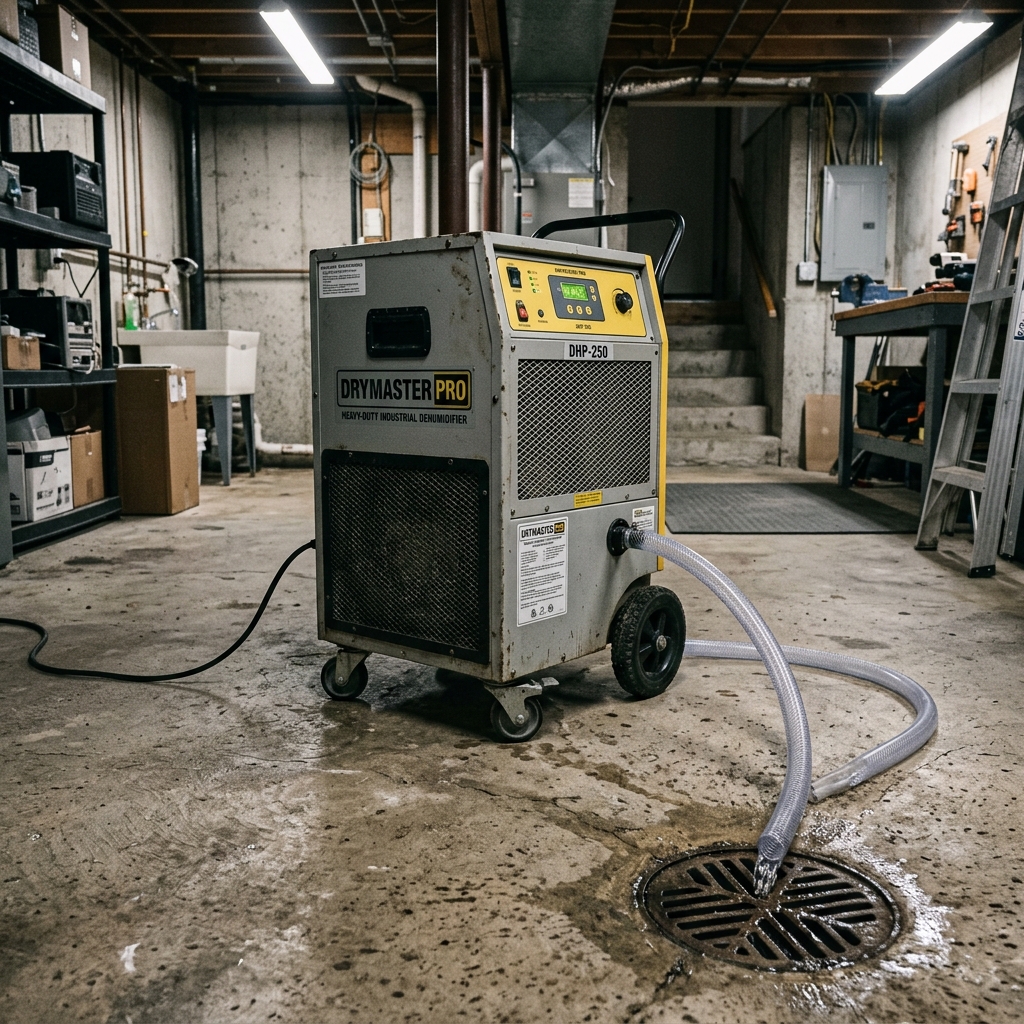
In spring 2026, a homeowner in Portland noticed a musty odor and damp carpet in their 1,200-square-foot finished basement. Relative humidity registered at 72%. They purchased a small 22-pint portable dehumidifier from a big-box store. The small unit ran 24 hours a day, filling its tiny bucket every four hours, but humidity never dropped below 64%. Mold spores began forming behind baseboard trim. We replaced the unit with a 50-pint continuous-drain unit; relative humidity dropped to a healthy 45% within 36 hours.
Understanding AHAM Dehumidifier Capacity Ratings
Dehumidifiers are rated by **Pints Per Day (PPD)**, representing the volume of moisture extracted from ambient air over a 24-hour period under standard testing conditions set by the Association of Home Appliance Manufacturers (AHAM).
AHAM Moisture Severity Categories:
- Moderately Damp (50% – 60% RH): Space feels damp and smells musty only during humid summer months.
- Very Damp (60% – 70% RH): Damp spots visible on walls or concrete floor; musty odor present continuously.
- Wet (70% – 80% RH): Moisture beads on walls or windows; floor feels damp underfoot.
- Extremely Wet (80% – 100% RH): Standing water seepage, active mold growth, wet wall studs.
Dehumidifier Capacity Sizing Chart
Use this capacity matrix based on room square footage and moisture severity level:
- 500 sq ft: Moderately Damp = 20 Pints | Wet/Extremely Wet = 30 to 35 Pints
- 1,000 sq ft: Moderately Damp = 30 Pints | Wet/Extremely Wet = 45 to 50 Pints
- 1,500 sq ft: Moderately Damp = 40 Pints | Wet/Extremely Wet = 50 to 60 Pints
- 2,000+ sq ft: Moderately Damp = 50 Pints | Wet/Extremely Wet = 60+ Pints or Whole-House Unit
Step-by-Step Dehumidifier Selection Guide
Follow this guide when buying a dehumidifier for your space:
- Step 1: Measure room length, width, and ceiling height to find square footage and volume.
- Step 2: Use a digital hygrometer to measure baseline Relative Humidity (RH) over three days.
- Step 3: Select required PPD capacity based on the sizing chart above. When between sizes, always buy the larger PPD capacity.
- Step 4: Determine drainage method: Manual Bucket Emptying, Gravity Hose Drain (to floor drain), or Built-In Condensate Pump (for pumping water up into a sink).
- Step 5: Check ambient temperature rating: If placing in an unheated basement under 65°F, choose a unit equipped with an auto-defrost sensor.
Common Dehumidifier Sizing Errors
Avoid these four common mistakes when operating dehumidifiers:
- Buying for square footage without checking dampness: A 500 sq ft wet basement requires a larger unit than a 1,000 sq ft moderately damp living room.
- Placing units against walls: Dehumidifiers require 12 to 18 inches of air clearance around intake grilles for proper airflow.
- Relying on manual bucket emptying: Units shut off automatically when internal buckets fill. If you are away, moisture levels spike again within hours.
- Running units in cold basements without defrost: Frost builds up on evaporator coils under 60°F, blocking airflow and burning out compressors.
Frequently Asked Questions About Dehumidifiers
What relative humidity should I set my dehumidifier to?
Set your dehumidifier humidistat to 45% or 50% relative humidity. Levels below 30% cause dry skin and cracking wood furniture; levels above 55% foster dust mites and mold.
How much electricity does a basement dehumidifier use?
An Energy Star-certified 50-pint unit uses roughly 420 to 500 watts per hour, costing about $15 to $30 per month in electricity depending on local utility rates.
Is a built-in pump worth the extra cost?
Yes. Units with built-in condensate pumps automatically push water up and out through vertical tubing into a basement window or sink, eliminating bucket maintenance completely.
Professional Trade Best Practices and Environmental Considerations
Building codes and environmental conditions dictate how long interior materials remain functional. Environmental factors like relative humidity shifts, thermal expansion coefficient, subfloor moisture vapor emission rates, and structural deflection play massive roles in project longevity. Professional contractors always test ambient indoor air conditions using digital moisture meters and thermo-hygrometers prior to unloading finish materials on site.
Acclimation is a mandatory requirement for all wood, laminate, and luxury vinyl flooring products. Store boxed materials inside the climate-controlled installation space for a minimum of 48 to 72 hours prior to opening packages. This allows internal moisture content to balance with home HVAC operating levels, preventing post-installation board buckling or joint gaps.
Detailed Tool Checklist and Equipment Safety
Working efficiently requires gathering appropriate safety gear and specialized trade tools before starting construction. Always wear ANSI-approved eye protection, N95 dust respirators when cutting masonry or drywall, and heavy-duty knee pads during floor installations. Keep a calibrated 4-foot spirit level, laser measuring tool, steel square, and chalk line on hand for layout accuracy.
- Personal Protective Equipment: N95 respirators, hearing protection, safety glasses, cut-resistant gloves.
- Layout Tools: 4-foot spirit level, laser distance meter, framing square, blue chalk reel.
- Cutting Tools: Miter saw with carbide finish blade, oscillating multi-tool, utility knife with fresh blades.
- Surface Prep Tools: Floor scraper, margin trowel, heavy-duty mixing paddle, shop vacuum with HEPA filter.
What building codes govern residential interior renovations?
Residential renovations are governed by the International Residential Code (IRC) alongside local municipal amendments. Key code enforcement areas include structural joist span limits, stairway riser heights, egress window dimensions, and electrical GFCI/AFCI breaker requirements.
How can I check if a contractor is properly licensed and insured?
Always request a copy of the contractor’s state license number and Certificate of Insurance (COI) listing general liability and workers’ compensation coverage. Verify license standing directly on your state department of professional regulation portal.
Professional Installation Standards and Material Science
Understanding the material science behind interior building components prevents premature failure. Every building material, from ceramic tile thinset and gypsum drywall to natural hardwood flooring and composite decking, has a specific thermal expansion coefficient and equilibrium moisture content. When indoor humidity fluctuates between seasonal extremes (dry winter heating versus humid summer air), un-acclimated materials undergo dimensional change.
For interior wood products, relative humidity must be maintained between 35 percent and 55 percent at a temperature range of 60 to 80 degrees Fahrenheit. Leaving wood flooring or cabinet components in an unheated garage or damp basement prior to installation causes warping, board cupping, and joint separation after installation.
Comprehensive Field Tool Checklist and Job Site Setup
Executing clean installation work requires assembling high-quality trade tools before beginning demolition or layout. Standard DIY toolkits often lack the precision required for tight tolerances. Invest in a 48-inch spirit level, a digital angle gauge, laser distance measure, carbide-tipped cutting blades, and heavy-duty surface protection film.
- Surface Preparation: Heavy-duty floor scrapers, self-leveling compound mixing barrels, margin trowels, and industrial shop vacuums.
- Precision Measurement: Digital calipers, laser levels, stud finders with deep scan modes, and steel framing squares.
- Cutting Equipment: Dual-bevel sliding miter saws, continuous-rim diamond wet saws, and oscillating multi-tools.
- Safety Equipment: N95 particulate respirators, ANSI-approved eye protection, and heavy-duty knee protection pads.
Building Code Compliance and Inspection Readiness
All major residential remodeling projects must comply with the International Residential Code (IRC) and local municipal amendments. Inspections typically occur at three key project stages: rough framing/structural, rough plumbing/electrical/mechanical, and final occupancy sign-off. Skipping permits or failing to schedule inspections can lead to stop-work orders, fines, or issues when selling your property.
How do I know if my project requires a building permit?
Cosmetic updates like painting, hanging curtains, or installing floating floors generally do not require permits. Structural wall removal, electrical circuit additions, plumbing line relocations, and exterior deck builds require municipal permits and inspections.
What is the best way to clean and maintain finished surfaces?
Use pH-neutral cleaners specifically formulated for your material type. Avoid harsh bleach, ammonia, or abrasive scrubbing pads on finished hardwood, natural stone tile, or acrylic bath surfaces.
Need to calculate measurements for your space?
Use our free interactive tool to calculate dimensions automatically.
Calculate Room Moisture Needs →