One minute he wants dinosaurs on every wall. The next, he finds dinosaurs deeply embarrassing. A thoughtfully planned bedroom can handle both phases without a complete makeover every birthday.
These boys bedroom decor ideas make room for practical storage and sturdy furniture alongside the things your kid loves. Start with a flexible foundation, then let him change the details as his interests grow.
1. Start with a versatile wall color

Choose a wall color that can work through several decorating phases, such as warm white, soft gray, muted green, or deep blue. A neutral backdrop gives colorful toys room to shine now and leaves space for band posters later. Test paint samples in the room at different times of day before you commit.
2. Choose a bed with staying power

A simple twin or full-size bed frame can suit your child for years as his tastes change. Look for sturdy construction, smooth edges, and a finish that works with different bedding styles. Measure the room first; a larger bed should still leave enough space to move comfortably.
3. Add personality with changeable bedding

Let bedding do the work when your child discovers a new obsession. Start with a solid duvet cover, then add a patterned throw or pillowcase in his current favorite colors or a design he loves. When the shark phase ends, you can swap a few pieces instead of repainting the whole room.
4. Build a gallery wall that evolves
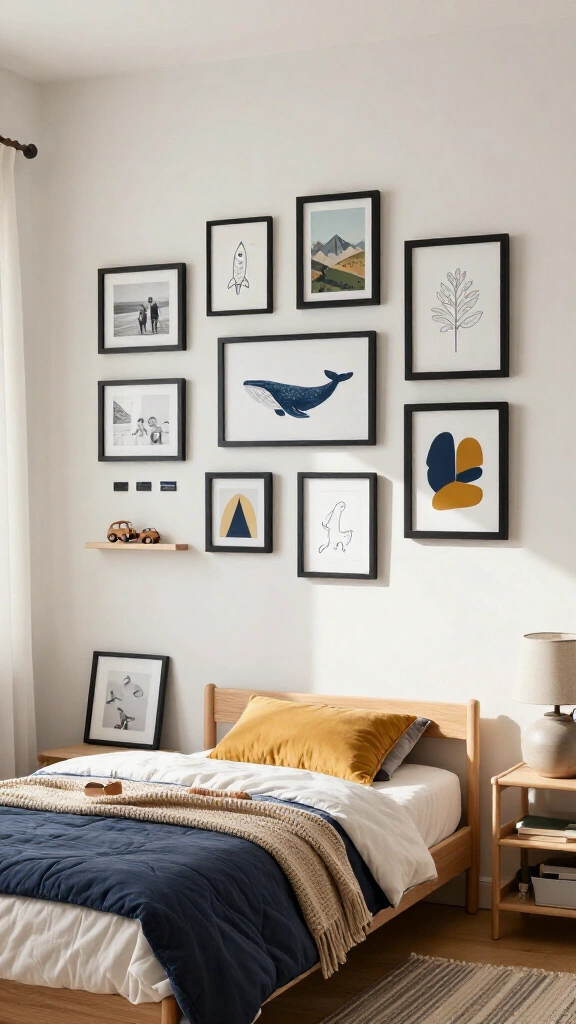
Mix family photos, artwork, postcards, and prints in lightweight frames to create a gallery wall you can change over time. Choose one frame color to tie the collection together, even when you switch out the art. Invite your child to pick a few pieces; his choices can make the bedroom feel like his space.
5. Make books part of the decor

Display picture books on low shelves while your child is young, then make room for chapter books, comics, and favorite collections. Ledges that face books outward show off colorful covers and make choosing a bedtime story easier. Secure the shelving to the wall and keep heavy books on lower shelves.
6. Create a cozy reading nook

Give an overlooked corner a comfortable chair or floor cushion, a soft throw, and a good reading light. Toddlers can cuddle up there for stories, while older kids can use the same spot to read or recharge. For more snug styling inspiration, browse these cozy room decor ideas.
7. Use baskets to tame toy clutter

Choose sturdy, open baskets that little hands can reach without help. They can hold blocks and stuffed animals now, then store sports gear, cables, or hobby supplies later. Add simple labels if your child likes sorting, but leave a little flexibility for the inevitable “miscellaneous treasures” category.
8. Invest in a dresser, not a theme

A solid dresser in natural wood, white, or another versatile finish will likely outlast your child’s latest character obsession. Change the knobs or decorate the wall above it when he wants a new look. Anchor the dresser to the wall; the U.S. Consumer Product Safety Commission explains why tip-over prevention matters.
9. Bring in a washable area rug

A rug softens the floor for building block towers and taking homework breaks. Choose a low-pile rug that’s easy to care for, with a pattern that can hide the occasional crumb or art-project accident. Check the care label before buying and add a suitable nonslip pad if the rug needs one.
10. Pick curtains with long-term appeal
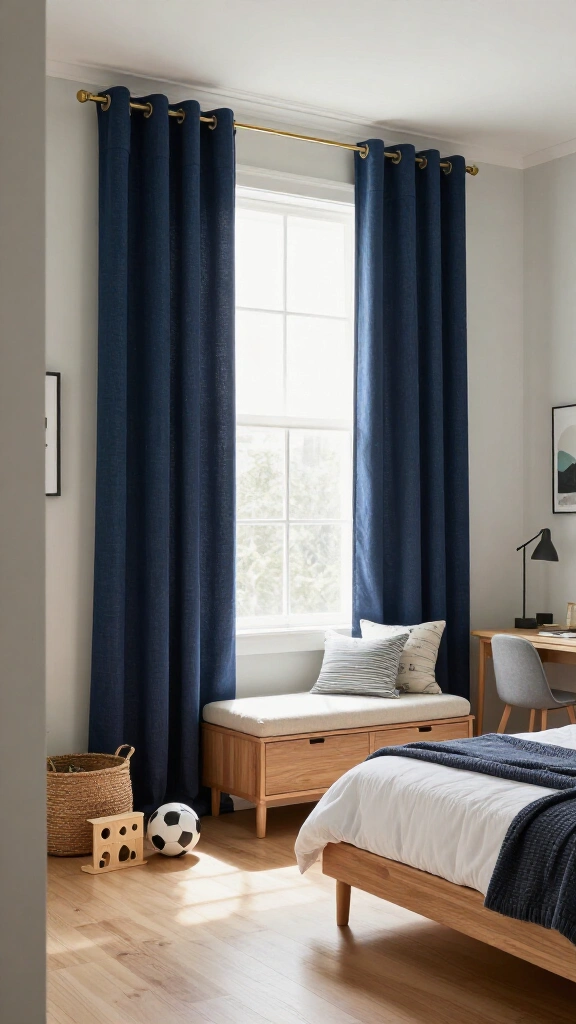
Solid or subtly patterned curtains can work in a toddler’s playful room and suit a teen’s more streamlined style. Consider light-filtering or room-darkening fabric according to your family’s needs, and measure the window before shopping. For window-covering safety, review the CPSC’s guidance on window coverings and keep cords out of reach.
11. Give the closet adjustable storage
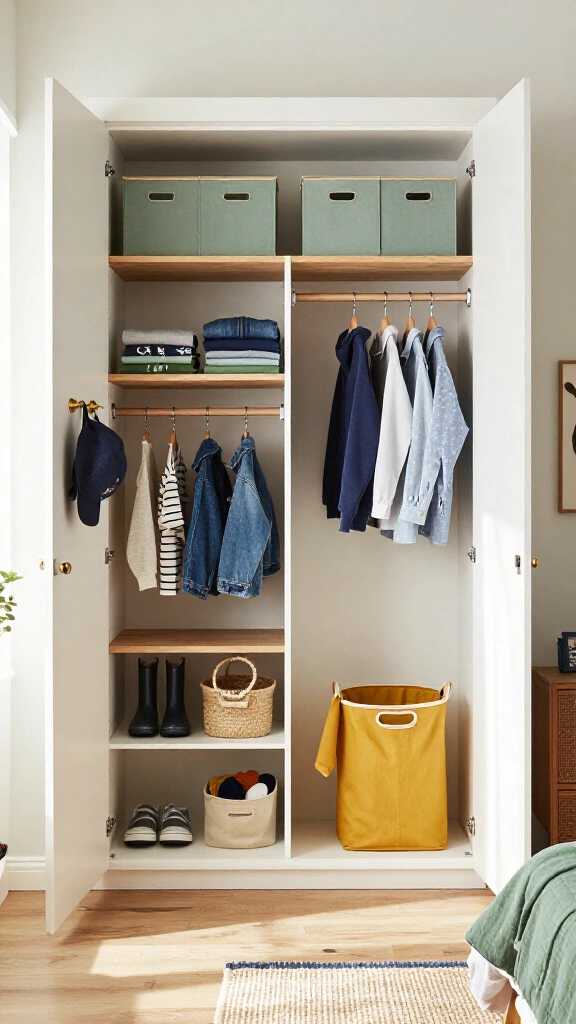
Kids grow, clothes grow, and somehow the laundry pile grows fastest of all. Adjustable shelves and hanging rods let you change the closet layout as clothing and storage needs change. Keep everyday items within reach for younger children, then raise or rearrange the shelves and rods as they get taller.
12. Add a desk when the time feels right
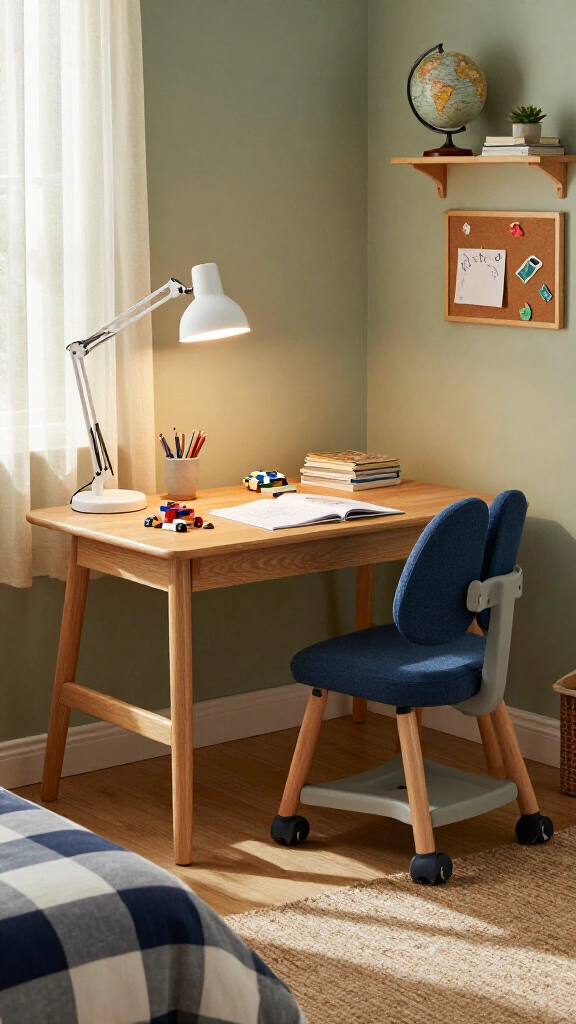
A small table can host coloring sessions first and homework later. As your child grows, choose a desk and chair that support a comfortable working position, with enough surface space for the activities he enjoys. A nearby task light helps him see projects clearly without relying only on overhead lighting.
13. Make room for creative displays

Give your kid a place to show off his latest masterpiece without covering every inch of the fridge. Mount a bulletin board securely or hang a simple row of clips so he can swap out artwork easily. Later, he can use the same display for concert tickets, photos, schedules, or sketches.
14. Try a two-tone paint treatment

Paint the lower portion of a wall a richer color and keep the upper portion light for a playful look that doesn’t feel babyish. Navy and warm white work well together, as do olive and cream or charcoal and pale gray. Use painter’s tape and a level to create a crisp dividing line.
15. Choose removable wall decals

Stars, mountains, geometric shapes, or a favorite animal can add character without covering the whole room. Follow the manufacturer’s instructions and test a small area first, since wall finishes and decal adhesives vary. When your child wants a change, remove the design carefully and give the space a fresh look.
16. Design a subtle adventure theme

Love the idea of an outdoorsy room? Combine earthy colors, wood furniture, and a mountain print instead of covering every surface in tents and bears. A suggested theme gives the room personality while leaving space for new interests, whether your child discovers skateboarding or astronomy next.
17. Add layers of lighting

Combine general overhead lighting with a reading lamp and a softer evening light. This mix works for play, homework, and bedtime routines without forcing one bright fixture to handle everything. Choose stable lamps, keep cords out of young children’s reach, and follow the manufacturer’s bulb recommendations.
18. Use under-bed storage wisely
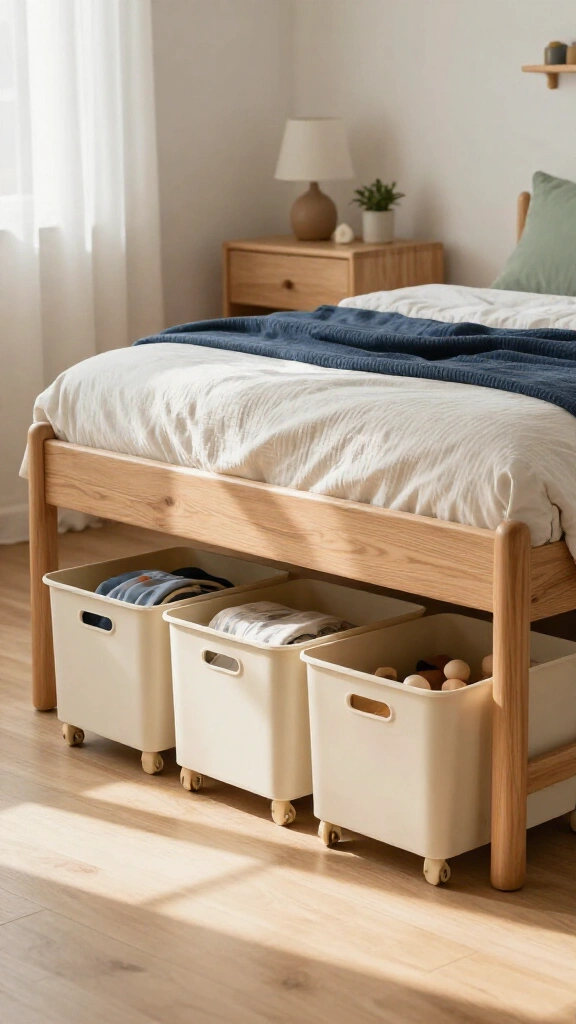
Slide shallow bins under the bed for out-of-season clothes, spare bedding, or toys your child doesn’t use every day. Measure the clearance first, and include any wheels or handles on the containers. Clear bins let you see what’s inside, while matching opaque boxes give the room a calmer look.
19. Bring nature indoors with wood tones

Wood furniture and simple natural textures add warmth without tying the room to a particular age. Try a wooden nightstand, a cork board, or a woven basket alongside painted pieces. You don’t need every finish to match perfectly; a similar warm or cool undertone can tie the room together.
20. Let hobbies shape the accessories

Does your kid love music, basketball, space, or building things? Let him bring that interest into the room with accessories you can change easily, such as framed prints, a display shelf, or a themed pillow. Keep the larger furniture simple so the room can follow his curiosity wherever it goes next.
21. Set up a flexible play and hangout zone

Leave some open floor space rather than filling every corner with furniture. A soft rug and a few floor cushions can make a spot for pretend play now and give friends a casual place to sit later. For a compact room, explore these small bedroom ideas for more ways to balance personality and floor space.
22. Make a statement with one accent wall

One accent wall can give a bedroom some energy without overwhelming it. Try a rich paint color, a simple geometric design, or wallpaper in a pattern your child loves. Before choosing wallpaper, check the installation and removal instructions so you know what the work will involve later.
23. Choose furniture with more than one purpose

A storage bench can hold extra blankets and offer a place to sit while getting dressed. A bookcase can organize toys today and school supplies tomorrow. Choose pieces that fit your room and solve a real problem; a clever detail won’t help much if nobody uses it.
24. Add a mirror for function and light

A mirror can help older kids get ready and reflect daylight around the room. Choose a simple frame that coordinates with the furniture rather than a design your child may quickly outgrow. Position it where it will be useful, and mount it securely with hardware that suits the wall type.
25. Give collections a dedicated shelf

Model cars, sports trophies, figurines, and handmade creations deserve a home that doesn’t take over the entire desk. Install a shelf at a suitable height and secure it according to the manufacturer’s directions. Rotate favorites as the collection grows, and keep small objects away from younger children who might put them in their mouths.
26. Plan for privacy as your child grows

A little independence goes a long way in a room that grows with your kid. Let him make choices about bedding, artwork, and the way he organizes his belongings, and give him more input as he gets older. A comfortable place to unwind and a respectful knock before you enter can matter as much as the decor.
27. Refresh the room in small stages
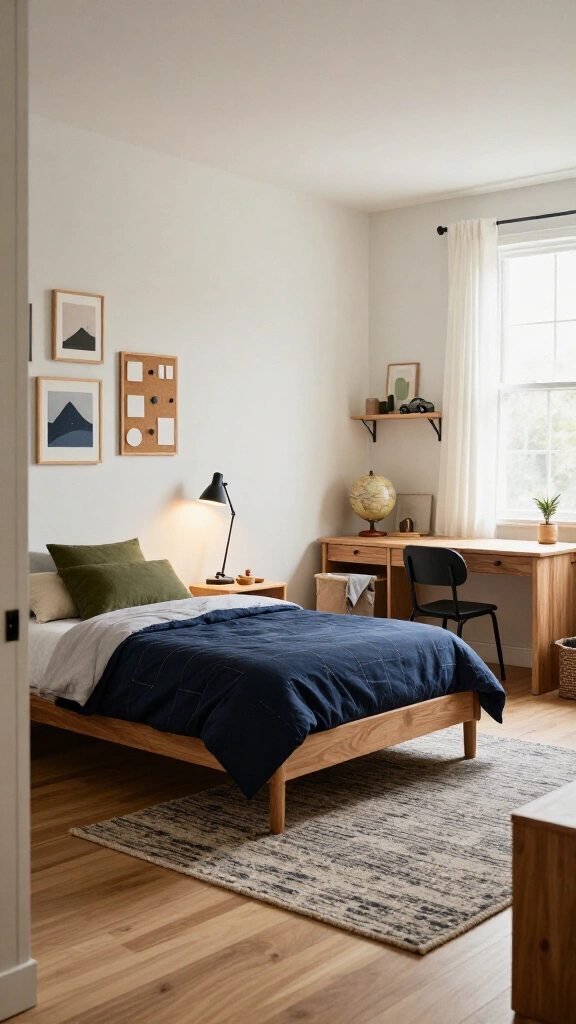
You don’t need to replace everything when your child enters a new phase. Start by removing what no longer works, then update one or two details that make a noticeable difference, such as bedding, art, or lighting. Keep the pieces that still fit his life and let the room evolve at his pace.
A bedroom that grows up without losing its personality
The best boys bedroom decor starts with sturdy essentials, practical storage, and a layout that leaves room to change. Bring in the colors, hobbies, and little quirks that make your child feel at home, then adjust those details as he grows.
And if his favorite color changes twice before the paint dries? Consider that excellent practice for decorating with a future teenager.