Does your home suddenly feel stripped and bleak the moment you pack away the holiday twinkle lights? You yank down the red bows, pitch the dry wreath, and your curb appeal takes a nosedive straight into the January blues. You do not have to settle for barren, sad dirt boxes until May rolls around.
Winter window boxes are your secret weapon for banishing that mid-winter chill. With the right mix of hardy textures, architectural branches, and colorful berries, your windows will turn heads through February and beyond. Here are 15 winter window box displays that celebrate the crisp season without screaming “Christmas.”
1. The classic evergreen mix

Nothing beats the staying power of mixed conifer boughs. Combine flat cedar, needle-rich white pine, and sturdy noble fir to create a lush, textured foundation that laughs at sub-zero temperatures. The contrasting shades of forest green, blue-gray, and bright chartreuse give you instant depth.
Cut your branch stems at a sharp 45-degree angle before pushing them deep into moist potting soil or floral foam. The soil freezes solid within days, locking your arrangement in place like concrete. Spritz the needles with an anti-desiccant spray like Wilt-Pruf to stop winter winds from stripping their moisture.
2. Dramatic red twig dogwood and birch poles

Do your window boxes lack vertical drama? Anchor the display with three to five white birch poles of varying heights clustered in the center. Then push bright stems of red twig dogwood (Cornus sericea) around them for an eye-popping burst of fiery color against your home’s siding.
Pair these upright stems with low-lying spruce branches to ground the design. The contrast between bone-white birch bark and blood-red stems delivers striking architectural interest that lasts until the spring thaw. Discover more seasonal inspiration with our favorite outdoor winter decor ideas to boost your exterior charm.
3. Frosty silver and blue conifer mix
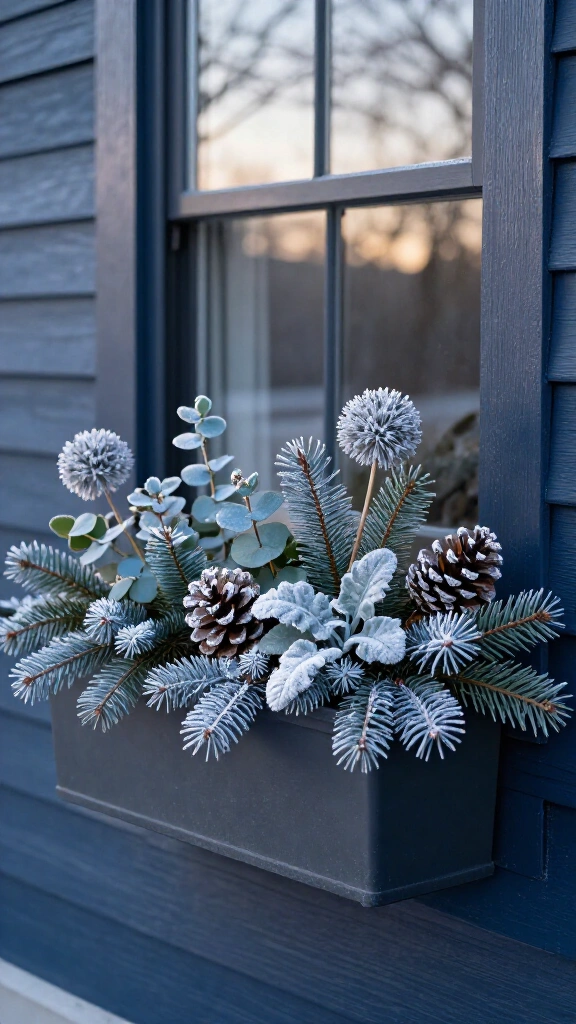
Ditch the traditional greens and lean straight into a cool, frosty palette. Combine cuttings of blue spruce, baby blue eucalyptus, and silvery dusty miller for an ethereal winter look. The muted silver tones mimic freshly fallen frost under the pale morning sun.
Incorporate silver-sprayed seed heads or frosted pinecones to bounce natural light toward your windows. This colorway flatters dark gray, navy, or brick exteriors particularly well. It completely skips Christmas tropes while leaning unapologetically into seasonal winter elegance.
4. Winterberry burst with holly and juniper

Who says winter gardens must abandon bright color? Deciduous holly branches (known botanically as Ilex verticillata) drop their leaves in autumn to reveal hundreds of glossy, scarlet berries. Push these upright branches into a thick skirt of trailing blue juniper.
The dense juniper foliage hides the base while electric red berries demand attention from the street. Local songbirds might even swing by for an afternoon snack, turning your window box into an interactive nature show. Keep the red organic and asymmetrical so it reads as a natural winter scene rather than leftover holiday trim.
5. Ornamental cabbage and cold-hardy kale

If you live in zones 6 through 9, living plants still belong in your cold-weather rotation. Ornamental kales and cabbages intensify their purple, rose, and creamy white hues as the thermostat drops. Plant them shoulder-to-shoulder in the center of your box for instant, rosette-shaped drama.
Surround the cabbage heads with trailing ivy or creeping thyme to spill gracefully over the front lip. These tough brassicas endure light freezes without flinching. Just remember to water them during extended dry thaws when the soil unfreezes.
6. Glowing fairy light and giant pinecone woodland

Winter nights arrive ridiculously early, so why let your curb appeal vanish at 4:30 PM? Create a magical, woodland-inspired escape using massive sugar pinecones, ponderosa pine tips, and weather-resistant warm white micro-lights. Nothing beats warm ambient light cutting through an icy January dusk.
Pro lighting tips for freezing temps:
- Select battery packs with built-in timers (6 hours on, 18 hours off) so you never freeze your fingers toggling switches.
- Encase battery boxes inside waterproof zip-top freezer bags before tucking them out of sight.
- Use commercial-grade, warm-white LED strands that resist cracking in sub-zero winds.
7. Structured boxwood hedge with burlap warmth

Do you prefer clean, symmetrical, formal architecture? Line up small, potted dwarf English boxwoods directly inside your window trough. Fill the empty gaps between pots with dense sheets of green sheet moss or natural burlap ribbon.
This tailored look delivers serious curb appeal that feels intentional and clean. Wrap the exterior of your wooden or zinc boxes in wide strips of rustic burlap to soften hard corners. When spring arrives, simply remove the boxwoods and plant them out in your permanent garden beds.
8. Rustic magnolia leaves and shed antlers

Magnolia grandiflora foliage offers the ultimate two-toned winter texture: deep glossy green on top and warm, velvety suede-brown underneath. Fan out fresh magnolia branches across your window box to establish a luxurious, sprawling foundation. The caramel undertones warm up stone and light-colored siding effortlessly.
Tuck naturally shed deer or elk antlers right into the center of the greenery. The weathered bone provides an organic, mountain-lodge aesthetic that feels both rugged and refined. For more ways to warm up your space without holiday accessories, check out our guide on after-Christmas winter decor.
9. Crisp all-white winter wonderland

Celebrate pure snowdrift minimalism with an intentional all-white composition. Paint fallen branches and pinecones crisp white, then intersperse them with creamy faux snowberries and natural white birch slices. A base of dense Fraser fir provides contrast that makes the white elements pop.
This arrangement looks spectacular against dark-painted brick or graphite homes. It completely bypasses holiday themes while saluting midwinter snowfall. Dust the entire composition with fine horticultural mica flakes for a subtle, daytime sparkle when the sun hits the box.
10. Trailing English ivy and winter creeper

Do not let your window boxes look bottom-heavy! Cascade evergreen English ivy (Hedera helix) and variegated winter creeper (Euonymus fortunei) over the front and sides of your boxes. The tumbling vines break up rigid window lines and hide plain container walls.
Pair these weeping vines with upright yew branches and dark purple plum boughs inside the box. The cascading vines survive frigid gusts remarkably well, maintaining their leathery green vigor all season long. You get movement, depth, and softness that lasts until the first spring daffodils emerge.
11. Dried citrus, cinnamon, and lotus pods

Infuse your exterior decor with earthy, spice-market warmth. Dehydrate thick blood-orange and grapefruit slices in your oven until leathery, then wire them onto thick cedar sprays alongside oversized cinnamon sticks. Add dried lotus seed pods and star anise clusters to complete the organic arrangement.
The amber, burnt orange, and deep brown shades introduce cozy visual warmth against bleak, overcast skies. The spicy scent will greet you every time you crack open the window for fresh air. It feels organic, harvest-inspired, and delightfully distinct from generic holiday garlands.
12. Architectural grasses and dried seed heads

Why toss your autumn perennials when their skeletal forms hold unbelievable architectural beauty? Harvest spent plumes of feather reed grass (Calamagrostis), dark brown coneflower cones, and spherical allium heads. Stand them upright among a base of low-profile Scotch pine.
These fine textures sway gracefully in winter breezes, bringing captivating motion to an otherwise frozen scene. You celebrate natural life-cycle beauty while providing shelter for overwintering beneficial insects. If you love fresh botanical styling, explore our clever non-Christmas winter swaps to refresh the rest of your home.
13. Weathered copper lanterns and cedar nesting

Transform your window boxes into welcoming beacons on stormy evenings. Set heavy, weathered copper or matte-black lanterns right into the soil beds, anchoring them securely with hidden bricks or heavy stones. Fill the lanterns with heavy-duty, battery-operated outdoor pillar candles.
Nestle soft Western red cedar and dried moss around the lantern bases to cushion them against wind drafts. The flickering amber glow inside the glass casts romantic, dancing shadows across your window panes every night. Your home becomes the coziest cottage on the block without a speck of tinsel in sight.
14. Fragrant eucalyptus and juniper berries

Combine silver dollar eucalyptus, seeded eucalyptus, and berry-laden female juniper branches for an ultra-sophisticated display. The round, dusty-blue eucalyptus leaves soften the prickly conifer boughs, creating an upscale boutique aesthetic. The powdery blue juniper berries pick up cool winter daylight beautifully.
This combo shrugs off drying winter winds better than almost anything else. Eucalyptus dries naturally without curling or dropping leaves, meaning your boxes look virtually unchanged from January 2nd through mid-March. The refreshing pine-and-menthol scent also naturally repels pesky pests from snooping near your window sills.
15. Winter-blooming violas and pansies

Did you know that violas can survive literal ice storms? If you reside in USDA zones 7 or warmer, winter pansies and violas will bloom persistently right through cold snaps. Plant purple, yellow, and pure white varieties tightly together for an energetic splash of genuine floral life.
When hard freezes strike, the flowers will temporarily wilt and play dead. Do not panic! The moment the afternoon sun warms the soil, their cellular structure bounces straight back up. Top-dress the soil surface with shredded cedar bark to insulate the shallow roots against sudden temperature plunges.
Your post-holiday window box survival checklist
Before you run outside with pruners in hand, review these container gardening rules to guarantee your winter window boxes look great until springtime:
- Keep the soil: Never dump your old summer potting soil! Leave it in the box to act as a heavy, firm base to anchor winter branch stems.
- Water before the big freeze: Soak the soil thoroughly right after designing your box. Once that wet dirt freezes solid, it holds branches upright through severe winter storms.
- Cut deep angles: Always slash branch bottoms at a steep angle to slice through dense dirt and maximize surface area for moisture intake during thaws.
- Mix needle types: Always blend broadleaf greenery (like magnolia or ivy) with fine needles (like fir and cedar) to create genuine visual depth.
Say goodbye to naked, forlorn window sills this January. Grab your clippers, collect some resilient boughs, and craft a display that keeps your facade lively, cozy, and proudly festive all winter long!