Do you ever look at modern, glitter-drenched holiday displays and crave something simpler? You can easily trade shiny plastic for the quiet warmth of an authentic pioneer homestead. Primitive holiday decor skips modern trends and focuses on weathered wood, muted earth tones, pantry spices, and hand-stitched cloth that carries character.
Transforming your rooms into a cozy frontier retreat never requires a massive antique budget or advanced woodshop skills. Warm up a mug of spiced cider, heat up your glue gun, and step back into a simpler century with these budget-friendly handmade accents. If you want more rustic hearth ideas, look at our guide on 15 DIY fireplace Christmas decor ideas to complement these crafts.
1. Coffee-stained muslin candy canes

Skip the bright plastic candy canes on store shelves this winter. You can make primitive fabric canes using scraps of unbleached cotton muslin and faded red ticking stripes. Cut the fabric into narrow cane shapes, sew the edges with dark brown thread, and pack them firmly with scrap cotton batting.
Drop the finished canes into a hot bath of dark-roast instant coffee, vanilla extract, and ground cinnamon for ten minutes. Bake the wet canes on a baking sheet at 200°F until dry to produce an aged, antique patina. They dry with a deep tan color and fill the entire kitchen with the scent of holiday spices.
2. Dehydrated citrus and cinnamon stick bundles

Frontier families made good use of every winter orange they could get. Slice fresh navel oranges into thin rounds and dry them slowly in a low oven until the fruit centers glow like stained glass. Pair each dried slice with two whole cinnamon sticks and a small sprig of fresh juniper.
Bind the spices and citrus together using rough jute twine. Hang these fragrant bundles directly on your evergreen boughs, or hang them from cast iron doorknobs throughout your hallways. You can learn more about traditional winter craft history through the Farmers’ Almanac.
3. Rusted tin star tree accents

Bright chrome tree toppers clash with the quiet look of primitive holiday rooms. Pick up plain tin punch cutouts, or cut your own star shapes from recycled biscuit tins with sturdy kitchen shears. You can produce a genuine rusty barn finish in a single afternoon without waiting years for the elements to do the work.
Submerge the metal pieces in a shallow glass dish filled with equal parts white vinegar and hydrogen peroxide, plus a generous spoonful of table salt. The chemical mixture bubbles immediately and forms a thick coat of genuine rust across the metal within hours. After the stars dry, thread torn strips of homespun calico through the top holes for hanging.
4. Homespun plaid and jute garland

Ditch store-bought foil tinsel and build thick fabric garlands that hang gracefully across your mantel. Pick up remnants of mustard, forest green, and brick red cotton plaids from a local fabric bin. Tear the cloth along the weave into eight-inch strips so the frayed edges show off their raw texture.
Knot each strip of torn cloth around a core of thick jute rope, rotating colors as you go. Push the fabric knots tightly together along the rope to build a full, heavy garland. This project sets a grounded foundation for your favorite country Christmas decor ideas across mantels and staircase railings.
5. Mason jar cranberry and pine floating lanterns

Old glass canning jars deliver instant historic charm to farmhouse shelves and side tables. Fill vintage aqua or clear jars three-quarters full with cool tap water and push fresh white pine cuttings down into the bottom. Scatter a layer of raw cranberries across the surface to build rich, natural contrast against the dark needles.
Set an unscented beeswax tea light candle right in the center of the floating berries. Wrap the threaded collar of the glass jar with rusty florist wire, securing a real cinnamon stick to the glass neck with string. Place several jars along your dining table to cast a soft, flickering amber glow over your evening meals.
6. Cloved burlap scent sachets

An authentic heritage Christmas engages your sense of smell as much as your eyes. Cut coarse coffee burlap into four-by-six-inch rectangles, leaving the loose weaves and threads visible. Stitch three edges closed by hand with heavy waxed button thread.
Pack the burlap pouches with dry cedar shavings, whole cloves, star anise, and crushed bay leaves. Paint a simple silhouette (like an evergreen sprig or a saltbox cabin) onto the coarse fabric with charcoal craft paint. Tuck these sachets inside blanket chests or nestle them deep within tree boughs to fill the room with woodland fragrance.
7. Vintage wooden thread spool mini trees
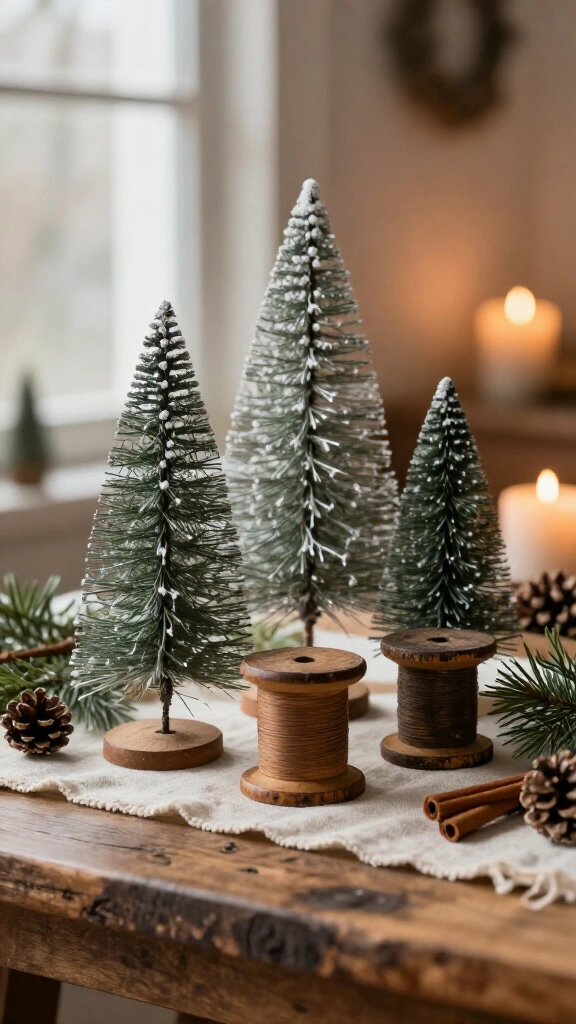
Old wooden thread spools make sturdy, authentic pedestals for tiny tabletop evergreens. Search junk shops for empty spools that still carry their original paper labels and worn timber finishes. If you only have new craft spools, brush them with dark walnut stain to create decades of wear in minutes.
Dunk green bottle brush trees in household bleach to strip the bright synthetic color, wash them clean, and tint them with muted sage paint. Glue the dried wire trunks directly into the spool holes. Dust the tree tips with ground cornstarch for a light frosty look, then line up three spools across your windowsill.
8. Distressed wood sled wall hanging

You can turn leftover pallet boards into a charming decorative runner sled for your entryway wall. Cut three pine boards with curved front tips, then screw two crossbars across the back to lock them together. Bend rusty iron strapping into curved runners, or screw weathered wood slats along both sides.
Paint the boards with dark red milk paint, let the surface dry completely, and rub beeswax along the outer edges. Apply a top coat of warm buttermilk paint, then rub the corners hard with coarse sandpaper to reveal the red layer beneath. Fasten a bundle of fresh pine boughs to the front with torn homespun ribbon to finish the display.
9. Tea-dyed salt dough folk ornaments

Stir two cups of white flour, one cup of fine table salt, and one cup of strong brewed black tea into a firm dough. Roll the mixture out to a quarter-inch thickness on brown craft paper, then cut out simple shapes like sheep, stars, and gingerbread figures. Pierce a hanging hole through the top of each cutout with a wooden skewer before baking.
Bake your ornaments at 250°F for two hours until the dough turns bone-dry and hard. Use a fine-tip artist brush and dark gray paint to add simple folk stitching lines around the edges. You can browse traditional patterns at the American Folk Art Museum for early American inspiration.
10. Wool felt penny rug table runner

Penny rugs stand out as one of the most distinctive nineteenth-century home textile traditions. Cut circles of different diameters from boiled wool scraps or felted thrifted sweaters in shades of olive, wine, and tan. Stack smaller discs on top of larger circles to form layered, dimensional pads.
Sew the stacked discs onto a dark wool runner using ecru embroidery floss and an open blanket stitch. Group the discs in straight rows or cluster them into circular wreath patterns across the fabric. This thick woolen runner shields your dining table from hot platters while adding tactile warmth to your holiday setup.
11. Hand-forged S-hook mistletoe bundles

Black iron hardware brings authentic colonial weight to soft holiday greenery. Buy reproduction iron hooks from a hardware restorer, or bend heavy steel wire into shape and coat it with flat black spray paint. The dark metal gives evergreen sprigs a grounded, historic look.
Tie together sprigs of real mistletoe, juniper with ripe berries, and bare birch twigs into a small bouquet. Bind the stems tightly with dark floral wire, then hang the bundle from your door trim or wooden beam using the hook. This natural bundle easily outshines the artificial plastic versions sold in mass-market shops.
12. Antiqued sheet music evergreen cones

Pick up loose pages from damaged vintage hymnals at used book shops to craft classic paper cones. Roll a single sheet of paper into a tight cone, tacking the seam in place with hot glue. Soften the bright cut edges by tapping them against a brown ink stamp pad.
Punch two holes through the top rim and run a short loop of dark wire through both sides for hanging. Fill the paper cone with cedar sprays, red winterberries, and a pinch of ground nutmeg. Hang these paper pieces from interior doorknobs or add them to your DIY Christmas room decor displays.
13. Cheesecloth primitive angel ornaments

Make soft, rustic angel figures using ordinary kitchen cheesecloth instead of modern shiny ribbons. Soak unbleached cheesecloth in a pot of black tea for an hour, squeeze out the liquid, and hang the fabric in the sun. Tear the dry cloth into ragged strips with your fingers to preserve the rough fringes.
Slide a plain wooden craft bead onto a loop of string for the head, then drape the tea-stained cloth over it to form flowing gowns. Twist slender grapevine tendrils into small halos and loop dark wire into wings behind the angel shoulders. These light ornaments turn and drift gently in the draft of your living room.
14. Galvanized olive bucket evergreen planters

Dented, weathered zinc olive buckets hold fresh holiday greens better than modern glossy planters. Put a plastic drip pan or heavy trash bag inside the base to catch water from your fresh clippings. Pack the bucket with floral foam or moist garden sand to hold tall branches upright.
Clip cedar boughs, fir branches, and pine stems from your backyard or a local tree lot. Push the stems firmly into the bucket base until the greenery spills over the metal rim. Wrap a wide strip of torn cotton feed sack around the middle of the bucket and tie it in a simple knot.
15. Upcycled wool sock folk snowmen

Take those stray cream wool work socks without matches and turn them into charming folk snowmen. Cut off the foot portion just above the heel, turn the sock inside out, and tie the cut edge shut with jute string.
Flip the sock right-side out and fill it with dry rice or pearl barley until it stands upright with good weight. Tie another piece of twine around the upper third to separate the head from the body. Finish the snowman by sewing three old horn buttons down the front and knotting a strip of red plaid flannel around the neck.
Essential tips for authentic primitive finishing
- Embrace imperfections: Primitive decor welcomes uneven cuts, frayed cloth borders, and worn surfaces.
- Stick to natural colors: Rely on mustard yellow, buttermilk cream, barn red, sage green, and charcoal.
- Use scent strategically: Add whole pantry spices like cinnamon, star anise, and cloves to your displays to bring back classic holiday memories. You can find more traditional fragrance ideas in Martha Stewart’s holiday project guides.
Embrace the warmth of a simpler season
Creating an authentic primitive holiday look requires no expensive heirlooms or complex tools. By using raw materials like unbleached muslin, kitchen spices, scrap lumber, and weathered metal, you build holiday accents full of character. These projects encourage you to slow down, put away your phone, and enjoy the honest craft of making decorations by hand.
Pick one idea to start on your kitchen table this weekend. Heat up some cider, clear off your workspace, and bring old-fashioned farmhouse warmth into your home this winter.